


Black Galingale Extract
A standardised extract from Kaempferia parviflora rhizome with specified methoxyflavone content, ready for supplement and cosmetic formulation.
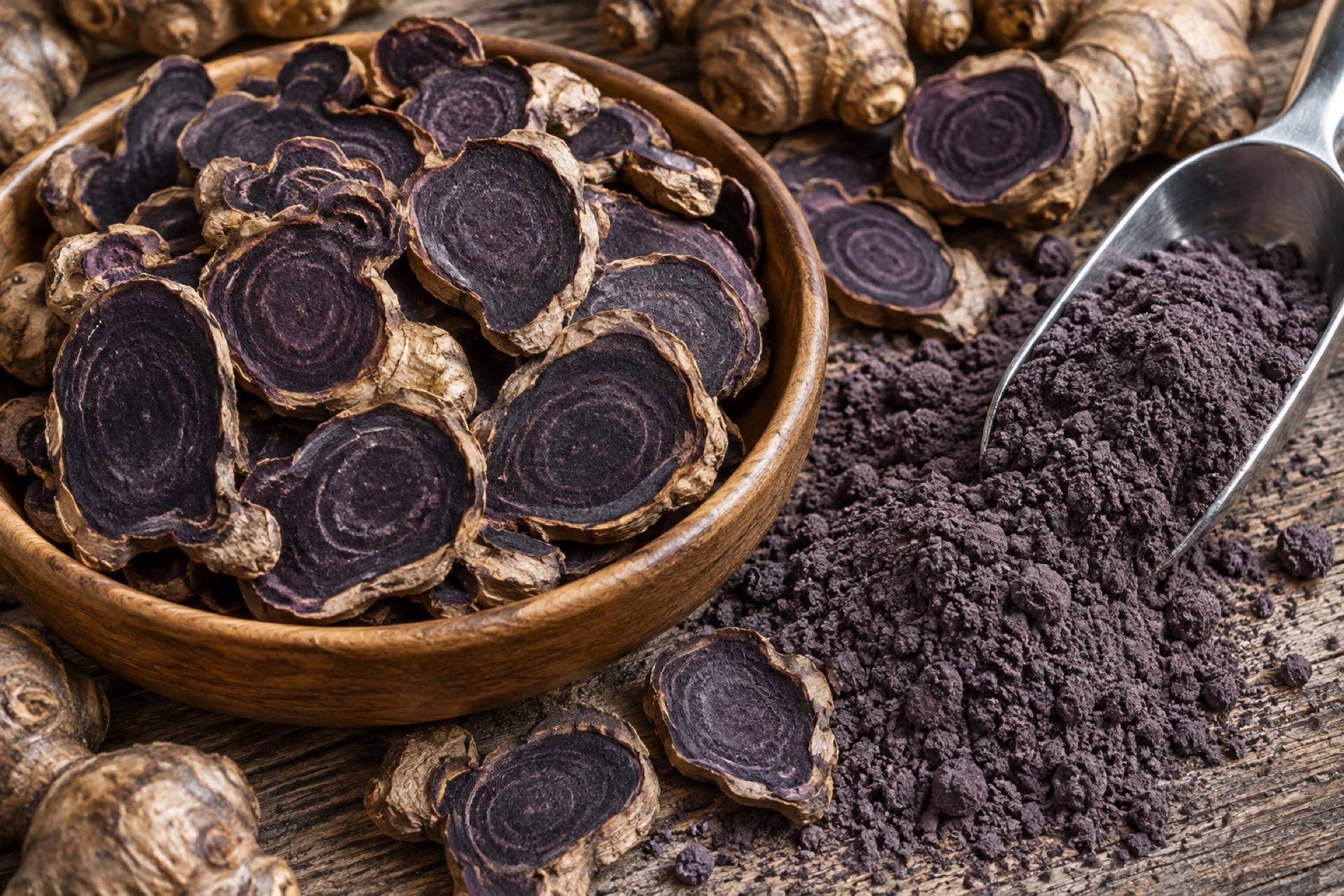
Black ginger, also traded as black galingale, is the rhizome of Kaempferia parviflora Wall. ex Baker, a member of the ginger family (Zingiberaceae) alongside ginger, galangal and turmeric. The part used is the underground rhizome, whose flesh is deep purple to almost black — the origin of the common name. In Thailand it is grown mainly in Loei, Phetchabun, Phitsanulok, Chiang Mai and Chiang Rai, and harvested at around 8 to 12 months.
For a supplement or cosmetic manufacturer, the phrase “black ginger extract” is not yet enough information to buy on. Extracts from the same rhizome can differ several-fold in active content depending on growing region, harvest age, extraction method and the form the material is supplied in. This page sets out the working detail: the correct botanical names, the marker compounds used for quality control, how the material is produced, which extract forms exist, and where the regulatory limits sit.
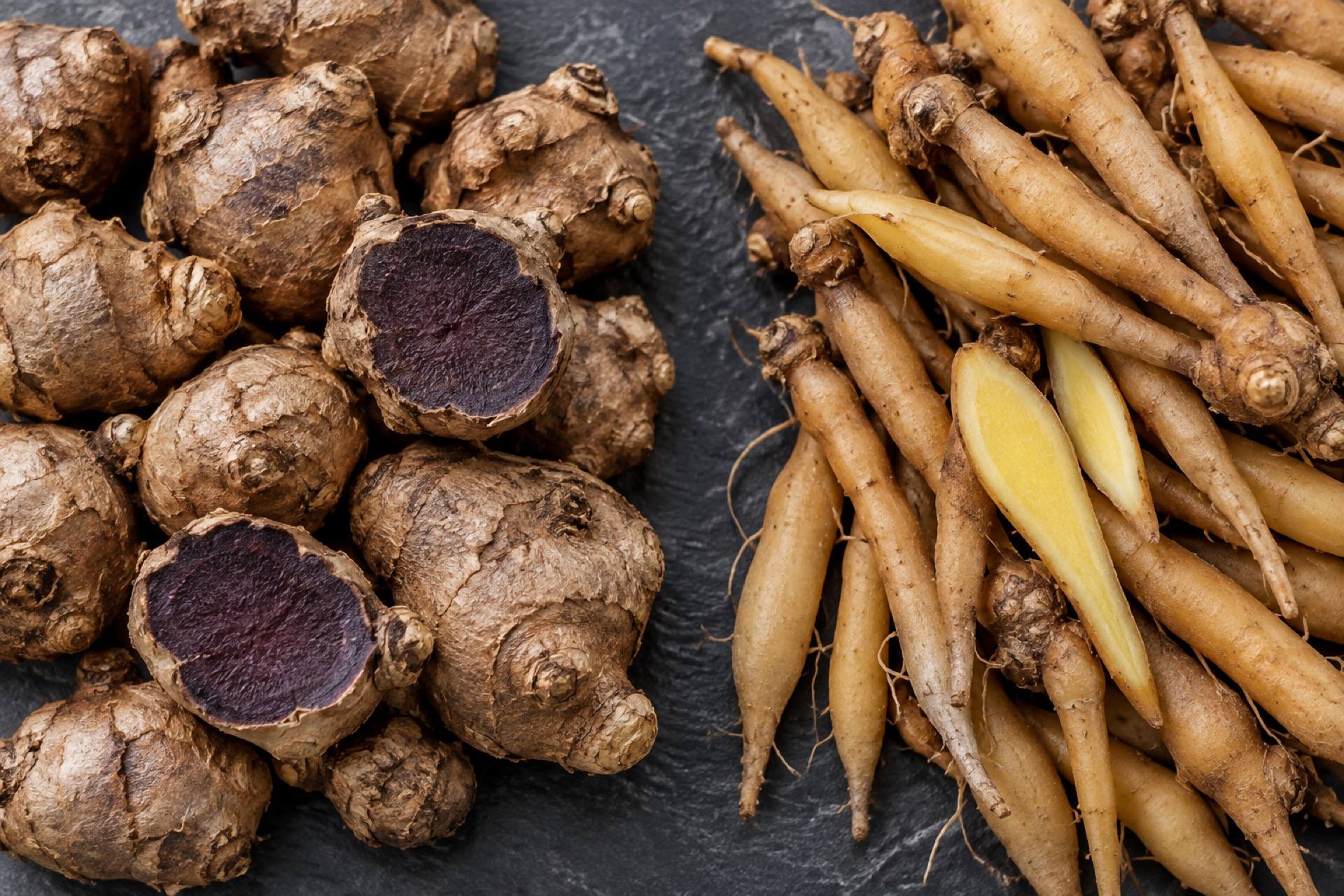
Black ginger, black galingale and fingerroot are not the same plant
This distinction has caused real errors in trade documents, so it is worth settling at the outset.
| Common name | Botanical name | Trade names in English | Distinguishing feature |
|---|---|---|---|
| Black ginger (Krachai Dam) | Kaempferia parviflora Wall. ex Baker | Black Ginger, Black Galingale | Rounded rhizome, deep purple to black flesh |
| Fingerroot (Krachai) | Boesenbergia rotunda (L.) Mansf., syn. Boesenbergia pandurata | Fingerroot, Chinese Keys | Slender finger-like roots, yellow flesh |
The confusion arises because an older synonym for fingerroot is Kaempferia pandurata, which looks close to the genus of black ginger. As a result many documents carry the synonym of the wrong species, and the research cited alongside them turns out to describe a different plant altogether.
Commercially this is not a detail. The botanical name on the Certificate of Analysis, on the registration dossier and in the cited literature all have to refer to the same species. Overseas buyers who check documents carefully will reject a consignment as soon as they find a mismatch.
The actives: methoxyflavones
The characteristic constituents of black ginger are flavones bearing methoxy groups — the methoxyflavones — and these are the compounds used as quality markers in industry: 5,7-dimethoxyflavone (DMF), 5,7,4′-trimethoxyflavone (TMF) and 3,5,7,3′,4′-pentamethoxyflavone (KPMF-8). Other flavonoids, chalcone, tannin and saponin are also present, while the essential oil is dominated by borneol and terpene compounds.
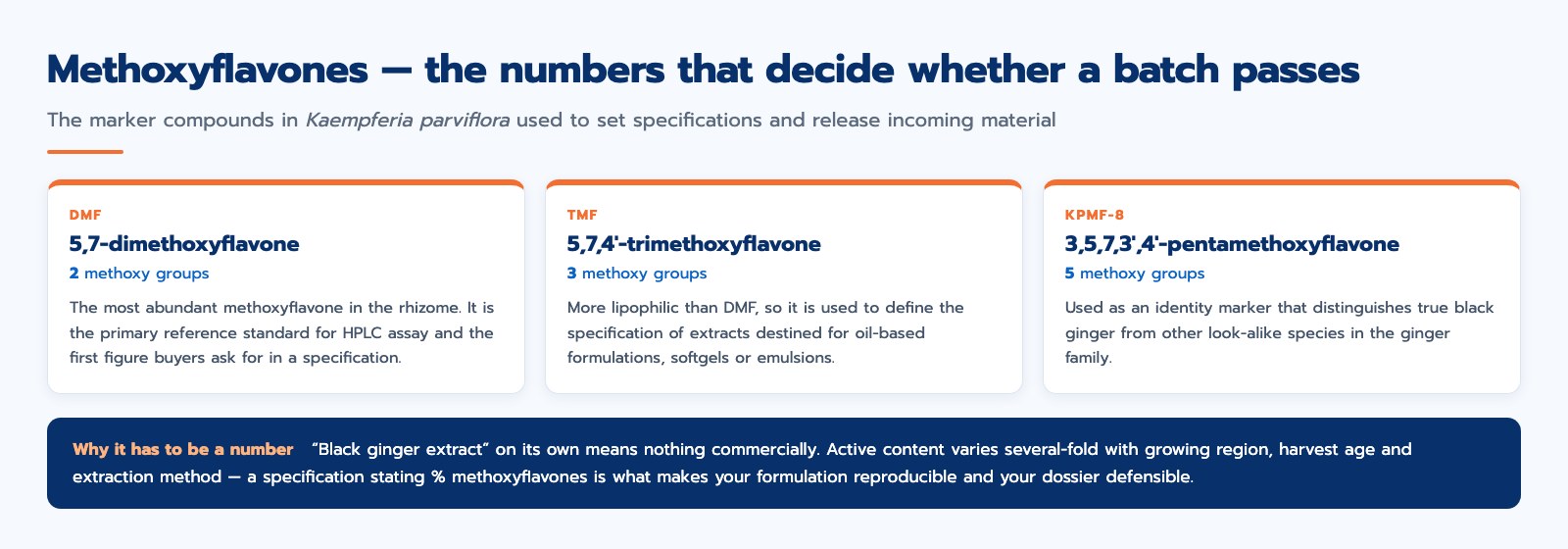
The number of methoxy groups has a direct bearing on how the material behaves. The more methoxy groups a compound carries, the more lipophilic it is and the less readily it dissolves in water. An extract destined for a clear beverage therefore has to be reformulated; the same dry powder used in a softgel will not work. This is why the choice of extract should start from the finished formulation rather than from the price per kilogram.
What published research says about black ginger
Black ginger has a long record of use in traditional Thai medicine, and a body of published work examines it from several angles. The areas reported most often are:
- Antioxidant activity. Flavones from black ginger show free-radical scavenging capacity in in-vitro assays, which is why the extract appears in skin-care and anti-ageing formulations.
- Cell-level anti-inflammatory and anti-allergic activity. Purified compounds from the rhizome have been reported to inhibit the release of inflammatory mediators in cell models.
- Antimicrobial activity. Laboratory studies have examined the effect of the extract on certain micro-organisms.
- Physical performance research. Methoxyflavones have been studied in relation to enzymes involved in blood flow, which is the background to the use of black ginger in tonic products.
Research findings are not marketing claims
Results from in-vitro or animal studies cannot be transferred directly onto a label or into advertising. The wording actually used has to be assessed against the product category and the claim rules of the Thai FDA, and equivalents apply in export markets. Statements that a product treats, relieves or prevents any disease are not permissible for either supplements or cosmetics.
Results from in-vitro or animal studies cannot be transferred directly onto a label or into advertising. The wording actually used has to be assessed against the product category and the claim rules of the Thai FDA, and equivalents apply in export markets. Statements that a product treats, relieves or prevents any disease are not permissible for either supplements or cosmetics.
From rhizome to industrial-grade raw material
The distance between “a herb with published research behind it” and “a raw material a factory can run” is batch-to-batch consistency. A manufacturer needs material that performs identically every time — active content, colour, odour, moisture and behaviour in the formula. That consistency is not achieved by testing at the end; it is built in at every stage upstream.
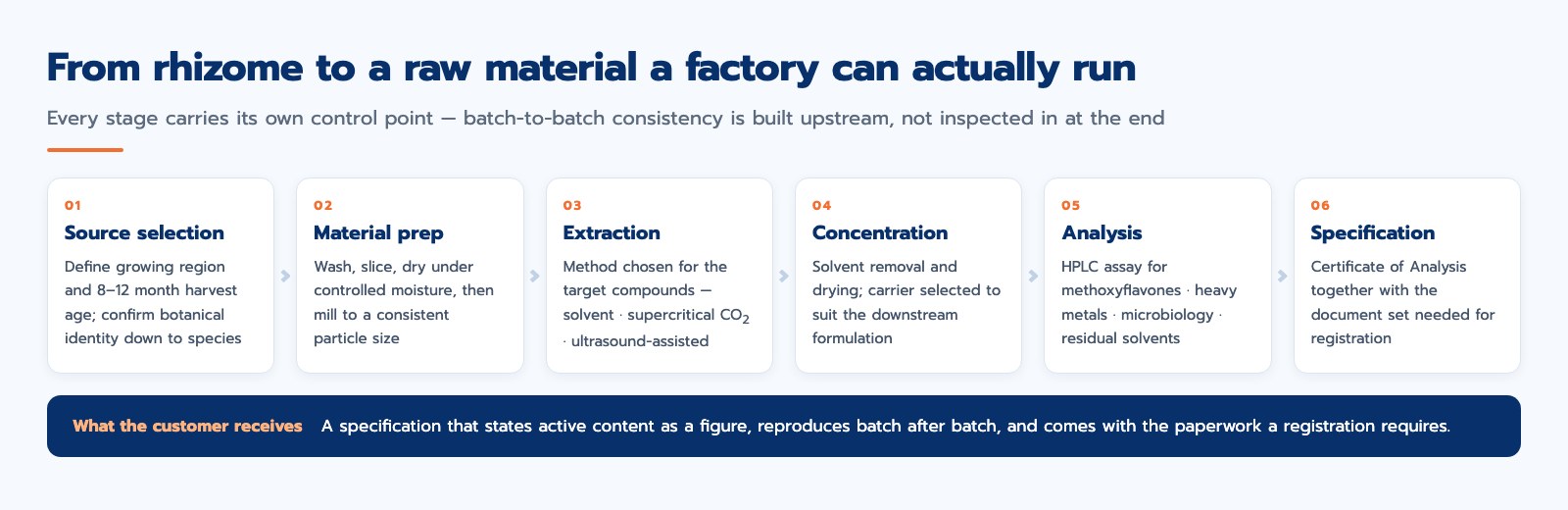
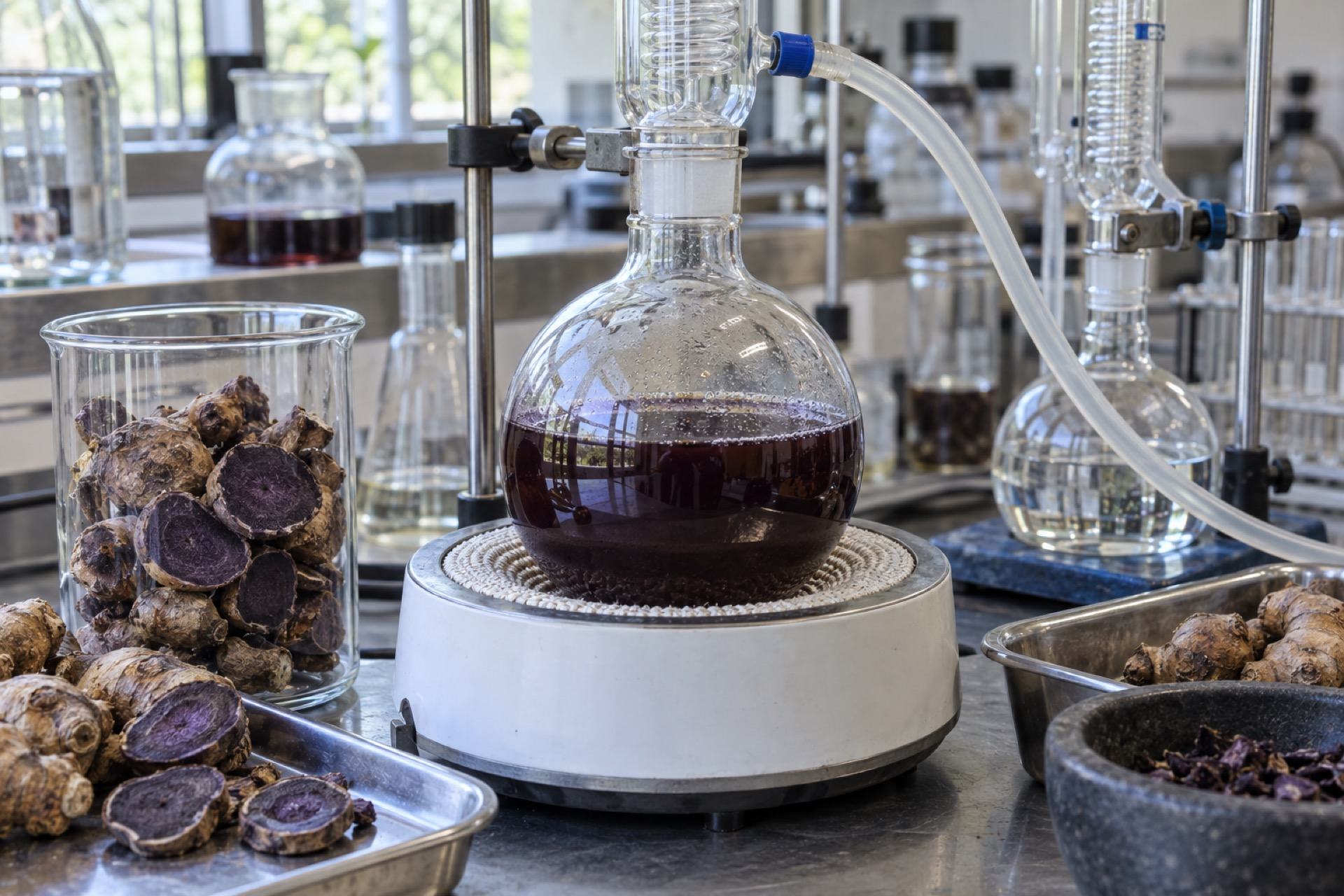
Several extraction routes are available for black ginger, and each yields a different compound profile. Solvent extraction gives good cost control and scales easily. Supercritical CO2 extraction leaves no residual solvent and suits lipophilic compounds. Ultrasound-assisted extraction shortens the process and lowers the temperature, which matters for heat-sensitive constituents. The choice is a joint decision between the target compounds, the cost per unit and the requirements of the destination market.
Extract forms available
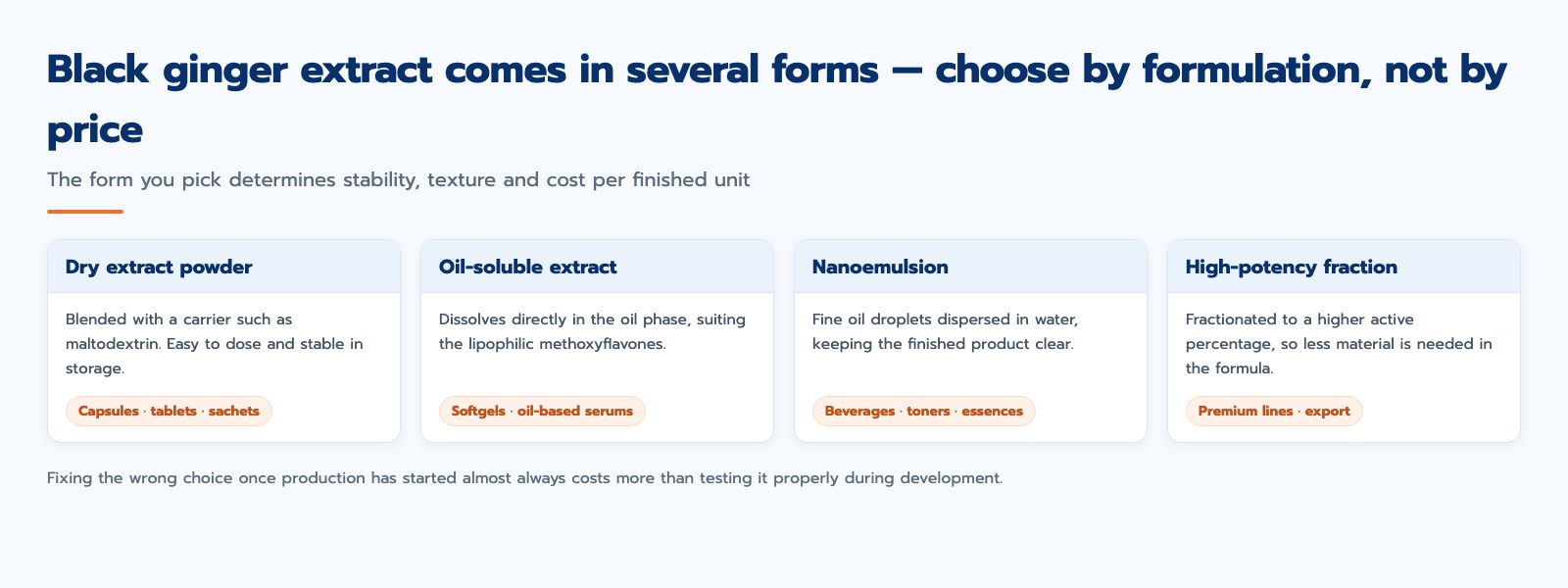
Dry extract powder is the most widely used form because it is easy to dose and stable in storage. In aqueous formulations, or where clarity matters, powder tends to cause dispersion problems and haze; an oil-phase extract or a nanoemulsion answers that better. A fractionated, higher-potency extract reduces the quantity that has to go into the formula, which affects both texture and total cost.
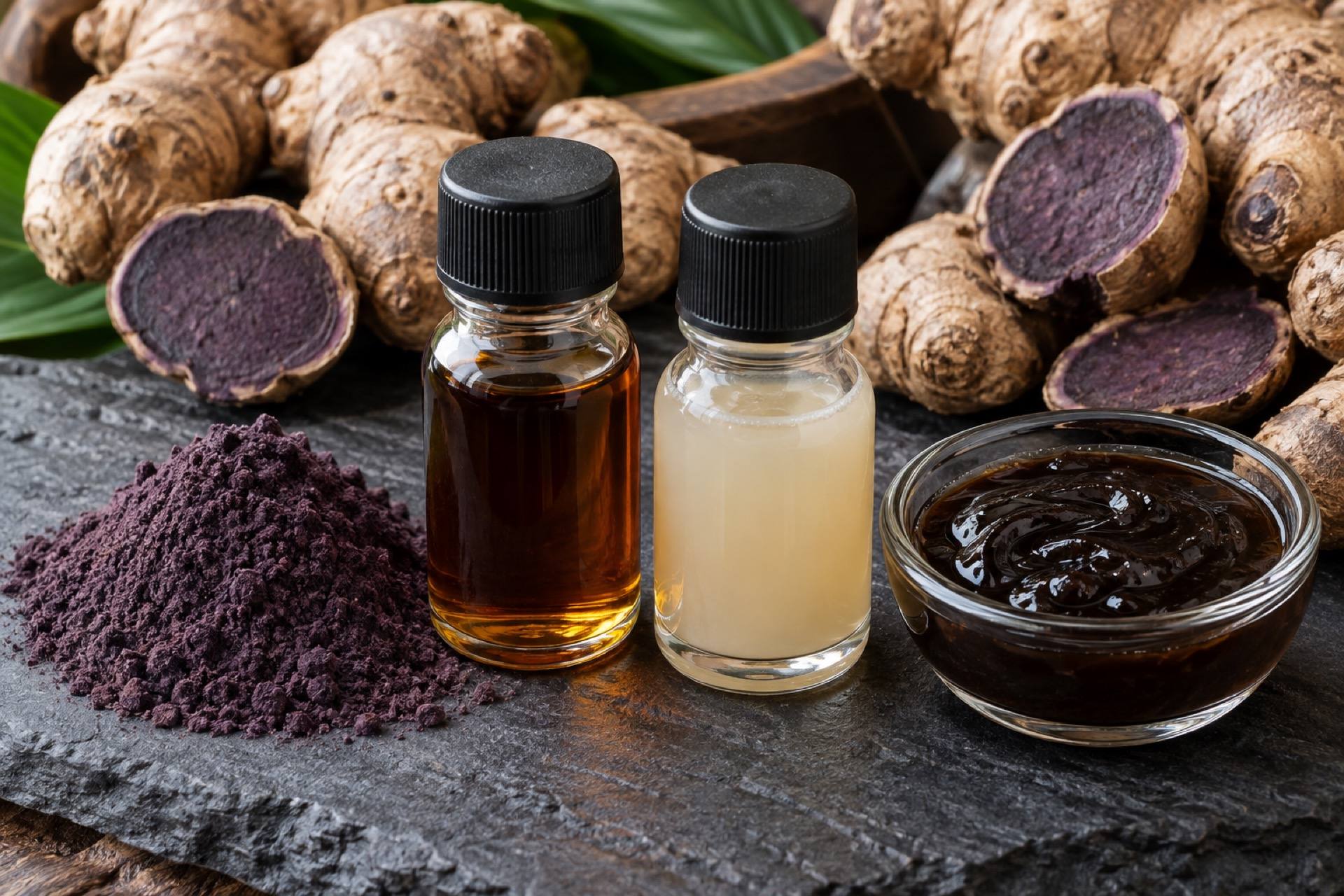
Black ginger by product category
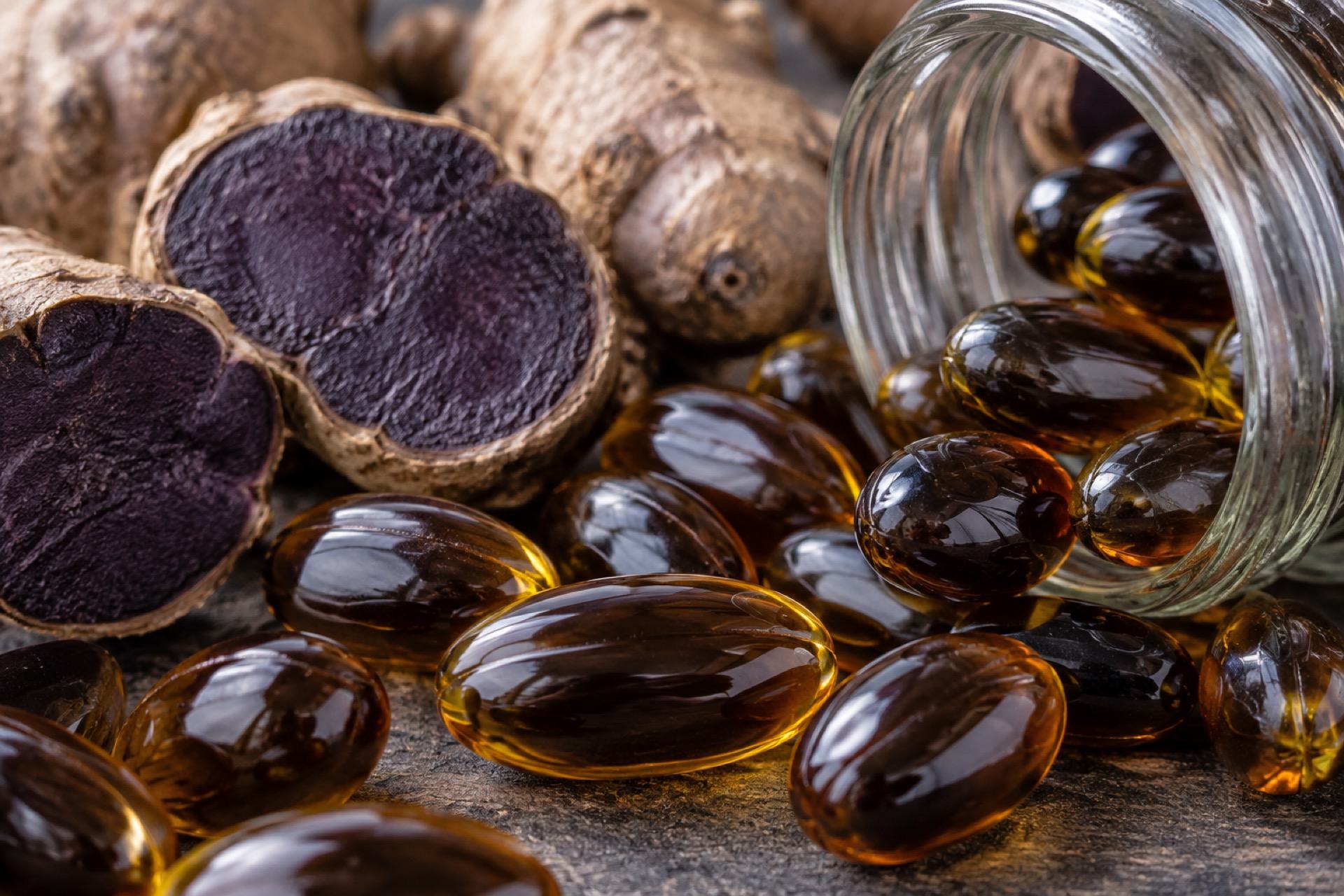
In dietary supplements, black ginger is used most often in capsules and softgels. Because the methoxyflavones are lipophilic, an oil phase gives both better stability and more consistent dose per unit. Functional beverages are the fastest-growing format, and they require an extract that has been adapted to disperse in water; without that, separation or ring deposits appear on the bottle wall during storage.
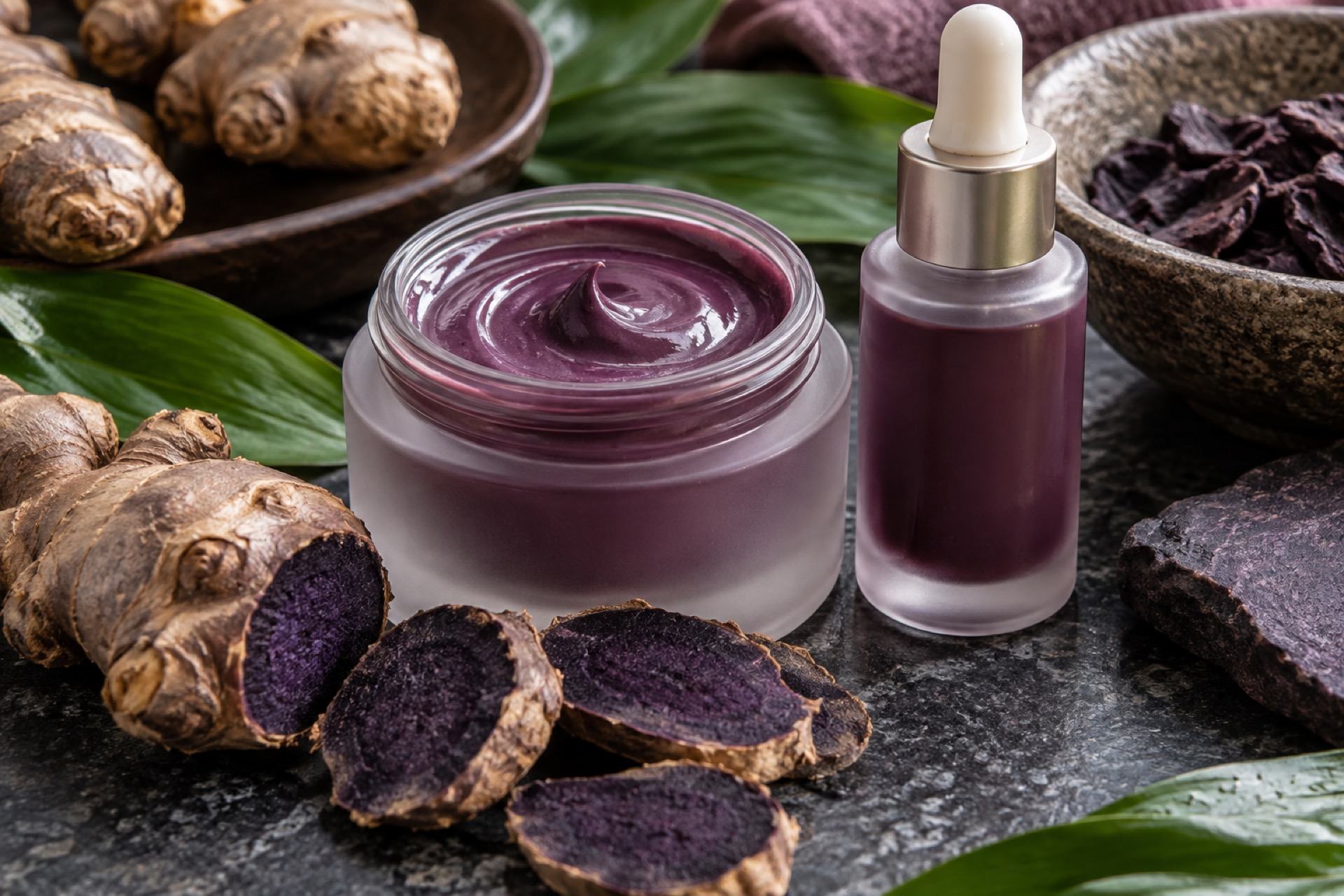
In cosmetics, black ginger appears in facial and hair-care products. The recurring problem is the depth of colour of the extract, which carries straight through into the finished product. It can be handled by reducing the dose through a more concentrated extract, by selecting an extraction process that yields a lighter colour, or by designing the product shade around the raw material from the start.
For export markets, additional requirements have to be prepared in advance: documented provenance of the raw material, analysis from a recognised laboratory, and confirmation that the ingredient is permitted under the destination country’s lists. That document set should be assembled alongside formulation development, not when the overseas customer asks for it.
What your specification should state
When purchasing black ginger extract, the documentation supplied with the material should cover at least the following.
| Item | What must be stated | Why it matters |
|---|---|---|
| Species and plant part | Full botanical name, and rhizome specified | Confirms it is not a different species |
| Active content | % methoxyflavones with the analytical method named | The figure used for formulation and release |
| Extraction ratio | For example 10:1, with the solvent used | Allows fair price comparison between suppliers |
| Carrier | Type and proportion of carrier | Affects the calculation of net actives |
| Safety parameters | Heavy metals, microbiology, residual solvents | Required for registration and traceability |
| Shelf life and storage | Period and recommended temperature | Prevents active loss before the material reaches the line |
Safety and claims
Black ginger has a long history of dietary and traditional use, but a commercial product still needs a defined use level and clear guidance for groups who should consult a physician first, such as pregnant and breastfeeding women and people on regular medication. On the cosmetic side, irritation testing should be completed before launch. On the supplement side, the use level has to sit within the limits of the product category concerned.
The most common failure is in the wording used in communication rather than in the formulation itself. Transcribing research results directly into a statement that the product treats or prevents a disease turns an otherwise compliant product into a legal problem. Setting the wording during product design is far cheaper than reprinting labels after production.
How TIBD works with black ginger
TIBD operates as the infrastructure that moves research out of the laboratory and into real production. On black ginger, the scope covers:
- Sourcing raw material and confirming botanical identity to species level
- Developing the extraction process and defining a reproducible active specification
- Testing and analysis of active compounds in our own laboratory
- Scaling from laboratory batch to factory production
- Preparing the document set for registration and for negotiation with partners
The deep-tech research network working with TIBD means that problems beyond conventional extraction — improving aqueous solubility, or building a delivery system — can be taken forward in-country rather than sent abroad.
Frequently asked questions
What is black ginger, and what else is it called?
Black ginger is the rhizome of Kaempferia parviflora. In English trade it is sold as black ginger or black galingale, and sometimes transliterated as Krachai Dam. Official documents should always carry the botanical name, because “black ginger” is applied to other plants in some contexts.
How does black ginger extract differ from black ginger powder?
Powder is the dried rhizome, milled — it still contains the whole rhizome including fibre and starch. An extract has had the target compounds drawn out and concentrated, so the active content can be stated as a figure and a much smaller quantity is used in the formula.
What active percentage should the specification state?
There is no single figure that fits every application, because it depends on the product format and how much can be incorporated. The practical route is to start from the active amount required per serving or per gram of finished product, then work backwards to the raw material specification.
Can we order a small quantity for formulation trials first?
Yes, and you should. Testing compatibility and stability before committing to a large batch reduces the risk of problems with colour, odour, sedimentation and change in active content during storage.
Can the same extract be used in both cosmetics and supplements?
The same source material can be used, but the form and the specification usually need to differ, because the formulation phase, the microbiological requirements and the registration documents are not the same for the two categories.
Reference
Than Than Yee and Kyi War Yi Lwin. “Study of Phytochemical Composition on Kaempferia Parviflora Wall. Ex Baker” IFFF-SEM 7 (2019): 128-136.
Tewtrakul, Supinya, Sanan Subhadhirasakul, and Sopa Kummee. “Anti-allergic activity of compounds from Kaempferia parviflora.” Journal of ethnopharmacology 116.1 (2008): 191-193.
Temkitthawon, Prapapan, et al. “Kaempferia parviflora, a plant used in traditional medicine to enhance sexual performance contains large amounts of low affinity PDE5 inhibitors.” Journal of ethnopharmacology 137.3 (2011): 1437-1441.