



Deep Tech Innovators · 01
Cold Atmospheric PlasmaElectricity you can touch,gently
Research from the Plasma Research Laboratory
Kasetsart University, Bangkhen
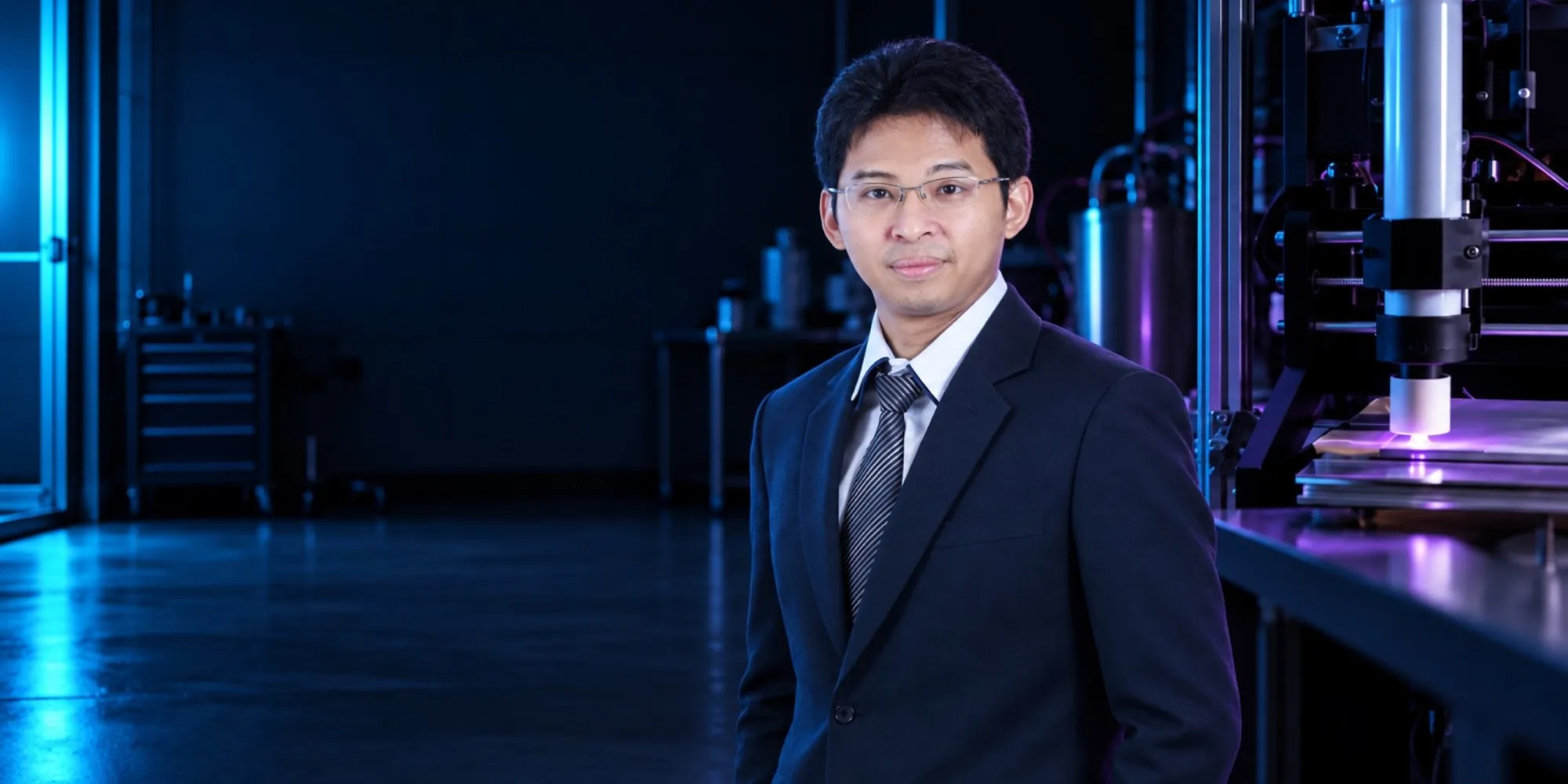
Deep Tech Innovator · Lead researcherAssoc. Prof. Dr. Siwapon SrisonphanPlasma Research LaboratoryDepartment of Electrical Engineering, Faculty of Engineering, Kasetsart UniversityProfile and contact ↓
Deep Tech Innovator · Lead researcher
From designing transistors
to designing a way to wake up a rice seed
Assoc. Prof. Dr. Siwapon SrisonphanDepartment of Electrical Engineering, Faculty of Engineering, Kasetsart University
Assoc. Prof. Dr. Siwapon Srisonphan worked in nanoelectronics, the same level of work that goes into CPUs. When he chose a PhD lab, he chose one where every instrument had to be built from scratch, because he had already worked out that back in Thailand he might have to build his own equipment. That is exactly what happened. What he could build was plasma struck by electrical discharge in ordinary air, with no expensive vacuum system.
A question set more than ten years ago
When we came back to Thailand we had nothing. None of the equipment we had trained on was here. We could not do anything. So we spent time looking at what was around us, and stepped back to ask what we actually could build
 Assoc. Prof. Dr. Siwapon SrisonphanDepartment of Electrical Engineering, Kasetsart University, Bangkhen
- Bachelor's · Electronic EngineeringFirst-class honours · KMITL
- Master's · Electrical EngineeringThe University of Texas at Austin · Ministry of Science scholarship
- PhD · Electrical and Computer EngineeringUniversity of Pittsburgh · published in Nature Nanotechnology
- Plasma Research LaboratoryKasetsart University, Bangkhen · same campus as TIBD
- Grand Winner 2026TECH PLANTER Thailand · Plasma-activated liquid (PAL)
Contact the research team directlyPlasma Innovations
For technical questions, research collaboration, and laboratory testing, reach Assoc. Prof. Dr. Siwapon Srisonphan and his team through these channels.
Emailplasma.innotech@gmail.comLINE OfficialPlasma InnovationsWebsitePlasma InnovationsPlasma Innovations websiteComing soon
The technology
What is cold atmospheric plasma?
The fourth state of matter, generated close to room temperature. That is what lets it touch seeds, fresh produce, and skin without thermal damage.
Give a gas enough energy that electrons break away from their atoms and it becomes plasma, which in nature runs thousands of degrees hot. Cold plasma accelerates only the electrons, which carry almost no mass, while the far heavier gas molecules stay cool. The result is fast, reactive chemistry on a material that never heats up
Close to room temperatureStarts from air and electricityNo vacuum system needed
Temperature of each kind of plasmaLogarithmic scale · approximate values
Lightning≈ 30,000 °C
Surface of the sun≈ 5,500 °C
Cold plasma · gas temperatureClose to room temperature
- 01Ordinary airStep 1 · Input
It starts with air and electricity. Nothing is added to the process.
- 02High electric fieldStep 2 · Energy
A discharge across the gap accelerates electrons until they carry enough energy to break molecules apart.
- 03Reactive speciesStep 3 · Chemistry
Chemically active particles form, and their lifetime is very short.
- 04Surface effectStep 4 · Result
They act at the surface of the material, then decay back into ordinary air.
5 plasma platforms
Five platforms the research team is developing
Each one distributes energy differently, so each suits a different problem. Choosing the right format is half the work.
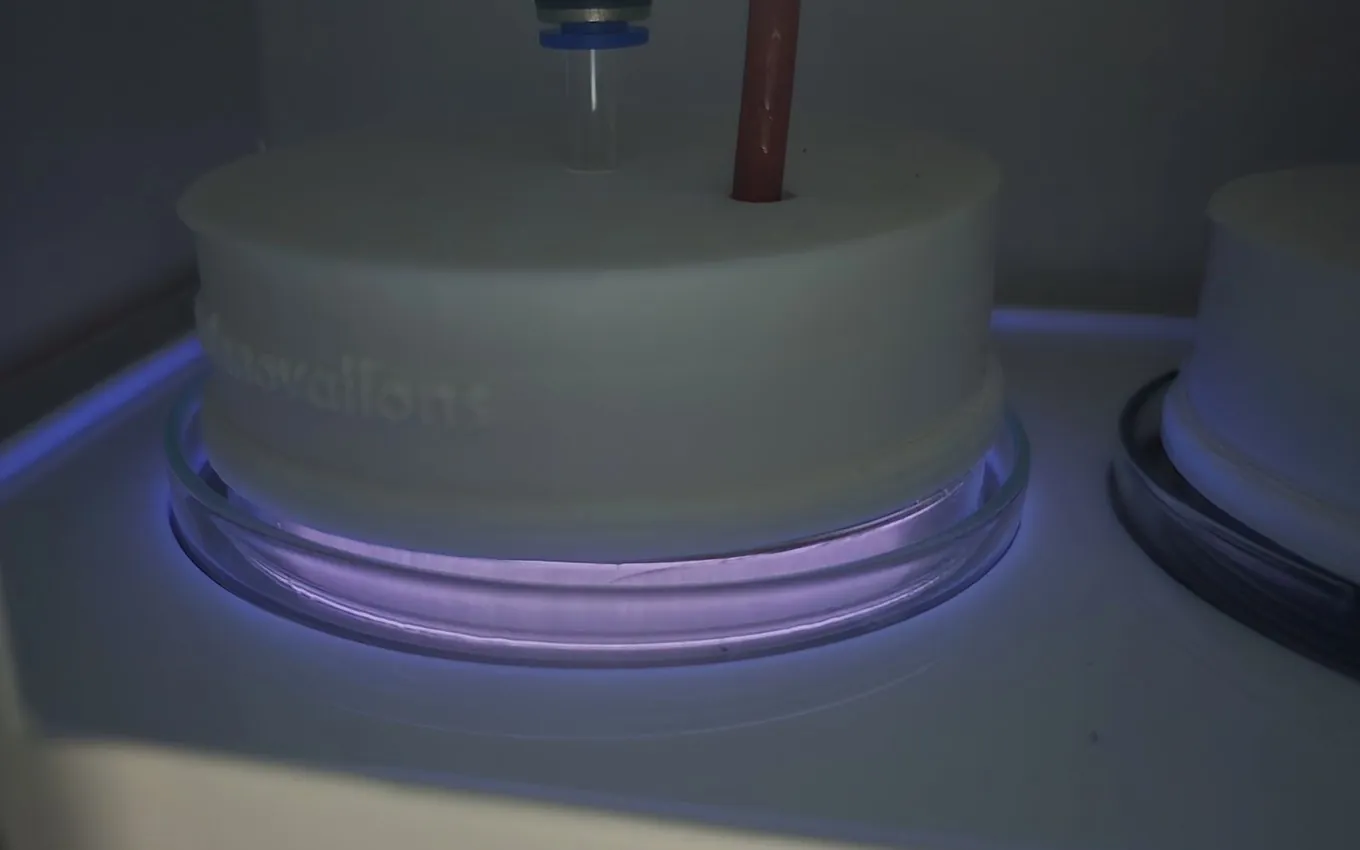 01DBDDischarge through a dielectric sheetDielectric Barrier Discharge
- Strength
- Even energy across a wide area
- Best for
- Seeds and other solid materials
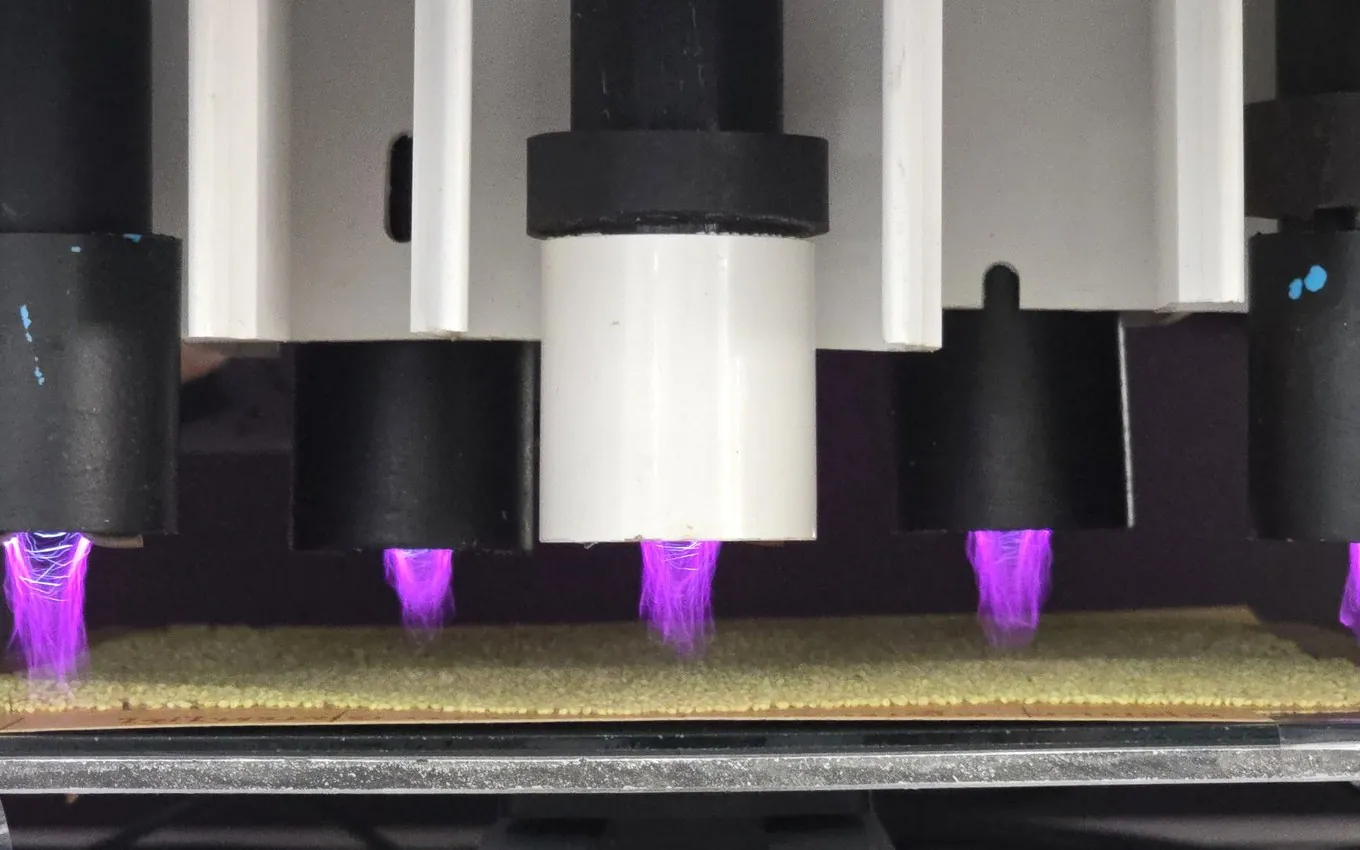 02Gliding ArcAn arc that travels along the electrodesGliding Arc
- Strength
- Higher power than DBD · heads can run in a row
- Best for
- Liquids and gases in volume
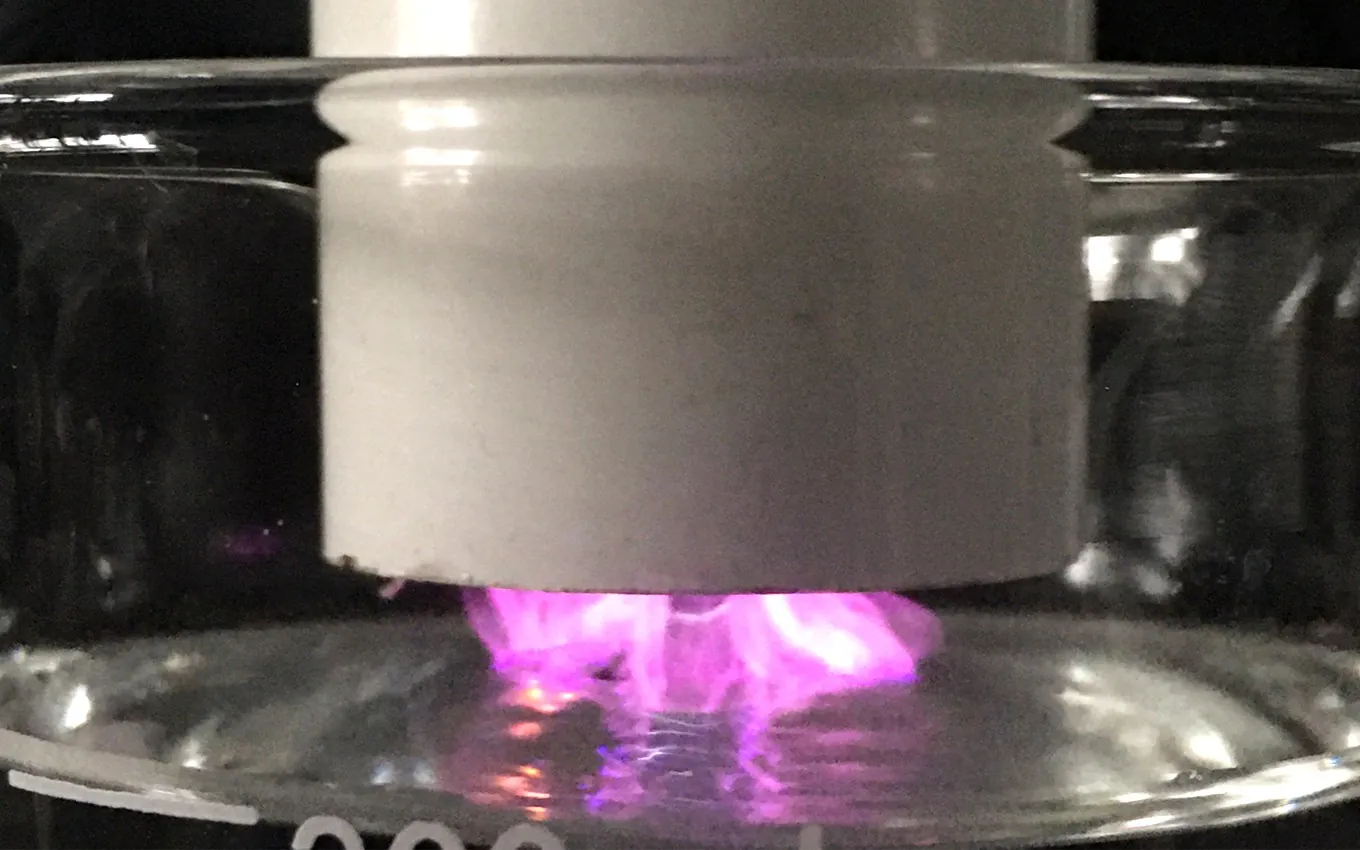 03PAWWater energised by plasmaPlasma Activated Water
- Strength
- No plasma source needed at the point of use · activity falls off over time
- Best for
- Steps where water is already present, such as washing and soaking
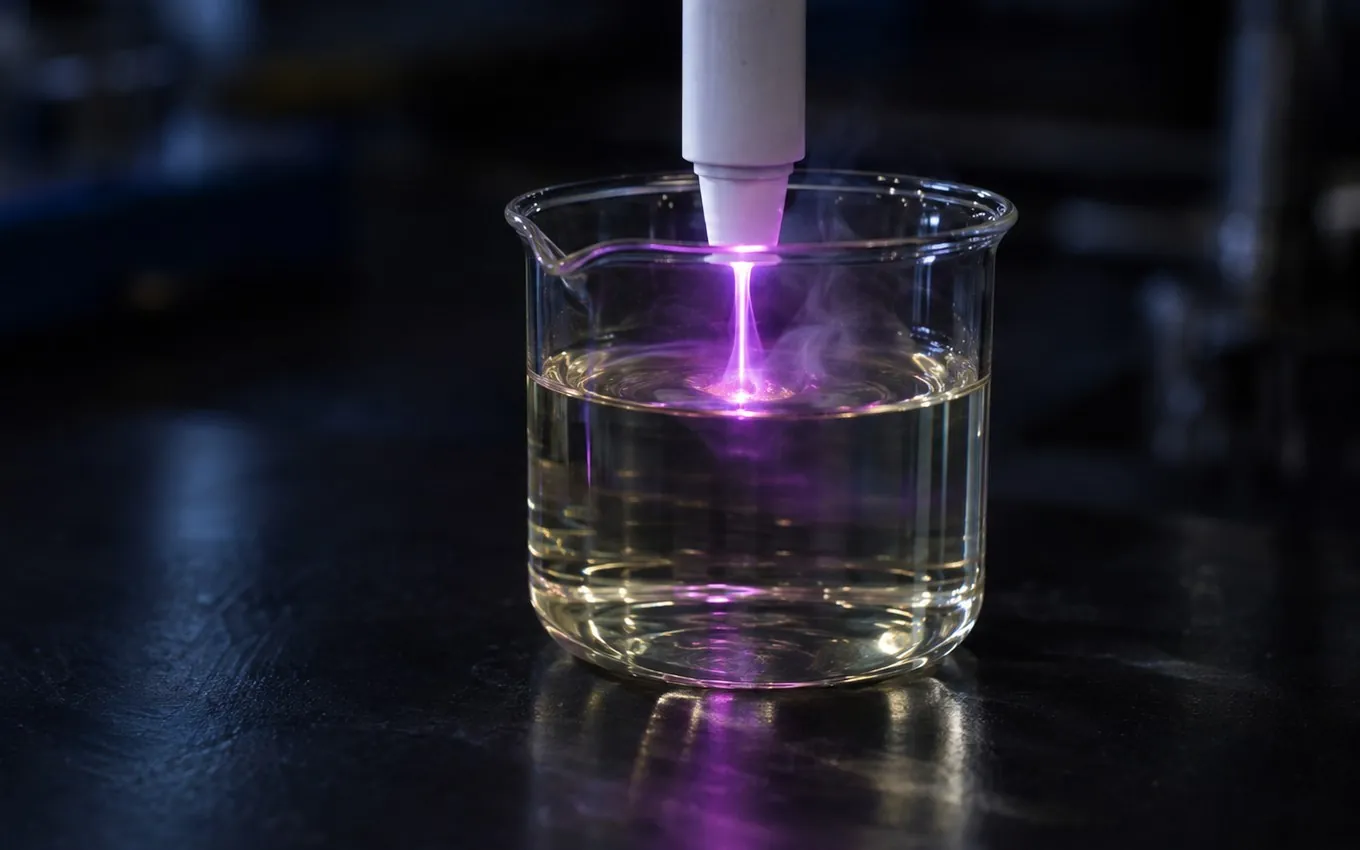 04PASA solution energised by plasmaPlasma Activated Solution
- Strength
- Starts from an organic acid · activity lasts longer and stays more stable than PAW
- Best for
- Work that needs longer-lasting activity than plasma-activated water
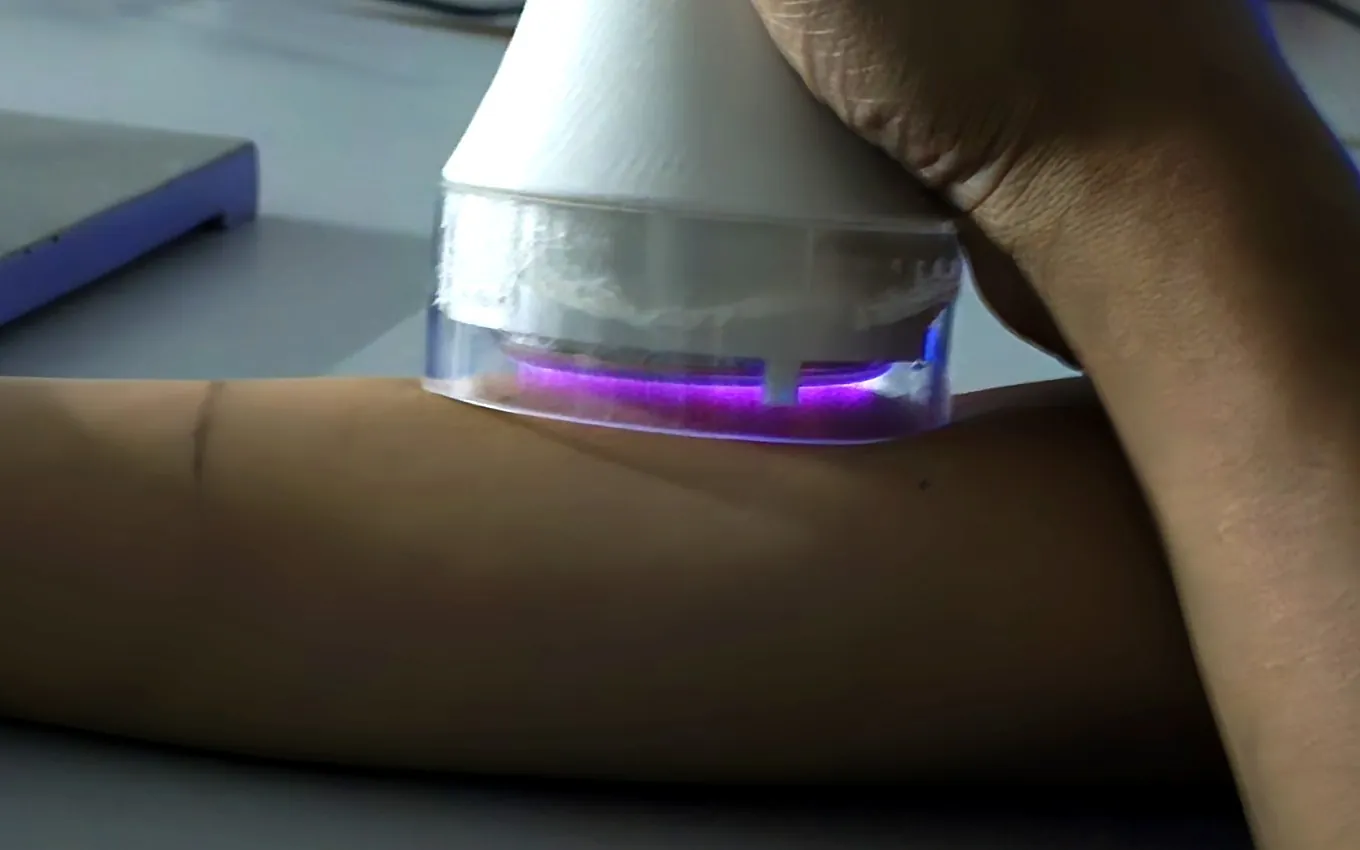 05Skin deviceIn developmentDevices for skin applicationsSkin-facing Device
- Strength
- Portable format · in development
- Best for
- Skin work (the line between cosmetic and medical device must be drawn clearly)
Lab test results
Measured results from five laboratory tests
Every image and number comes from real laboratory testing, from seeds and material surfaces to test skin and plasma-activated liquid.
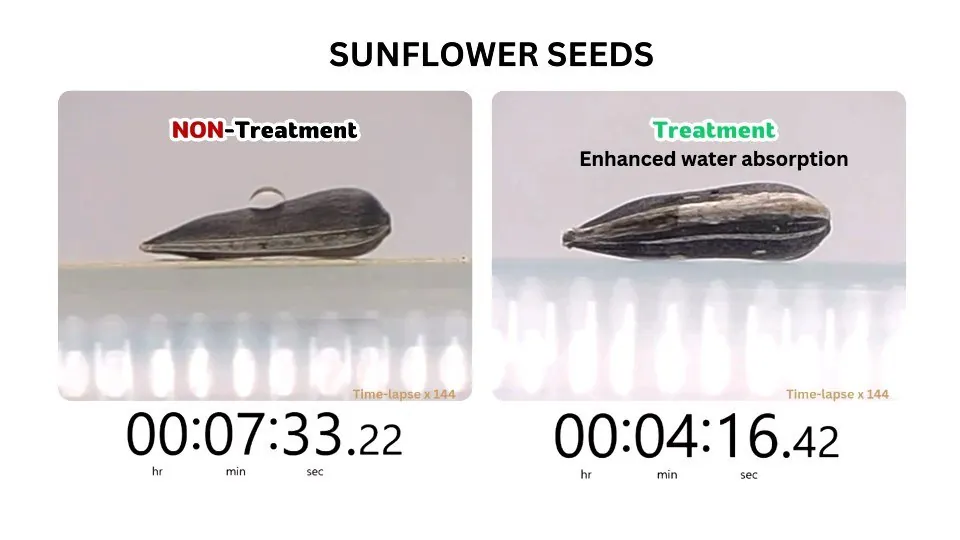
Result 1 · Sunflower seed
Time for a seed to absorb water
Untreated07:33
After cold plasma04:16
About 43% fasterRecorded by time-lapse photography under identical conditions
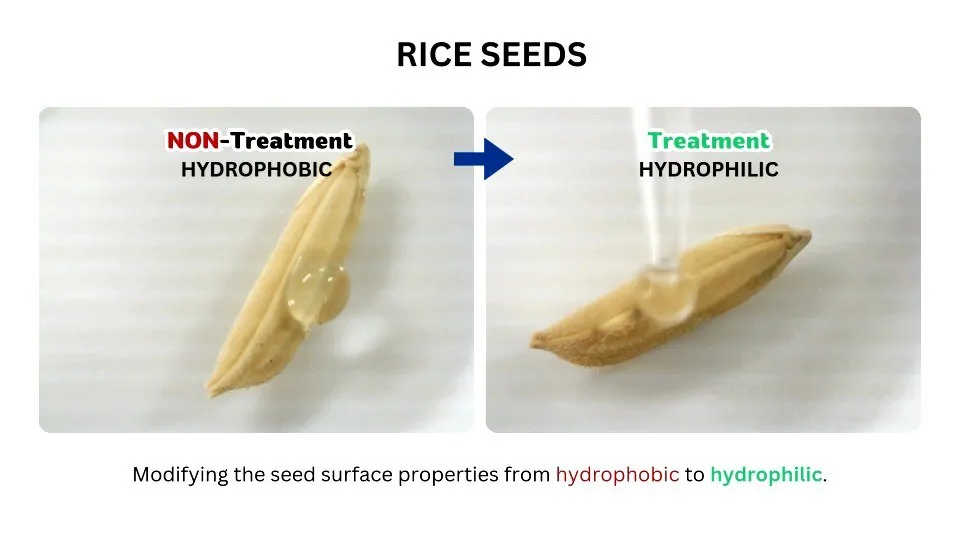
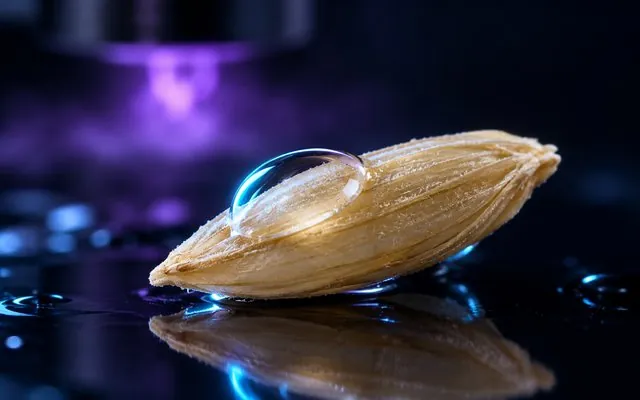
Result 2 · Rice seedThe surface turns from water-repelling to water-loving
On an untreated seed a water droplet beads up. On a plasma-treated seed it spreads out flat. That is the mechanism behind faster water uptake.
HydrophobicHydrophilic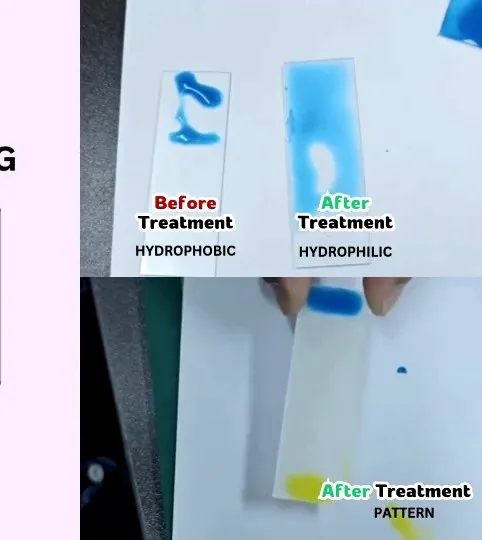
Result 3 · Material surfaceBefore and after, on a sheet of glass
The same mechanism helps materials and packaging take coating, printing, or bonding better, with no solvent involved.
Water beads upWater spreads flatUntreated skin15:18
After low-power plasma05:49
About 2.6 times fasterUses plasma below 10 watts with no heating of the skin. Recorded by time-lapse.
Bacteria used in the test3 species
- Staphylococcus aureus
- Pseudomonas aeruginosa
- Salmonella Choleraesuis
Tested by an external laboratory (January 2026). This is a laboratory result, not a product claim.
From the laboratory
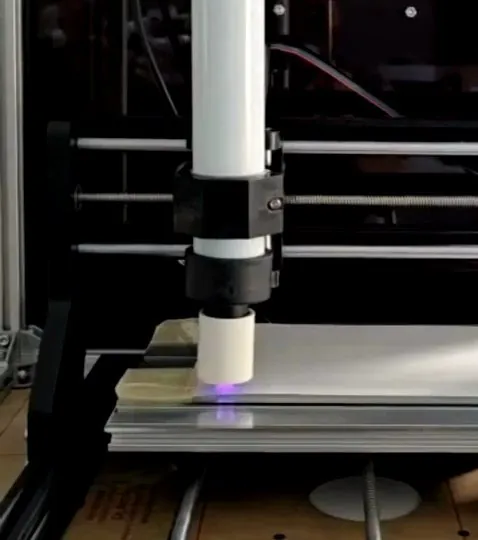
Tap or hover a thumbnail to enlarge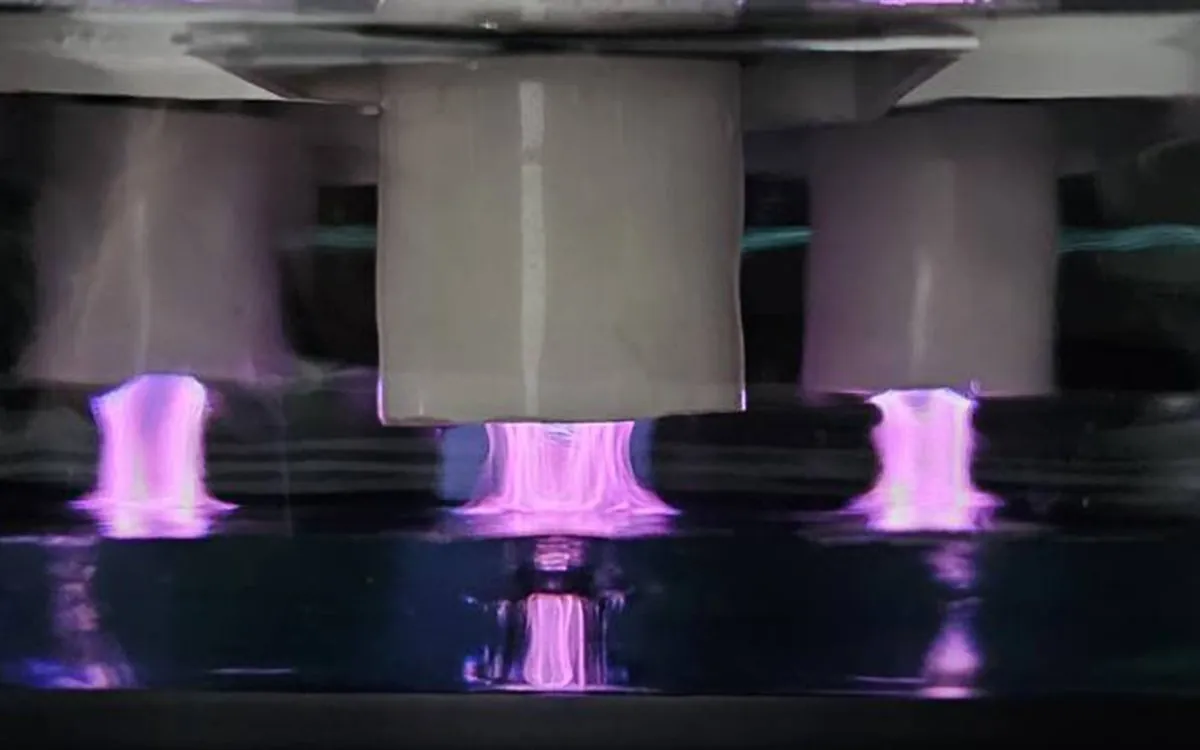
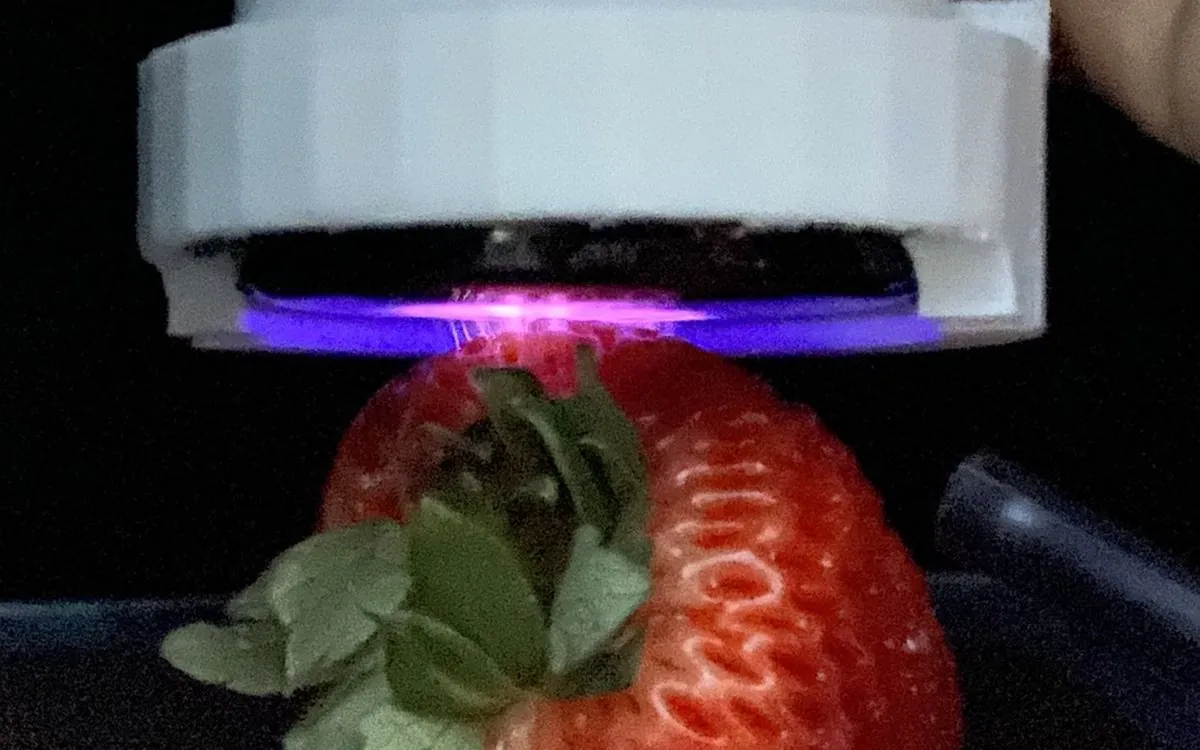
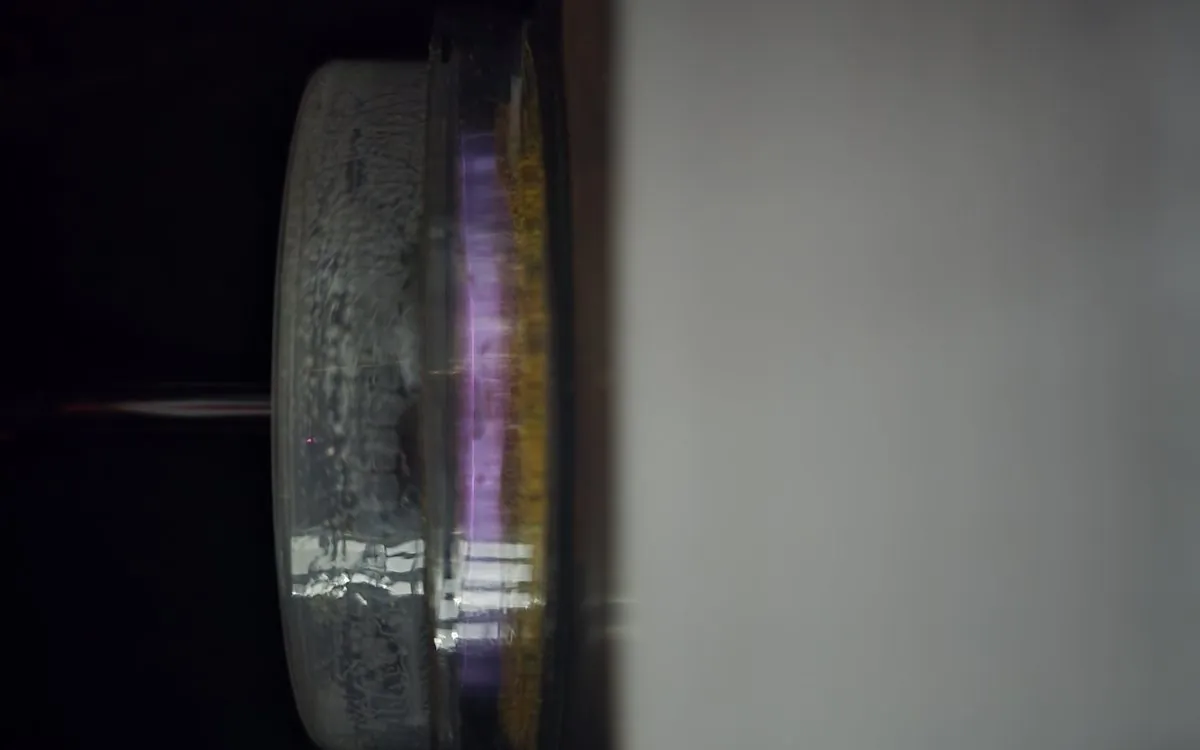
Test result images courtesy of the research team, Plasma Research Laboratory, Kasetsart University
The hardest problem
Research that works and research that can be used are not the same thing
“We do this ten seeds at a time, but we are talking about tens of thousands of kilograms. So how do we get there? … Plasma is not afraid of working small. It is afraid of working big.”
Assoc. Prof. Dr. Siwapon Srisonphan
What we are interested in now needs no vacuum. You switch it on and use it. It can sit on a conveyor. You can hold it in your hand.
- No vacuum system needed
- Can be installed on a production conveyor
- Can be used hand-held
Assoc. Prof. Dr. Siwapon SrisonphanDepartment of Electrical Engineering, Kasetsart University, BangkhenApplications
What cold plasma can be used for
The TECH PLANTER judging panel summarised the scope of this technology in three areas: food safety, agriculture, and healthcare.
Agriculture
Applications
- 1Seed priming
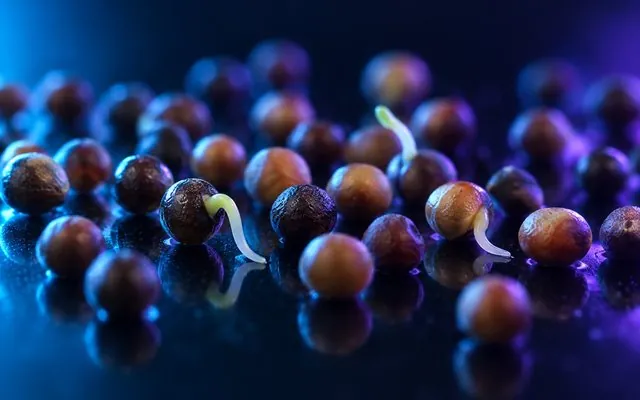
Turns the seed surface from water-repelling to water-loving with no chemical soak, for faster water uptake and more even germination.
- 2Reducing seed-borne fungi
Plasma-treated seeds give healthier seedlings than seeds carrying fungal contamination, without a chemical seed coating.
- 3Silkworm egg hatching without hydrochloric acid
Gliding arc plasma replaces soaking the eggs in hot hydrochloric acid, cutting water and chemical use and lowering the risk to operators.
Food and packaging
Applications
- 1Reducing microbial contamination
On fresh produce and raw materials, without heat and without adding a residue.
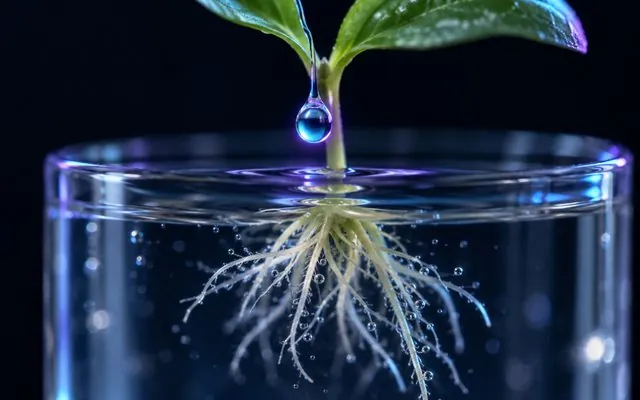
- 2Plasma-activated liquid (PAL: PAW/PAS)
Used in washing or soaking steps in place of certain chemicals. It works through reactive species such as H₂O₂, NO₂⁻ and NO₃⁻.
- 3Surface treatment
Before printing, coating, or bonding, with no solvent involved.
Health and beauty
Applications
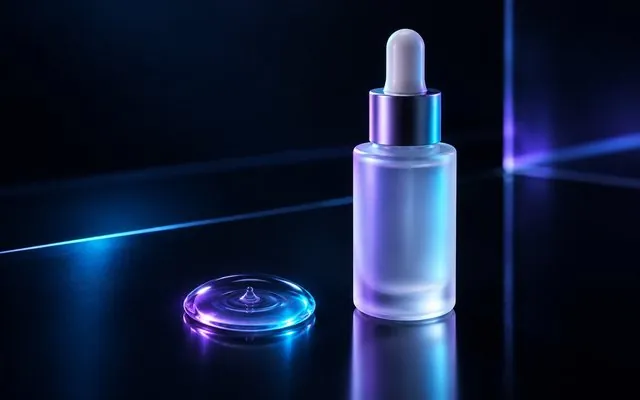
- 1Helping actives pass into the skin
In the laboratory, test skin treated with low-power plasma absorbed a solution about 2.6 times faster, with no heating.
- 2Cutting back on preservatives in cosmetics
One layer of the preservation system. The formulation still has to pass every existing standard.
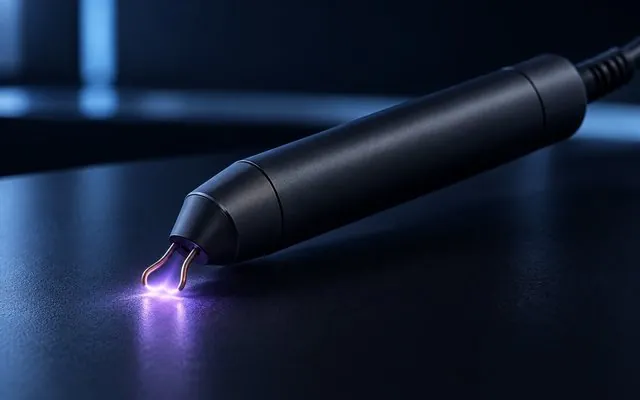
- 3Devices for skin applications
In development. The line between a cosmetic and a medical device has to be drawn clearly.
Frequently asked questions
Questions about cold plasma
The questions companies ask most, answered from the research team’s work.
Still have a question about your own problem?
Send the details to LINE @tibdglobal. The TIBD team will help assess whether cold plasma is a fit.
Talk to the TIBD teamHow is cold plasma different from ordinary plasma?
Ordinary plasma runs so hot that it cannot be used on anything living. Cold plasma is engineered so that the heavy particles stay cool, which is what lets it touch seeds, food, and skin without thermal damage. You will also see it called non-thermal plasma or atmospheric pressure plasma, meaning the same thing.
Does cold plasma leave a residue?
The reactive species the process creates are short-lived and decay back into ordinary air, so they do not accumulate the way a conventional disinfectant chemical does. Even so, using it on food and cosmetics still requires testing, and it has to be assessed against the relevant regulator’s requirements case by case.
Does cold plasma really extend the shelf life of fresh produce?
Reducing the microbial population on the surface of produce slows spoilage, which affects how long it keeps. How much longer depends on the type of produce, the conditions used, and temperature control through the whole chain, so it has to be tested on each grower’s actual produce. There is no single number that applies to every case.
How far can cold plasma be used in skin work and cosmetics?
On the cosmetics side, a plasma-activated liquid is used as one layer of the preservation system in a formulation, and the formulation still has to pass preservative efficacy testing to ISO 11930 or USP 51 exactly as before. On the device side, anything applied directly to skin is still in development, and it has to be clearly established whether it is a cosmetic or a medical device, because the two sit under different legal frameworks.
What is the difference between cold plasma and plasma-activated water?
Cold plasma is the process. Plasma-activated water is the liquid that has been through that process. Its advantage is that it drops into steps where water is already present, such as washing or soaking, without putting a plasma source at the point of use. The trade-off is that its activity falls off over time. The research team calls this group of liquids plasma-activated liquid (PAL).
What is the difference between PAW, PAS and PAL?
PAL (plasma-activated liquid) is the umbrella name for liquids activated by plasma. It comes in two types. PAW (plasma-activated water) starts from water and suits washing, soaking, and agricultural use. PAS (plasma-activated solution) starts from a solution such as lactic acid, can be tuned to a specific job, and holds its activity longer. News and articles that say plasma-activated water or PAL are talking about the same family of technology.
Can cold plasma replace chemicals entirely?
Not entirely. The researcher says so himself: plasma is not the answer to every problem. Conditions that work for one industry may not carry over to another, so it has to be designed and tested case by case.
How does a company get started?
Start by pinning down the problem: where in the process contamination appears, what the chemical cost is. Then assess together whether cold plasma suits that problem, design a small-scale test to prove the result, and only then plan how to scale.
News and articles
Read more about cold plasma
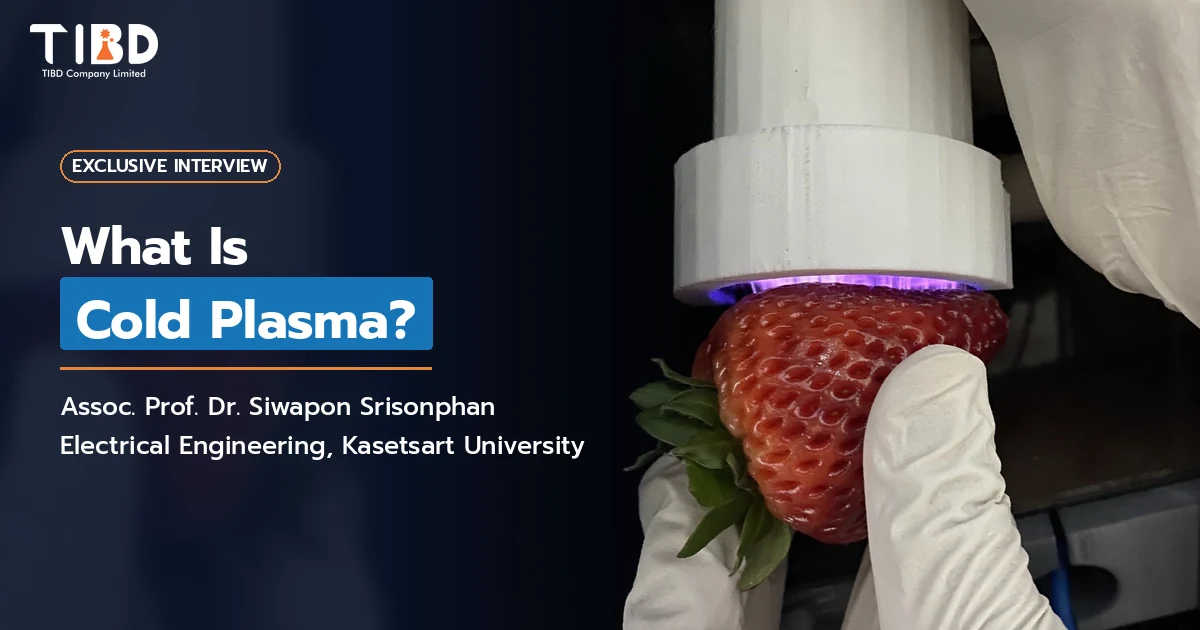 InterviewWhat cold plasma is: an interview with Assoc. Prof. Dr. Siwapon Srisonphan
He explains what cold plasma is without a single equation, and tells how the research began after he came back to Thailand with no equipment.
Interview recorded 11 Sep 2025Read the interview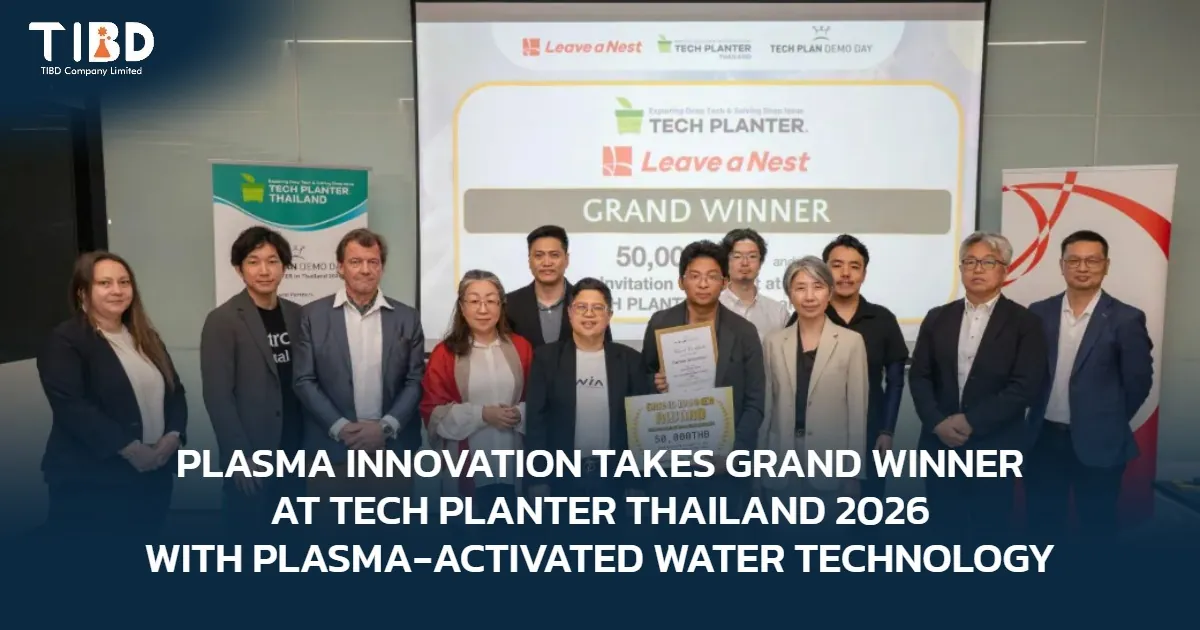 News · TECH PLANTER Thailand 2026Plasma Innovations takes Grand Winner at TECH PLANTER Thailand 2026
The plasma-activated liquids project won first place out of 46 applicant teams nationwide and went on to the Asia Final 2026 in Kuala Lumpur. It builds on the research of Assoc. Prof. Dr. Siwapon Srisonphan.
18 Jul 2026 · Chulalongkorn UniversityAsia Final · 27 Aug 2026Read the newsTalk to the TIBD team
“We do not know everything, and we are not good at everything. Problems that come from industry are exactly what interests us.”
Assoc. Prof. Dr. Siwapon Srisonphan
If you have a problem in hand — a contaminated raw material, a process that leans on chemicals, or a product you want to put research behind — let’s talk.
Technology ownerAssoc. Prof. Dr. Siwapon Srisonphan and the research team
Plasma Research Laboratory, Department of Electrical Engineering, Kasetsart University, Bangkhen
Taking it to productTIBD Company Limited
Joint product development, testing on real problems, and business development
TIBD Company Limited · Kasetsart Agricultural and Agro-Industrial Product Improvement Institute, Kasetsart University, BangkhenLaboratory photographs and test result images courtesy of the research team · Quoted passages are from an interview recorded on 11 September 2025