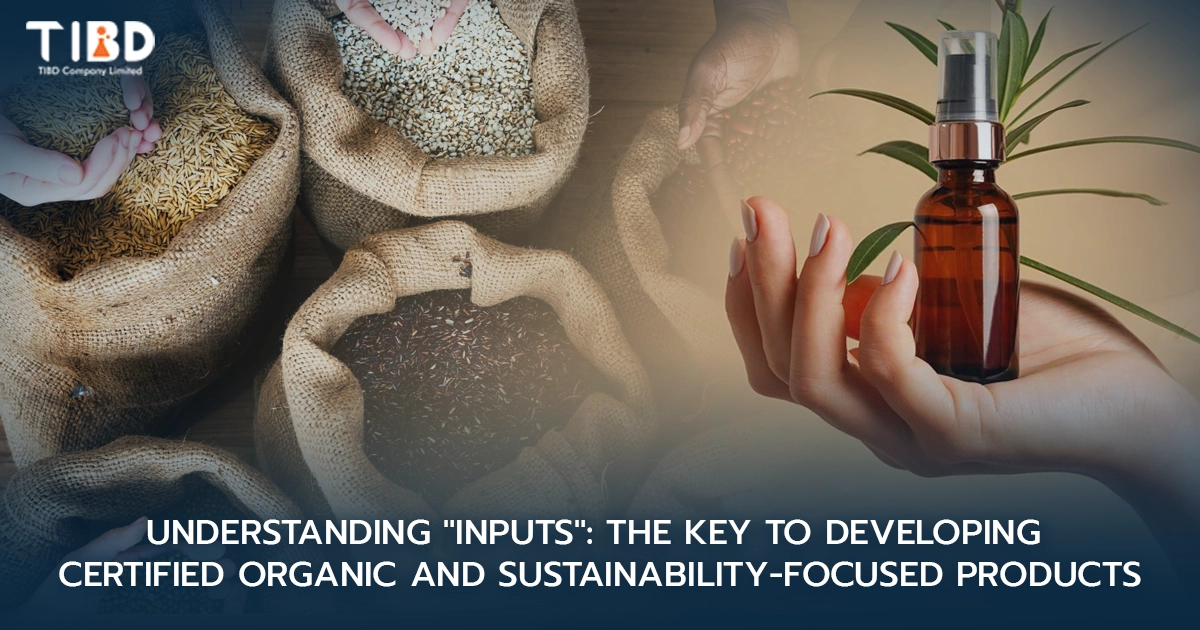
Understanding “Inputs”: The Key to Developing Certified Organic and Sustainability-Focused Products
In an era where consumers worldwide are placing ever-greater emphasis on safety, transparency, and sustainability, the market for organic products and sustainability-focused products is experiencing exponential growth across every industry—from food and beverages to cosmetics, health supplements, and personal care. According to the Research Institute of Organic Agriculture (FiBL), the global organic products market surpassed EUR 135 billion in 2024, with continued year-on-year growth projected well into the future. At the same time, the organic cosmetics segment has emerged as one of the fastest-growing categories, driven by modern consumers who demand assurance that every ingredient in the products they use has been verified and certified to internationally recognized standards.
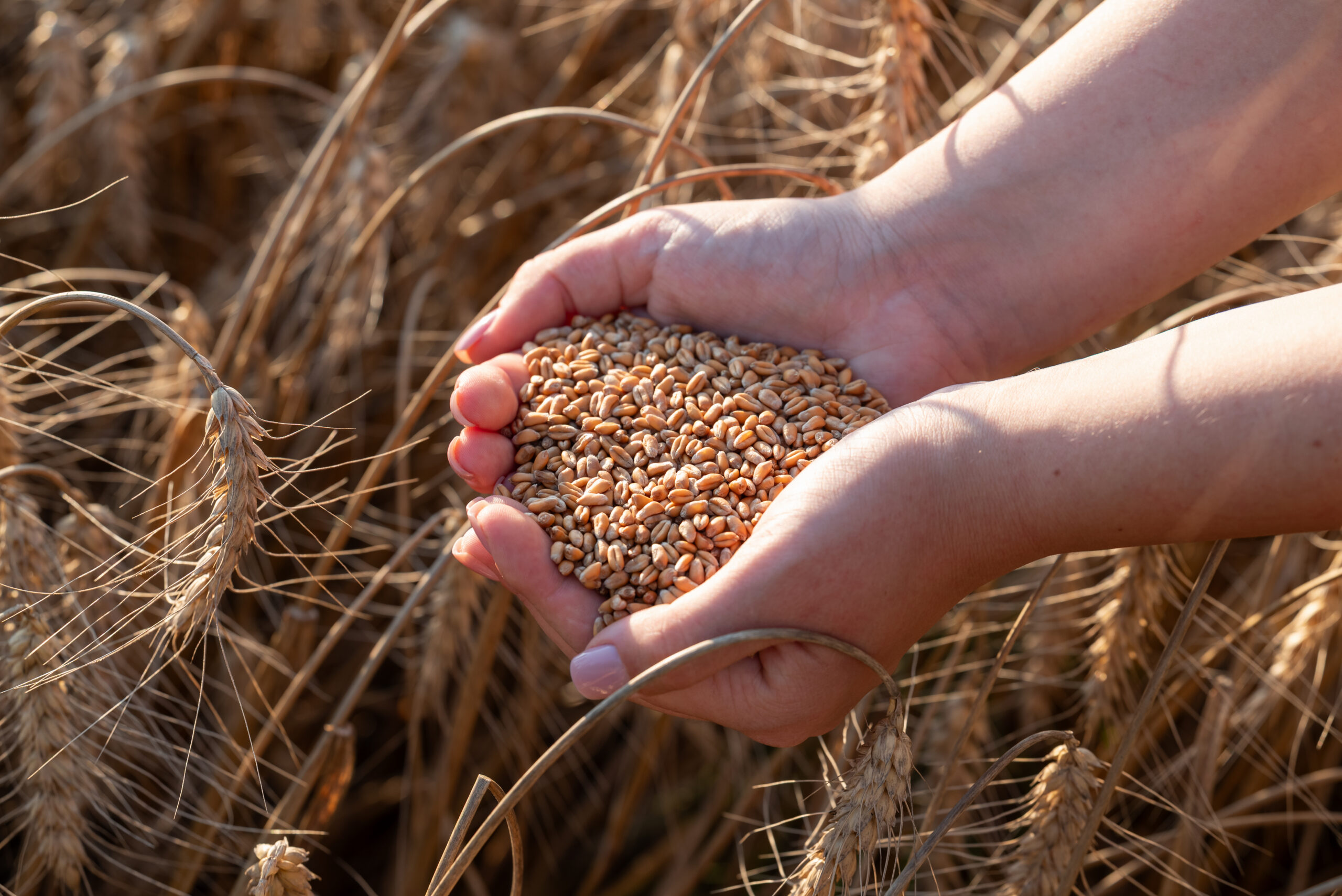
Yet many industry operators may not be fully aware that before any product can earn an “organic” certification, there is a critical component called “Inputs”—the raw materials and production factors used throughout the supply chain—that must also undergo rigorous verification and certification. This encompasses everything from the fertilizers used to cultivate botanical raw materials, to the solvents employed in active ingredient extraction, to the cleaning and disinfection agents used in manufacturing facilities, and the various additives involved in the organic product supply chain.
This article provides a comprehensive guide to Inputs in the context of organic and sustainability-focused products, covering their definition, the relevant regulatory frameworks, Ecocert’s verification and certification services, and the strategic role of TIBD as a trusted consultant ready to support Thai entrepreneurs in the health and beauty industry on their journey toward international standards.
What Are ``Inputs``? Why Are They Essential to the Organic Product Supply Chain?
In the context of organic and sustainability-focused products, the term “Inputs” refers to products used in the production process across the entire supply chain, from upstream to downstream. These include fertilizers and soil conditioners, crop protection products, cleaning and disinfection products used in food and cosmetics manufacturing facilities, oenological inputs for the wine industry, and additives and auxiliaries for food and feed.
A critical distinction to understand is that Inputs are products used in the manufacturing process of organically certified goods, but they are not themselves certified as organic. In other words, Inputs serve as a “toolbox” for producers when it is no longer possible to rely solely on naturally available resources within the management system or on certified organic ingredients and products.
To illustrate: an organic cosmetics manufacturer seeking to use plant-based extracts in its formulations must ensure that the botanical raw materials were cultivated using fertilizers verified as “suitable for use in organic farming.” Likewise, the cleaning agents used on the production line must be products confirmed to be free of prohibited substances under organic standards. Therefore, selecting certified Inputs forms the very foundation of building credible organic products across the entire value chain.
Regulatory Frameworks Governing Inputs: What Entrepreneurs Need to Know
The use of Inputs in organic product manufacturing is not a matter of discretion. It is governed by stringent regulations from multiple organizations and regions worldwide. To be suitable for use in organic production systems, Inputs must meet the marketing requirements specific to the country of sale and their product category.
Core Requirements for Inputs
First, Inputs must not be produced from or by genetically modified organisms (GMOs), and must be based exclusively on raw materials listed as compliant with organic standards.
Second, depending on the regulations and the type of Input, nanomaterials and ionizing radiation may also be prohibited—a particularly important consideration for cosmetics and health product manufacturers, given the widespread use of nanotechnology in the beauty industry.
Third, while the raw materials used to manufacture an Input do not need to be certified organic, they must be of natural, non-synthetic origin. Where synthetic raw materials are necessary, they are limited and must meet environmental criteria wherever possible. These requirements have direct implications for producers at every level of the supply chain, from upstream raw material suppliers to downstream brand owners and distributors.
Key International Standards
At the European Union level, Regulation (EU) 2018/848 serves as the primary legislation governing organic production and labelling. It defines the list of substances authorized for use as fertilizers, soil conditioners, and crop protection products through Commission Implementing Regulation (EU) 2021/1165—a regulation with direct implications for producers seeking to export organic products, whether food, beverages, or cosmetic raw materials, to the European market.
Beyond the EU, several other critical standards exist that Thai entrepreneurs should be aware of: the NOP (National Organic Program) in the United States, JAS (Japanese Agricultural Standards) in Japan, COR (Canada Organic Regime) in Canada, GB (Guobiao Standards) in China, BR in Brazil, and NPOP (National Programme for Organic Production) in India. Each standard has its own specific requirements, making it essential for Inputs manufacturers and organic product brands to thoroughly understand the regulations of their target markets to avoid export complications or missed business opportunities.
How to Identify Whether an Input Is Suitable for Organic Production
One of the most frequently asked questions from entrepreneurs is: “How can I tell whether a particular Input is suitable for use in organic systems?” The answer lies in the product label and Technical Data Sheet, which should carry the statement “Product Suitable for Use in Organic Farming.”
An important caveat: Organic logos such as the EU Organic Logo are reserved exclusively for finished products that have been certified organic. Inputs cannot bear these logos, even if they have been verified as suitable for organic systems. This is a common misunderstanding among manufacturers and distributors, and one that can lead to legal issues and loss of credibility similar to the counterfeit “COSMOS Organic” product crisis in Thailand’s cosmetics industry that TIBD previously reported on.
The Role of Ecocert in Inputs Verification and Certification
Ecocert is a world-leading verification and certification organization with over 30 years of expertise in organic standards. As a global leader, Ecocert’s Inputs service covers multiple organic regulations, including EU (European Union), NOP (United States), JAS (Japan), COR (Canada), and others, enabling producers to use a single service to support exports to multiple markets simultaneously.
Ecocert’s Inputs verification services provide two essential guarantees: a Conformity Guarantee ensuring that the Input placed on the market meets organic standards, and a Security Guarantee giving confidence to distributors and users of the Input that it will facilitate, rather than complicate, their own organic certification process. This is of direct benefit to cosmetics and health product brands that need certainty about the raw materials they select.
Ecocert Inputs Services: Documentary Review and Inputs Attestation
Ecocert delivers two types of Inputs verification services, each with a different level of depth and scope. Entrepreneurs can choose the format best suited to their business needs.
1. Documentary Review
Documentary Review is a document-level verification that covers the examination of product formulas, ingredients, and labels. If the Input passes review and is found to be compliant, it is listed on Ecocert’s online database at www.inputs.bio—a vital reference resource where buyers and manufacturers worldwide can check the status of any Input, including cosmetics brands verifying whether their chosen raw materials have already been certified.
2. Inputs Attestation
Inputs Attestation is a more comprehensive service. It begins with the same Documentary Review process but adds an on-site audit to verify the authenticity of the producer’s declarations, assess the quality system, and examine the traceability of the company across all stages of Input manufacturing.
Upon successful completion, the Input is listed as “Attested” on the www.inputs.bio database, and the manufacturer is authorized to use the “Approved by Ecocert” logo on its commercial documents a mark of trust recognized by buyers worldwide, whether in food, cosmetics, or health products.
Today, Ecocert’s www.inputs.bio database contains more than 10,000 validated UAB references from over 1,100 companies worldwide, underscoring the scale and importance of the Inputs ecosystem in the global organic and sustainability-focused products market.

Inputs and the Health & Beauty Industry: A Connection Thai Entrepreneurs Cannot Afford to Overlook
For entrepreneurs in the health and beauty industry, understanding Inputs is critically important because the supply chain for organic products in this sector is particularly complex. It spans from the cultivation of botanical raw materials requiring certified fertilizers and crop protection products, to the extraction of active ingredients using solvents and chemicals that must comply with organic standards, to the cleaning and disinfection agents used in production lines that must be safe for both the product and the environment.
Cosmetics manufacturers seeking COSMOS ORGANIC or COSMOS NATURAL certification must ensure that every raw material in their formulation, including the Inputs used in the production process, complies with standard requirements. Using Ecocert-certified Inputs significantly reduces complexity and increases confidence throughout the certification process.
Beyond certification, having certified Inputs delivers several strategic advantages. In terms of global market access, it opens doors to organic product markets in the European Union, United States, Japan, and other key markets worldwide. For brand credibility, the “Approved by Ecocert” status is a mark that buyers around the world recognize and trust. For risk mitigation, systematic verification reduces legal risks and the possibility of rejection from target markets. And for competitive differentiation, producers who use certified Inputs can communicate their sustainability commitment clearly and credibly.

TIBD: Your Strategic Consultant for Ecocert Inputs Certification
TIBD Co., Ltd., as a strategic partner of Ecocert in Thailand, offers comprehensive, end-to-end support for Thai entrepreneurs preparing for Inputs verification and certification. With a team of experts who possess deep knowledge of both international standards and the local health and beauty industry landscape, TIBD is uniquely positioned to guide businesses through every step of the process.
TIBD’s services encompass Consulting & Strategic Planning to assess business readiness and develop implementation roadmaps aligned with Ecocert requirements; Training & Knowledge Transfer covering international standard requirements from raw material selection through quality control; Pre-Audit Readiness Assessment to identify strengths and areas for improvement before the formal verification process; Product Development Support including formula refinement, sustainable ingredient sourcing, and production process alignment with standards; and Post-Certification Market Expansion with marketing strategy support, brand development, and distribution network building both domestically and internationally.
The partnership between TIBD and Ecocert combines Ecocert’s world-class certification expertise with TIBD’s deep knowledge of the Thai health and beauty industry, providing Thai entrepreneurs with end-to-end support from initial preparation through to successful international market entry.
Conclusion
“Inputs” the certified raw materials and production factors used in organic manufacturing are an indispensable component of the global organic and sustainability-focused product supply chain. Although Inputs themselves are not certified as organic, they must undergo rigorous verification to confirm their suitability for use in organic production systems, in compliance with the regulations of each target market. Whether in the food, agriculture, or health and beauty industry, Ecocert’s Documentary Review and Inputs Attestation services enable producers to build credibility, access international markets, and elevate their competitive capabilities effectively.
For Thai entrepreneurs interested in raising their raw materials and production Inputs to international certification standards, or seeking expert guidance on developing organic products in the health and beauty industry, TIBD’s consulting team is ready to assist. Because every step toward sustainability begins with choosing the right Inputs.
Ready to Elevate Your Inputs to International Organic Standards?
Contact TIBD’s consulting team for end-to-end support from documentation and readiness assessment to international market expansion.Click
or contact by @thaiecocert