Description

Extracts are key raw materials in Thailand’s health and beauty industry, used as Active Ingredients in cosmetics, concentrated supplements, and traditional Thai herbal products. Long-term stability of extracts is a critical condition for finished product development and regulatory registration.

The challenge with extracts lies in the diversity of formats and the different storage requirements across each one, from solvent-based extracts such as ethanol or oil solutions, water-based liquid extracts, spray-dried powder extracts, to Encapsulation Systems that enclose extracts within microscale capsules. Each format has distinct challenges and requires specific testing protocols.

TIBD’s service covers stability testing for all extract formats per ICH Q1A(R2) and ICH Q7 (Active Pharmaceutical Ingredient) under ASEAN Zone IVb conditions. It encompasses Marker Compound analysis by High-Performance Liquid Chromatography (HPLC), Retest Date determination, oxidative degradation evaluation, and Encapsulation structure verification, conducted in partnership with VISBIO as an Independent Quality Assurance Verifier (IQAV).
Extracts in Thailand’s Health and Beauty Industry

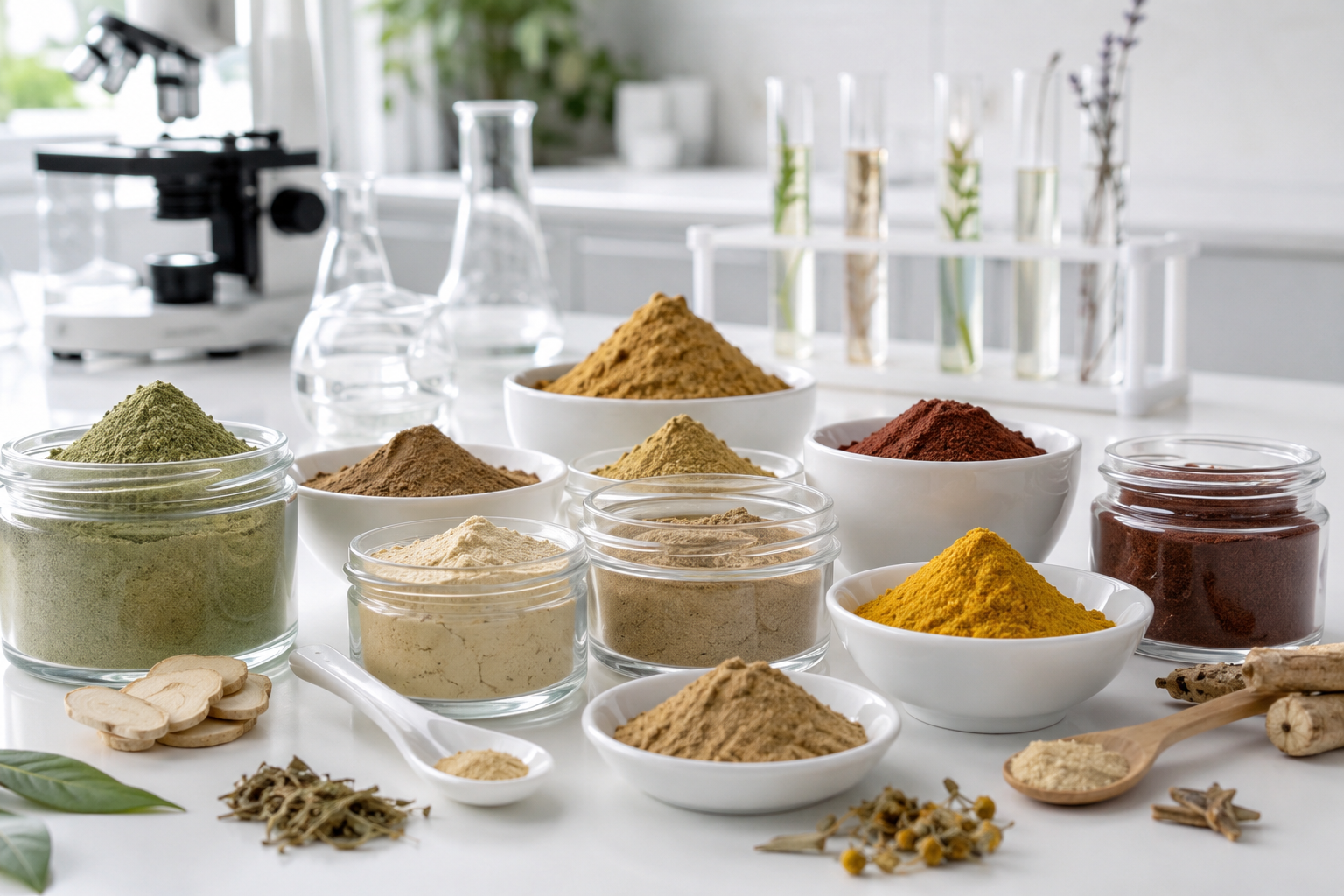
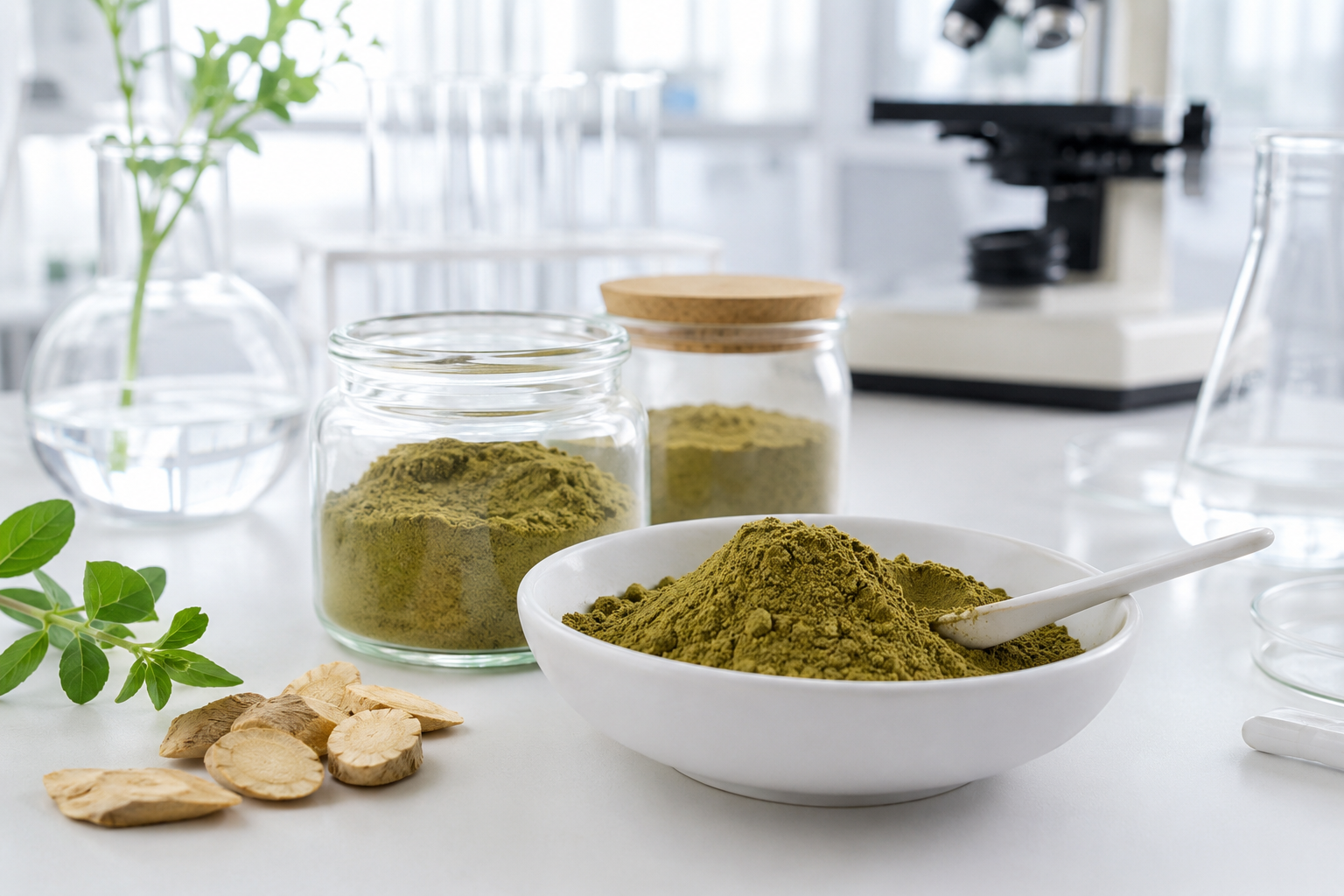
Extracts in the Thai industry fall into two main groups by origin. The first is Plant Extracts (Botanical Extracts), widely used in Thai herbal products, cosmetics, and supplements, including Turmeric extract, Andrographis extract, Centella extract, Moringa leaf extract, and Amla extract. The second is extracts from other sources such as probiotic bacteria, algae, and fungi.

Commercially, extracts are typically produced and traded as Standardized Extracts with clearly defined Marker Compound content, for example Turmeric extract standardized to 95% Curcuminoids, Andrographis extract standardized to 10% Andrographolide, and Centella extract standardized to 80% Total Triterpenes. Standardization enables finished product manufacturers to formulate accurately and predict efficacy.

Extract stability is a key factor in setting Retest Dates and in planning raw material procurement and storage. Extracts that degrade quickly must be ordered in small, frequent quantities, increasing management costs, while stable extracts can be purchased in bulk at lower unit cost.

Extract Stability Hub: stability testing covering 7 extract forms and encapsulation systems

7 Extract Formats Supported by TIBD

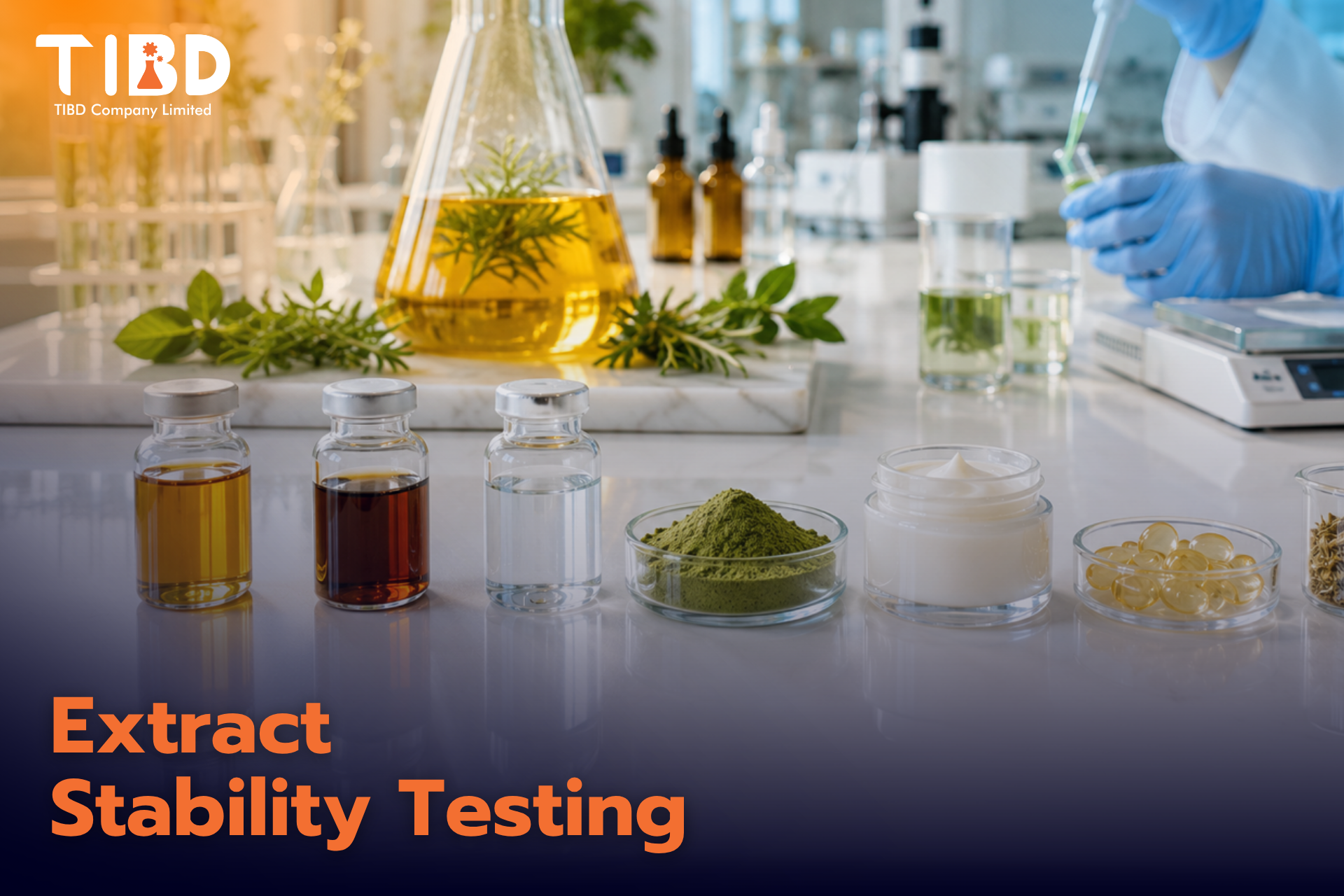
TIBD provides stability testing for extracts across 7 primary formats and Encapsulation Systems, each with a purpose-built protocol.

  1. Solvent-Based Extract (Ethanol Extract) using ethanol, methanol, or other organic solvents for extraction and storage. Challenges include solvent evaporation and storage safety requirements.
  2. Oil-Based Extract using vegetable oils such as coconut oil, sesame oil, or olive oil as the carrier medium. Challenges include oxidative degradation, Peroxide Value increase, and odor changes.
  3. Water-Based Extract (Aqueous Extract) using water as the solvent. Challenges include microbial growth and long-term active compound degradation, requiring refrigerated storage.
  4. Spray-Dried Extract (Powder Dry Extract) converted into stable long-term powder form through spray drying. Challenges include moisture absorption and powder caking.
  5. Emulsion Extract dispersed in an oil-water system to enhance Bioavailability. Challenges include emulsion system stability over time.
  6. Encapsulation Systems Extract using Microcapsules, Nanocapsules, or Liposomes to protect the extract and control release.
  7. Herbal Extract governed by the Herbal Product Act B.E. 2562 (2019), covering single herb extracts and multi-herb formulation extracts.

Each format has a dedicated article covering its specific parameters, acceptance criteria, and format-specific considerations.

The Retest Date Concept for Extracts and Active Ingredients

Extracts and Active Ingredients use a Retest Date rather than an Expiry Date as applied to finished products. A Retest Date is the date by which the extract must be re-tested to confirm it remains within specification, not a disposal date.

The principle of Retest Date per ICH Q7 is that an extract stored under defined conditions may continue to be used as long as it passes testing at the Retest Date and still meets its specifications. This approach reduces raw material waste and helps manufacturers plan procurement efficiently.

Retest Date determination is based on stability data tested under defined storage conditions. Extracts stored under refrigeration (2-8°C) typically achieve a longer Retest Date than those stored at room temperature.

Testing Parameters Specific to Each Format

TIBD’s protocols cover parameters specifically designed for each extract format.

  • For Solvent-Based Extracts: Residual Solvent content per ICH Q3C, Marker Compound content, degradation products, pH, and net weight.
  • For Oil-Based Extracts: Peroxide Value per ISO 3960, Acid Value, Oxidative Stability Index (OSI) per EN 14112, Marker Compound content, and appearance and odor.
  • For Water-Based Extracts: microbiological testing, Marker Compound content, pH, clarity, and sedimentation.
  • For Spray-Dried Extracts: Moisture Content, Water Activity (aw), Particle Size, Solubility, and Marker Compound content.
  • For Emulsion Extracts and Encapsulation Systems: Encapsulation Efficiency (EE%), Release Profile, Particle Size, Zeta Potential, and structural stability.
  • For Herbal Extracts: Marker Compound analysis, TLC/HPTLC Fingerprinting, microbiological testing per THP 2021, and contaminant screening.

Application in Finished Product Development

Stability data for extracts plays an important role at multiple stages of finished product development.

  • In ingredient selection, finished product developers can choose extracts with stability profiles matched to the intended shelf life of the final product.
  • In formulation design, stability data of extracts in various solvents and emulsion systems guides selection of the most suitable formulation system and the best protection approach.
  • In shelf-life determination, extract stability data provides the foundational baseline for calculating Worst-Case Scenarios and proposing safe shelf-life claims for the finished product.
  • In registration submissions, stability data for Active Ingredient extracts must be submitted in Module 3.2.S of the Common Technical Document, requiring comprehensive data covering the stated Retest Date.

Marker Compound Analysis and Degradation Assessment

The core of extract stability testing is tracking Marker Compound content over time. TIBD uses HPLC and LC-MS/MS for general extracts and GC-MS for extracts with volatile components such as essential oils.

Degradation assessment is performed using three methods. The first is comparing Marker Compound levels across pull points, where a decline of more than 10% from the initial value is considered a significant change. The second is analyzing Degradation Products that may arise from decomposition. The third is TLC/HPTLC Fingerprinting to capture the overall chemical profile.

For multi-component extracts such as herbal materials, assessment must cover multiple Marker Compounds simultaneously, as individual compounds may degrade at different rates.

Extract Stability Hub: stability testing covering 7 extract forms and encapsulation systems

Testing Conditions and Storage

TIBD’s protocols use conditions per ICH Q1A(R2) and ICH Q7, adjusted to suit the characteristics of each extract format.

For room-temperature extracts: long-term conditions are 30°C / 75% RH per ASEAN Zone IVb, and accelerated conditions are 40°C / 75% RH.

For refrigerated extracts such as aqueous extracts and heat-sensitive materials: long-term conditions are 5°C ± 3°C, with 25°C conditions optionally added to assess degradation under emergency scenarios.

For frozen extracts that are highly unstable: long-term conditions are -20°C, with additional assessment of the impact of Freeze-Thaw Cycles on stability.

VISBIO’s Role as an Independent Quality Assurance Verifier (IQAV)

VISBIO, acting as an Independent Quality Assurance Verifier (IQAV), performs Marker Compound analysis, TLC/HPTLC Fingerprinting, and other format-specific parameters for all extract types, using Validated Methods per ICH Q2(R1) with full traceability documentation at every step and operations conducted under ISO/IEC 17025 standards.

TIBD Team Expertise

The extract stability testing service is conducted in partnership with Dr. Wuttipong Panitsettakorn, Advisor and Co-Founder, who specializes in commercial technology management for the health and beauty industry, and Ms. Mandhamon Uttamo, Advanced Formulator, with experience in extract development and application in finished products. Our team includes researchers specializing in Phytochemistry, Extraction Technology, Spray Drying, and Encapsulation Systems.

Does your extract require stability data to establish a Retest Date or to support its use in finished products? If you need extract stability testing services for any format, Contact TIBD for a customized protocol. Individual format articles are available in the TIBD service hub.

Reference

Apply for Extract Stability Testing Service (Extract Stability Hub): Covering 7 Extract Formats and Encapsulation Systems

If you have any questions or would like to receive a free consultation regarding Extract Stability Testing Service (Extract Stability Hub): Covering 7 Extract Formats and Encapsulation Systems, or if you would like to visit us in person in Bangkok, Thailand, you are warmly welcomed and feel free to contact us via the contact form below.

  • This field is for validation purposes and should be left unchanged.