

Cold plasma for skin / Article 10
Cold plasma devices for skin: the line between a cosmetic and a medical device
What a company needs to know before developing a plasma device for clinics or consumers — where the technology stands, the registration route, and the cost that is usually underestimated.
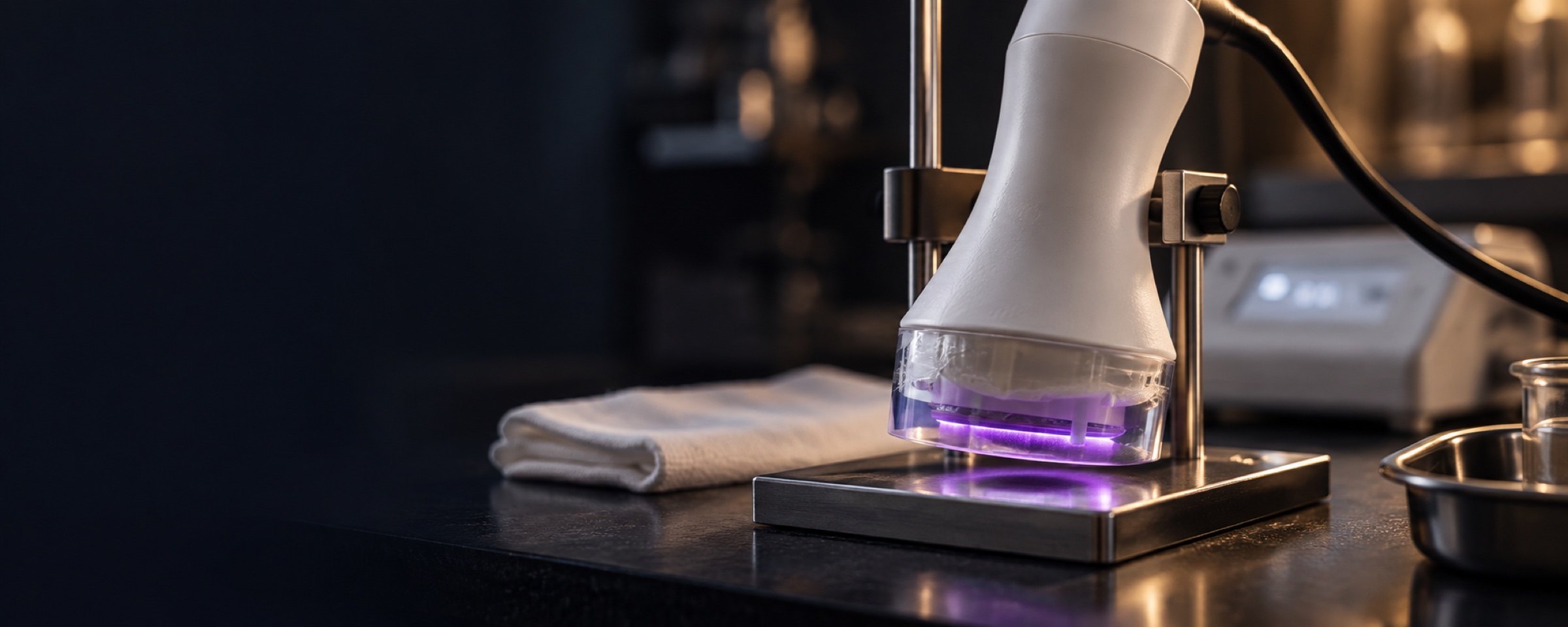
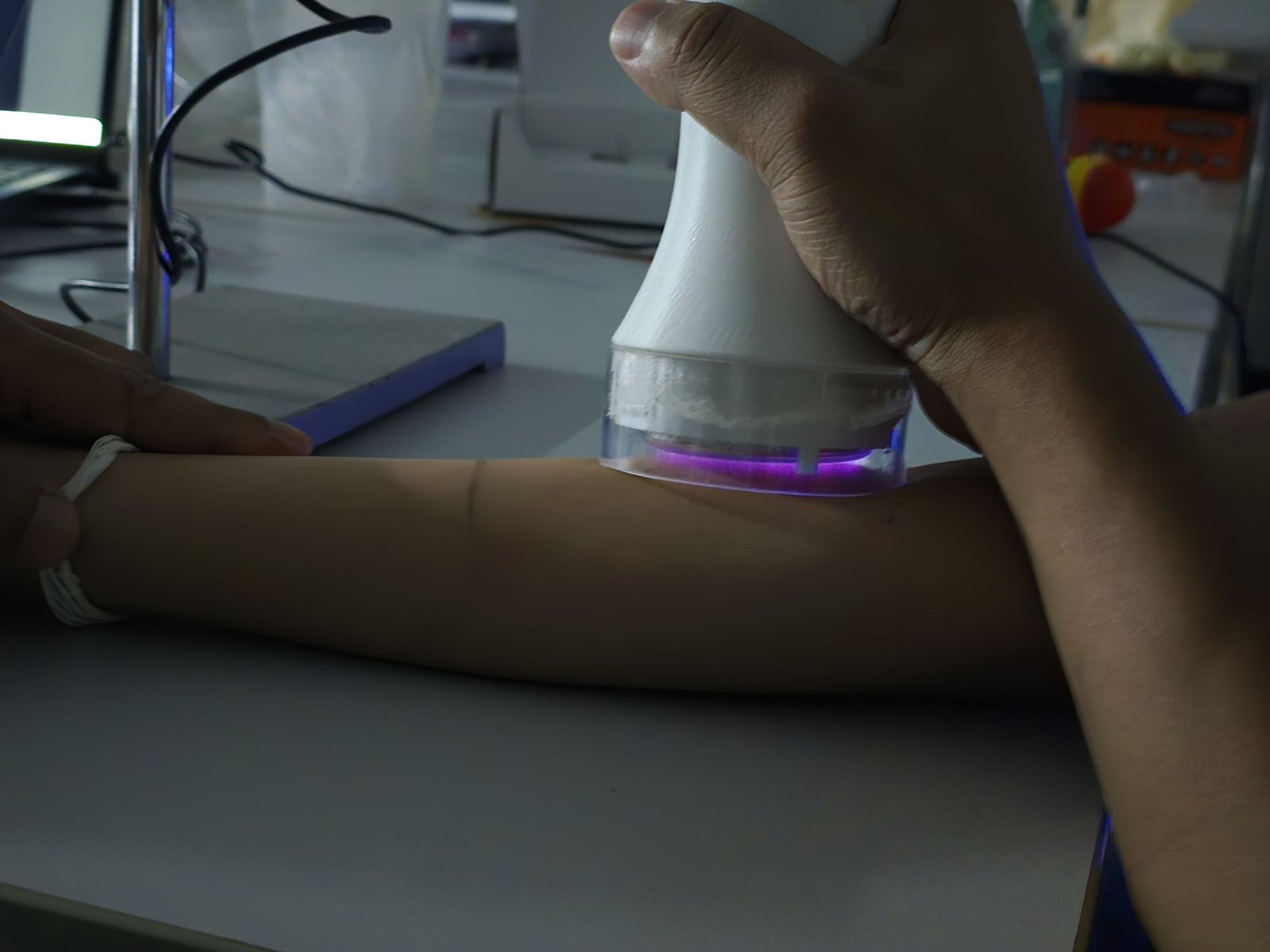
A cold plasma device for skin generates plasma at atmospheric pressure and low temperature, then brings it into contact with skin under controlled parameters. Research reports that this mechanism affects both skin cells and the microorganisms on the skin.
But the first question to answer is not technical. It is whether what you are about to build is a cosmetic or a medical device. The answer determines everything that follows: budget, timeline, documentation, and what you are allowed to say in marketing.
This article explains that line first, then the technology and the development route.
01Where the line sits
The line is not drawn by the device. It is drawn by the intended purpose the manufacturer declares, and by the claims used to sell it.
| Point | On the cosmetic side | On the medical device side |
|---|---|---|
| Declared purpose | Care of appearance and general skin condition. | Treating, relieving or curing a medical condition. |
| Thai legal framework | Cosmetics Act B.E. 2558 | Medical Device Act B.E. 2562 |
| Quality system required | Cosmetics good manufacturing practice | ISO 13485 for medical device quality management |
| Electrical safety testing | To general electrical appliance standards | To IEC 60601-1 and the relevant particular standards |
| Clinical data | Not mandated at the same level | Required, and has to pass an ethics committee |
| Time and budget | Much shorter and lower | Much longer and higher |
The common mistake is designing and manufacturing on the cosmetic side, then marketing in medical language. That is both a legal and a reputational risk, and it is not easily fixed afterwards, because the documentation on file does not support what has already been said.
Once the medical device side is chosen, the registration route ties to the risk class the regulator assigns to that device, which determines the documentation and test results required. It has to be confirmed with the Thai FDA product by product, not inferred from a device that looks similar.
The straight advice: settle this before writing the product requirements, not when preparing to file.
02Where the technology stands
The global beauty device market has expanded from established technologies such as laser, radiofrequency and high-intensity ultrasound towards a group that works through cell stimulation at the biomolecular level. Cold plasma is one of that group.
Internationally, several companies already market devices of this kind commercially, both small pen formats for spot treatment and clinic systems. In Thailand, the number of developers working at this level with a domestic research base is still limited.
That gap is the opportunity, because device brands and clinic groups in Thailand understand local skin conditions, treatment culture and how clinics in this region actually work, better than an overseas manufacturer does.
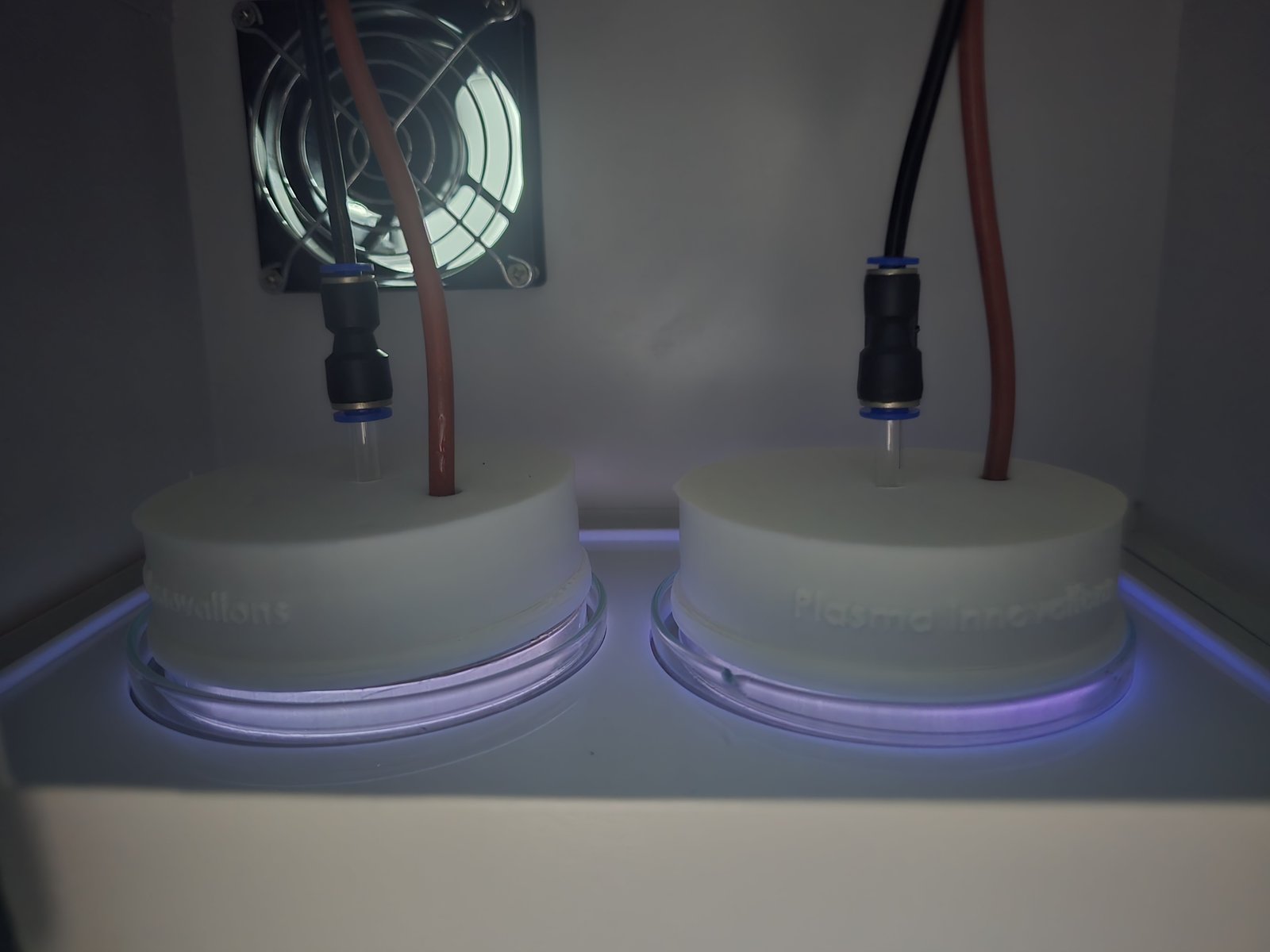
Technically, three plasma formats are commonly used in this field: plasma jet, dielectric barrier discharge and streamer plasma. All three can be designed for safe skin contact under controlled parameters, but they distribute energy differently, so they suit different applications.
03What the research reports
The plasma medicine literature has built up understanding of how cold plasma affects skin along several dimensions: stimulation of fibroblasts, shifts in the balance of inflammation-related cytokines, reduction of microorganisms on the skin, and effects on blood flow in the upper skin layers.
| Study | Journal | What it reports |
|---|---|---|
| Judée et al. (2019) | Journal of Physics D: Applied Physics | Studies the relationship between the electrical settings of an atmospheric pressure plasma jet and its toxicity and efficacy in living systems, giving a parameter frame that design can reference. |
| Kostov, Machida and Prysiazhnyi (2014) | Plasma technical literature | Generating a cold argon plasma jet at the tip of a flexible plastic tube, the basis for an applicator that can reach different positions on the face. |
| Srisonphan (2018) | ACS Applied Materials & Interfaces | The mechanism by which cold plasma changes the wettability of a material surface, the physical basis for applicator design. |
| Bourke et al. (2018) | Plasma Processes and Polymers | The role of species formed at the gas-liquid interface in wound healing. |
What has to be read correctly: most of this work studies mechanisms and parameters, not proof of a cosmetic outcome in real users. What happens in real use depends on the treatment protocol, frequency of use, the user's skin condition, and what else is used alongside, all of which have to be studied in their own context.
04Why this is joint development rather than buying a device
Five gates to clear if you go the medical device route
- The design has to follow a medical device quality management system from the design stage, not have documentation written retrospectively.
- Electrical safety testing to international standards has to be done in an accredited laboratory, and requires the design documentation to be complete first.
- Biological safety assessment of the skin-contacting parts has to be done before any human trial.
- Human testing has to pass an ethics committee and be carried out under dermatological supervision.
- Filing for registration relies on a technical documentation set built systematically from every stage above.
Each gate takes time and budget, and crucially the order cannot be changed. Skipping a stage and coming back to it later is usually several times more expensive than doing it in order from the start.
What TIBD delivers in a project like this is therefore not a finished device. It is design and prototyping, measurement of the plasma properties leaving the applicator, preliminary safety testing, and preparation of the documentation set for registration, working with the partner's engineering team to integrate it into the product design.
05Who this kind of project suits
Partners whose problem fits
- Beauty device brands wanting to build their own product on a domestic technology base.
- Corporate clinic groups wanting a device specific to their own brand.
- Companies entering this market with a research capability integrated into the registration route.
Who it does not fit: anyone who needs a device ready to sell this quarter, because that is not what this development route delivers.
06The route to overseas markets
If the long-term plan is export, the registration route for the target market should be designed from day one.
The European Union market falls under the EU Medical Device Regulation, while the United States requires premarket notification for devices in the relevant class. Knowing which market you are heading for affects which standards you test to, and the form of clinical data you have to collect.
Designing the project with that in mind from the start saves a great deal of cost and time, because many tests can be shared across submissions if they are planned for, and cannot be shared if they are run separately without a plan.
07In summary: four points before deciding
Four things to remember before deciding
- The line between a cosmetic and a medical device is not drawn by the device. It is drawn by the declared intended purpose and the claims used to sell it.
- The plasma medicine literature reports effects on skin along several dimensions: fibroblast stimulation, shifts in cytokine balance, and reduction of microorganisms on the skin.
- The design has to follow a medical device quality management system from the design stage, not retrospectively. That is why this is joint development rather than buying a device.
- If the long-term plan is export, design the registration route for the target market from day one.
08Frequently asked questions
Does cold plasma burn the skin?
Cold plasma is designed to operate close to room temperature, so it does not produce the heat a laser does. Even so, inappropriate settings or too long a contact time can still cause side effects, which is why setting the parameters and running safety testing are stages that cannot be skipped.
Can it be made as a home-use device?
Technically yes, but intending it for consumer self-use changes the whole safety problem, because there is no professional supervising the use. The requirements for preventing misuse and limiting energy are considerably stricter.
How much clinical data is needed before it can be sold?
It depends on the claims you intend to sell with. Claims about feel and appearance need far less evidence than claims that touch on treating or curing. Setting the target claim is therefore what determines the size of the entire project.
How does it differ from laser and radiofrequency devices?
Laser and radiofrequency work by delivering thermal energy into the skin layers to provoke a response. Cold plasma works through chemically active species formed in air, without heat as the main mechanism. The result is a different sensation during use, a different recovery period, and a different set of suitable applications. They are not directly interchangeable technologies but different tools chosen according to the problem.
Does it need a special gas?
It depends on the format chosen. Some systems run on ordinary air; others use a specific gas to achieve a particular energy distribution. That choice affects both the cost per treatment and how demanding the device is to maintain on site, so it should be decided together with the product brief.
How long does registration take?
There is no general figure, because it depends on the risk class of the device, the completeness of the documentation, and the regulator's queue. What you can control is the completeness of the documentation, which comes from working in order from the start.
09Talk through your problem with the TIBD team
If you are considering building a cold plasma device for your own brand, the first question to answer together is whether it will be sold as a cosmetic or as a medical device, because that determines everything that follows.
TIBD works alongside researchers and technology owners so that research carries on from the laboratory through to a real production line. The first thing we do is assess together whether your problem genuinely suits this technology. If it does not, we will say so at the start.
Message us on LINE @tibdglobal or use the contact form at tibdglobal.com/contact and tell us about the problem in your process.
Read next
- Plasma-activated water actives for skincareWhat the research says, and where the line sits
- Cosmetics that want to cut back on preservativesWhere plasma-activated water sits in a formulation
- What cold plasma is — an interview with Assoc. Prof. Dr. Siwapon SrisonphanExplained without a single equation, and the one question he has carried for over ten years
← Back to Cold Plasma · Cold plasma services · Talk to the team
Sources Judée et al. (2019) Journal of Physics D: Applied Physics DOI: 10.1088/1361-6463/ab0fbb · Kostov, Machida and Prysiazhnyi (2014) technical literature on generating a cold argon plasma jet at the tip of a flexible tube · Srisonphan (2018) ACS Applied Materials & Interfaces · Bourke et al. (2018) Plasma Processes and Polymers DOI: 10.1002/ppap.201700151 · Legal and standards framework: Thailand Medical Device Act B.E. 2562, Thailand Cosmetics Act B.E. 2558, ISO 13485:2016, ISO 10993, IEC 60601-1, Regulation (EU) 2017/745 · Cold plasma research in Thailand by Assoc. Prof. Dr. Siwapon Srisonphan Kasetsart University
About TIBD TIBD Company Limited works alongside researchers and technology owners so that research carries on from the laboratory into real industrial use, from feasibility assessment and test design to prototyping and scale-up of production, with VISBIO, an affiliated company, acting as the independent verifier. The office is at the Kasetsart Agricultural and Agro-Industrial Product Improvement Institute, Kasetsart University, Bangkhen.