

Cold plasma in the plant / Article 07
Process water: cold plasma sterilization without adding anything to the water
For cosmetics and food plants that have to control water quality along the line, especially those developing formulations that do not lean on conventional preservatives.
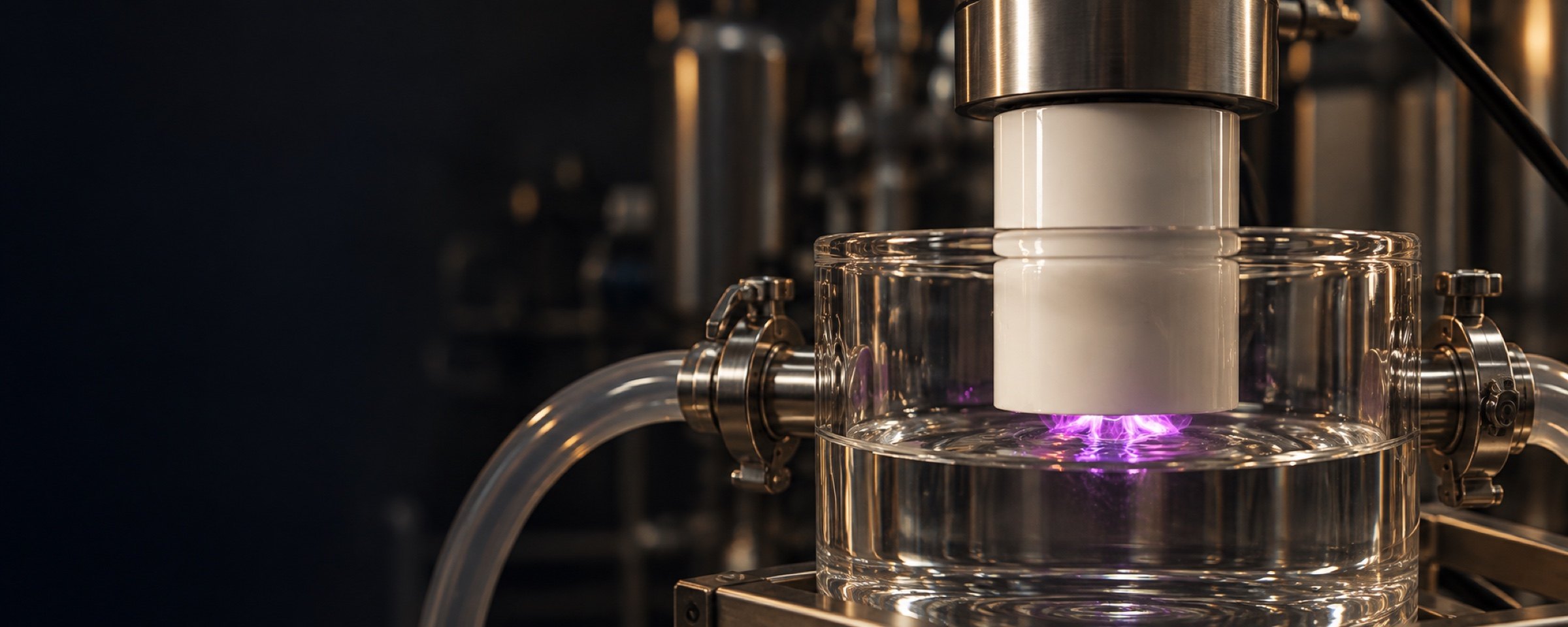
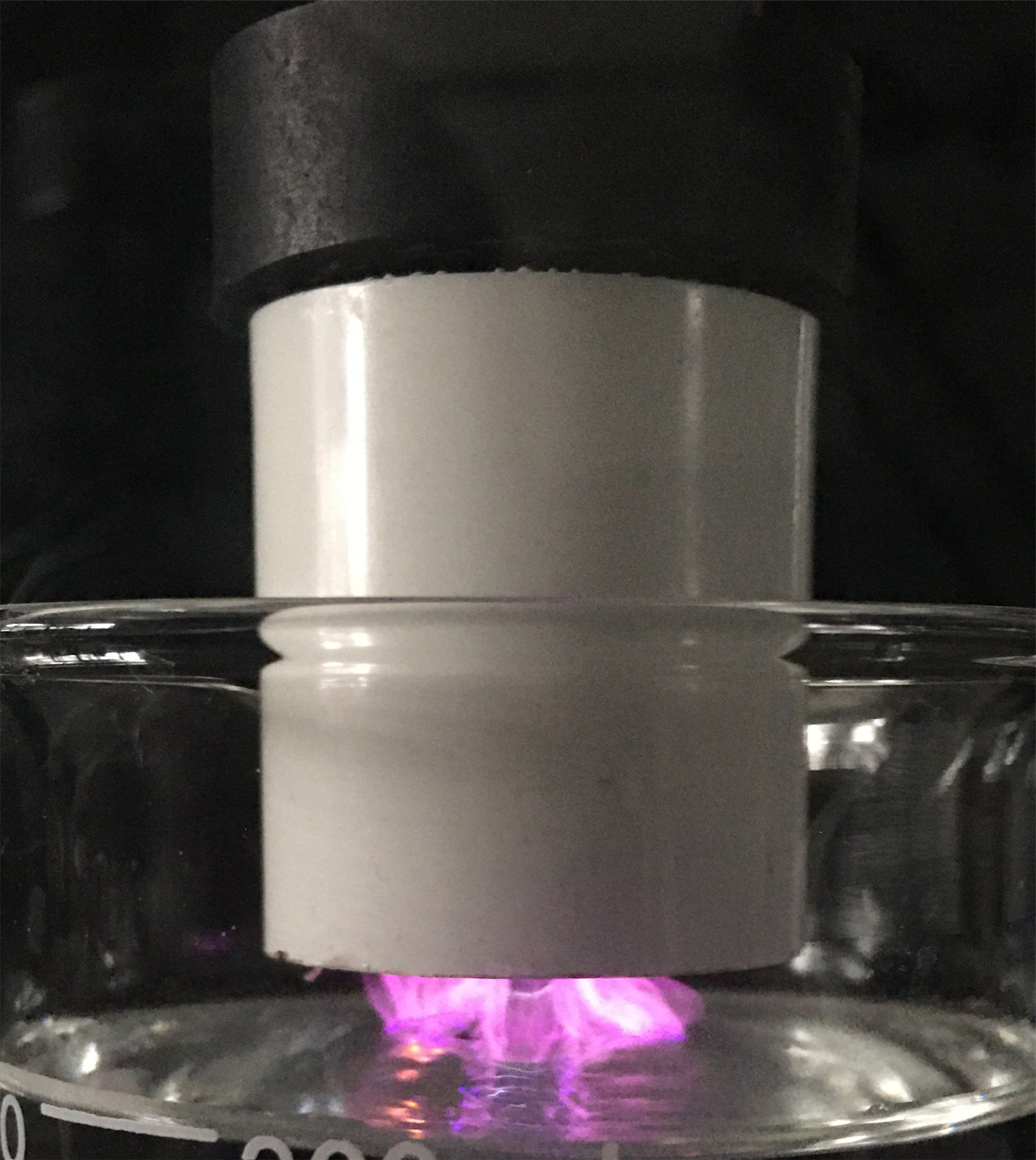
Plasma water disinfection means running cold plasma directly against water to create species that destroy the cells of the microorganisms present in it, with no disinfectant added to the water. Those species have a limited lifetime, so nothing accumulates as a residue in the finished product.
This matters most to a cosmetics plant because water is the single largest raw material in almost every formulation: in the water phase of an emulsion, in toners and essences where water is the main ingredient, and in cleaning production equipment. The microbiological quality of the water is therefore where safety starts for the whole system.
01Why water quality is the bottleneck for preservative-free formulations
In a conventional formulation, the preservative catches whatever contamination gets in during or after production. Design a formulation without conventional preservatives and that safety net is gone.
The starting water then has to be cleaner than the usual standard, not merely compliant, because anything the water carries in will have nothing to stop it once it is in the product.
ISO 22716, the good manufacturing practice standard for cosmetics, requires that water used in production is selected, routinely monitored for both chemical and microbiological properties, and appropriately treated before use.
ISO 17516 sets microbiological limits for non-sterile cosmetic products, capping total aerobic bacteria and prohibiting the detection of specified organisms. Water carrying contamination above those limits puts both regulatory inspection and recall risk on the table.
02What plants use today
Industrial water preparation usually layers several methods rather than relying on one.
| Method | How it works | Limits worth knowing |
|---|---|---|
| Chlorine and chlorine compounds | An oxidising agent is dosed into the water to reduce microorganisms and to keep residual activity in the pipework. | Residual levels have to be controlled, by-products can form when it reacts with organic matter in the water, and some formulations will not accept chlorine in the starting water. |
| Reverse osmosis | Pressure pushes water through a membrane that passes only small molecules. | Membranes need maintenance, and the process produces reject water. |
| Ultrafiltration | Filtration through a membrane with a defined pore size. | It separates by size, but does not destroy whatever passes through. |
| Ultraviolet (UV) | Damages the genetic material of microorganisms. | It only works on water clear enough to let the light through, and leaves no residual activity in the pipework. |
| Thermal treatment | Periodic heat sanitisation of the system. | Energy-intensive, and the line stops while it runs. |
| Cold plasma | Creates reactive species in the water itself, destroying cells through oxidation. | Parameters have to be designed around the specific water of each plant. |
Where cold plasma earns its place is that it is designed to run continuously in line at a defined flow rate, so it integrates with an existing water preparation train, and the species it creates have a limited lifetime, so it leaves no residue that has to be declared in the product.
03What the research reports
| Study | Journal | What it reports |
|---|---|---|
| Boxhammer et al. (2015) | Plasma Processes and Polymers | The effectiveness of cold atmospheric air plasma in reducing populations of Escherichia coli, Staphylococcus aureus and Candida albicans within minutes, under specifically designed test conditions. |
| Bekeschus et al. (2020) | Scientific Reports | Explains that the antimicrobial activity of plasma-activated water is driven by two groups of components acting independently of each other. |
| Kamgang-Youbi et al. (2012) | Physics of Plasmas | Describes the acidic properties of plasma-activated water, which can be designed to sit in a pH range suited to the end application. |
| Suwannarat et al. (2024) | ACS Applied Bio Materials | The effectiveness of discharge plasma in liquid against Gram-negative bacteria, used as a model for contamination in formulation systems. |
What has to be read correctly: the reduction figures in these studies were measured under specifically designed test conditions. They are not numbers that transfer to any plant's water.
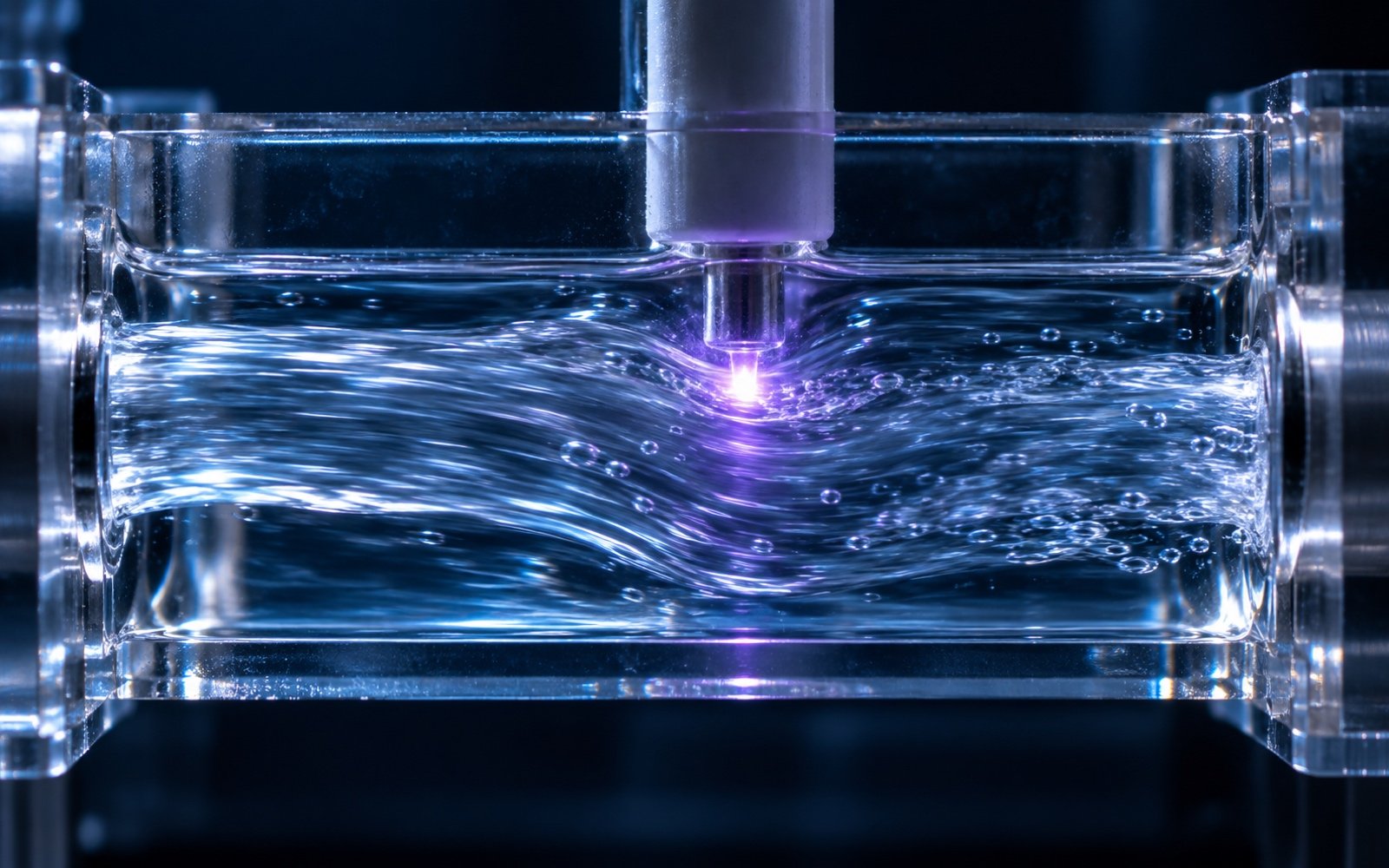
04Why every plant’s water needs conditions found for it specifically
Four reasons no two plants have the same conditions
- The starting water differs greatly from plant to plant in source, chemical composition and initial microbiological quality, so suitable parameters have to be found case by case.
- The size of the system, the flow rate required, and the engineering constraints of the target plant determine how the equipment and control system are designed.
- Using treated water in a formulation designed without conventional preservatives requires compatibility testing with the other ingredients, and preservative efficacy testing on the finished formulation.
- Registering a formulation that uses water treated this way requires a documentation set supporting its safety and its suitability for use.
TIBD runs this as a research project scoped to each plant, starting with a full analysis of the starting water, then finding conditions that work on that plant's water, together with the test results needed for registration.
05Which organisms a water system has to watch most closely
Not every organism is an equal problem. In a plant water system some groups need particular attention because they live well in water and resist conventional disinfection better than expected.
Three groups to watch in a water system
- Gram-negative bacteria that grow in low-nutrient water. This group forms biofilm on pipe walls, which is why testing only at the point of use can miss the problem entirely.
- Yeasts and moulds carried in from air and equipment, which tend to show up in product testing rather than in water testing.
- Organisms that the standards prohibit from being detected in cosmetic products at all, where even a small count fails the batch.
Biofilm on the pipe wall is where most systems come unstuck, because organisms inside biofilm are many times more resistant to disinfection than those floating free in the water. System design has to address both the water flowing through and the build-up on the walls.
That makes the monitoring plan as important as the equipment. Sampling from several points in the system on a defined cycle, with results recorded continuously, is what an auditor looks for during a plant inspection.
06Who this fits
The profile this kind of project suits
- Contract cosmetics manufacturers with R&D and engineering teams that will install and run the system themselves.
- Formulation laboratories developing products without conventional preservatives.
- Brand owners with their own manufacturing who want to raise the standard of their water preparation.
- Food plants that have to control the quality of water in direct contact with product along the line.
07How the project runs
The first step is a full analysis of the plant's starting water: pH, conductivity, total dissolved solids, hardness, heavy metal profile and microbiological quality, to establish a baseline before anything is designed.
The second step is a preliminary design covering which plasma format suits that plant's water, the flow rate and electrical parameters, and how it would connect to the existing system.
The third step is laboratory testing, using the plant's own water inoculated with reference organisms to simulate contamination, measuring both the reduction achieved and the composition of the treated water.
The final step is a pilot-scale design matched to the size of the plant, with operating procedures and training, then preservative efficacy testing of the formulation made with this water, to ISO 11930 or USP 51, with VISBIO acting as the independent tester.
On the certification side, a newly installed system has to be verified in line with cosmetics good manufacturing practice, covering installation, operational and performance qualification.
08In summary: four points before deciding
Four things to remember before deciding
- Take conventional preservatives out of a formulation and the safety net that caught contamination during and after production goes with them. Water quality becomes the bottleneck.
- Cold atmospheric air plasma has been reported to reduce populations of Escherichia coli, Staphylococcus aureus and Candida albicans within minutes, under specifically designed test conditions.
- The starting water differs greatly between plants, so suitable parameters have to be found case by case. TIBD runs this as a research project scoped to each plant.
- Every project begins with a full analysis of the starting water before anything is designed: pH, conductivity, hardness and microbiological quality.
09Frequently asked questions
Can it replace our existing filtration?
Generally it is not a replacement but a layer added to what is already there. Filtration still separates physical contaminants; plasma handles the microbiological side. Most designs place plasma after filtration.
How long can plasma-treated water be stored?
The activity created has a limited lifetime and falls off over time, so the practical arrangement is generation at the point of use in the line rather than production into a storage tank. The usable window has to be set from each system's own test results.
Does it affect the pH of the formulation?
It can, because the process changes the chemical composition of the water. The design therefore has to set a target pH range from the outset, and compatibility with the other ingredients has to be tested before real use.
How is it monitored after installation?
Sampling points and testing cycles are defined in the operating procedure, taking samples from the starting water, from water after the system, and from the actual point of use, because the difference between those three tells you whether the problem is the incoming water, the treatment, or the pipework, which are fixed in different ways.
Is it cheaper than what we run now?
It depends what you compare it with. Against a system that is energy-intensive or carries an ongoing chemical cost, there is a chance of saving over the long run, but the real figure has to be calculated from each plant's flow rate, electricity cost and maintenance plan. There is no general number.
10Talk through your problem with the TIBD team
If your plant is about to take preservatives out of a formulation and you are not yet confident the water system can carry it, start by sending us your starting water analysis.
TIBD works alongside researchers and technology owners so that research carries on from the laboratory through to a real production line. The first thing we do is assess together whether your problem genuinely suits this technology. If it does not, we will say so at the start.
Message us on LINE @tibdglobal or use the contact form at tibdglobal.com/contact and tell us about the problem in your process.
Read next
- Cosmetics that want to cut back on preservativesWhere plasma-activated water sits in a formulation
- Extending the shelf life of fresh produce with cold plasmaReducing post-harvest microorganisms without adding a residue
- Plasma-activated water as a source of plant nutrientsHow far nitrogen fixation from air actually goes
← Back to Cold Plasma · Cold plasma services · Talk to the team
Sources Boxhammer et al. (2015) Plasma Processes and Polymers DOI: 10.1002/ppap.201400174 · Bekeschus et al. (2020) Scientific Reports DOI: 10.1038/s41598-020-65761-1 · Kamgang-Youbi et al. (2012) Physics of Plasmas DOI: 10.1063/1.3687508 · Suwannarat et al. (2024) ACS Applied Bio Materials · Standards framework: ISO 22716:2007, ISO 17516:2014, ISO 11930:2019, USP 51, Thailand Cosmetics Act B.E. 2558, Regulation (EC) No 1223/2009 · Cold plasma research in Thailand by Assoc. Prof. Dr. Siwapon Srisonphan Kasetsart University
About TIBD TIBD Company Limited works alongside researchers and technology owners so that research carries on from the laboratory into real industrial use, from feasibility assessment and test design to prototyping and scale-up of production, with VISBIO, an affiliated company, acting as the independent verifier. The office is at the Kasetsart Agricultural and Agro-Industrial Product Improvement Institute, Kasetsart University, Bangkhen.