Description

The health and beauty industry uses Encapsulation Systems technology to solve three problems that open formulations cannot: Stability Protection of unstable active ingredients, Controlled Release, and Bioavailability Enhancement. Examples include encapsulating Vitamin C in microcapsules to prevent oxidation before skin contact, encapsulating Probiotics in coated capsules to survive stomach acid, and encapsulating essential oils in Liposomes to slow evaporation.

The challenge is that encapsulation systems themselves are also unstable. The shell material may crack or degrade over time, Encapsulation Efficiency (EE%) decreases, the core material may leak prematurely, or the physical structure may deform, causing the Release Profile to deviate from its intended design. The business consequence is that the product cannot support the claims it was designed to make, fails registration, or faces questions from consumers and retailers.

TIBD’s service covers custom stability testing protocol design for Encapsulation systems, analysis of Encapsulation Efficiency and Release Profile at pull points per ICH Q1A(R2) and the ASEAN Stability Guideline, and analysis conducted in partnership with VISBIO as an Independent Quality Assurance Verifier (IQAV) using Validated Methods per ICH Q2(R1), to provide data supporting FDA registration, Cosmetic Notification filing in ASEAN, and negotiations with international Brand Owners who use Encapsulation technology as a core selling point.
What Is Encapsulation? Definition and Types of Delivery Systems

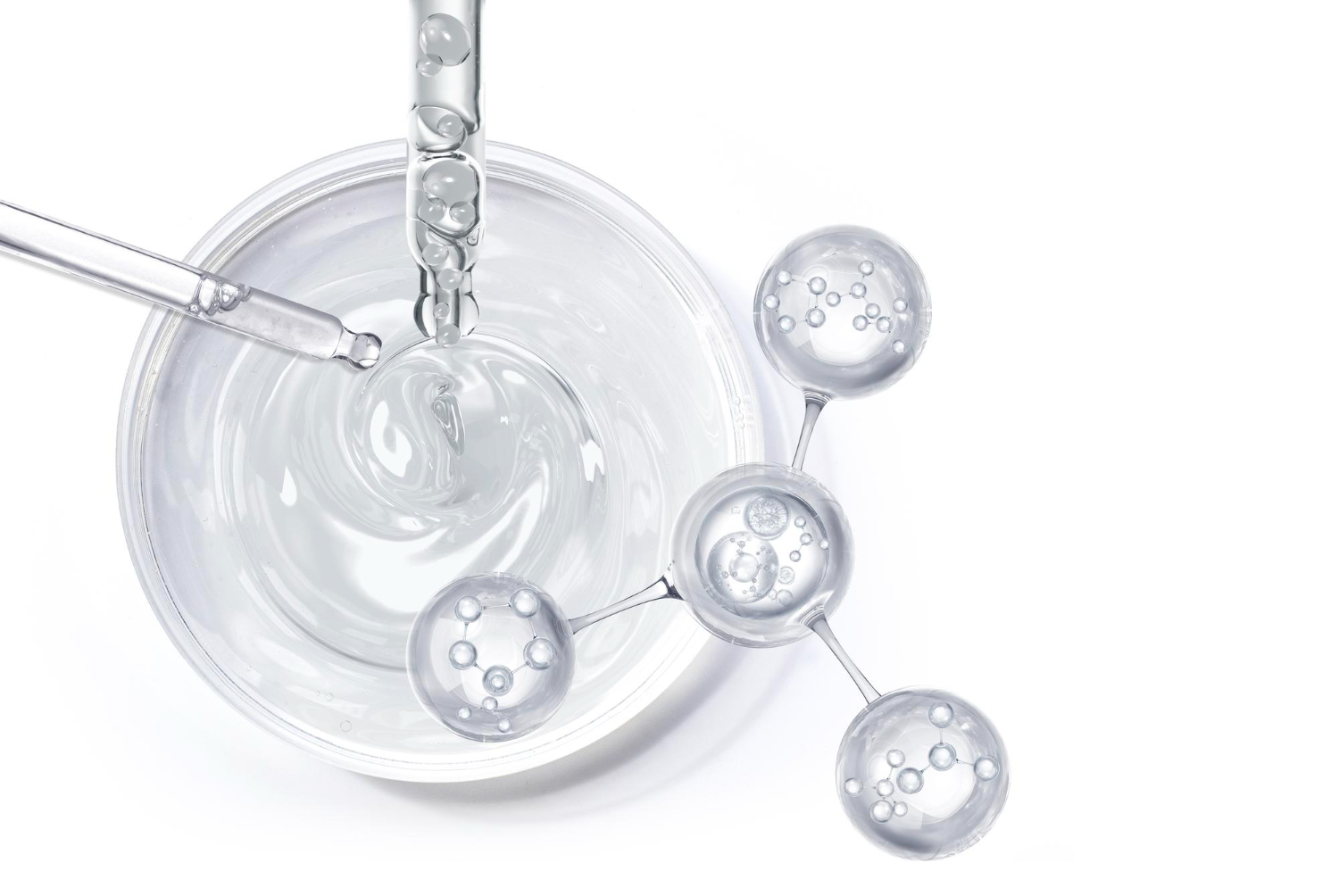
Encapsulation is a technology that encloses a core material, such as bioactive compounds, vitamins, enzymes, live microorganisms (Probiotics), or essential oils, within a shell material that may be a polymer, lipid, protein, or carbohydrate.

The three primary purposes of Encapsulation are: first, protecting the core material from degrading factors such as oxygen, light, moisture, heat, and extreme pH; second, Controlled Release so the core material is released at a specified time and location, such as intestinal rather than gastric release; and third, increasing Bioavailability by reducing particle size for improved absorption.

Encapsulation types are categorized by particle size into Microcapsules (1-1000 micrometers) and Nanocapsules (below 1 micrometer); by structure into Reservoir Type, where a shell layer surrounds the core, and Matrix Type, where the core is distributed throughout the polymer matrix; and by material into Lipid-Based systems such as Liposomes and Solid Lipid Nanoparticles, Polymeric systems such as Microcapsules from Alginate, Chitosan, or Gelatin, and Protein-based systems such as Whey Protein Microspheres.

Stability testing for encapsulation systems, from microencapsulation to nanoencapsulation

Differences Between Microencapsulation, Nanoencapsulation, and Liposome

Manufacturers often use these terms interchangeably, but technically and from a regulatory standpoint, the differences are significant for both formulation design and stability testing protocols.

  • Microencapsulation applies to systems with particle sizes in the micron range. It is widely used in food and supplement industries to encapsulate vitamins, probiotics, fish oil, and flavoring agents. Common production methods include Spray Drying, Coacervation, and Fluidized Bed coating. The larger particle size makes testing and storage easier, though it may affect mouthfeel in food products.
  • Nanoencapsulation applies to systems below 1 micrometer, typically in the 100-500 nanometer range. It is popular in cosmetics and pharmaceuticals to enhance bioavailability and skin penetration. Smaller particles offer higher surface area and greater efficacy of active ingredients, but the long-term stability challenge is that particles tend to aggregate or undergo Ostwald Ripening over time.
  • Liposomes are a subgroup of Nanoencapsulation using phospholipids as shell material, creating a bilayer structure similar to a cell membrane. This allows encapsulation of both hydrophilic compounds in the aqueous core and lipophilic compounds in the shell layer. They are widely used in premium cosmetics and active delivery products. Liposomes present particular stability testing challenges because the lipid bilayer may leak and deform.
  • Solid Lipid Nanoparticles (SLN) and Nanostructured Lipid Carriers (NLC) are newer alternatives to Liposomes that use solid lipids instead of phospholipids, offering better long-term stability and suitability for cosmetics and cosmeceuticals.

Why Encapsulation Systems Require Special Stability Testing

Encapsulation systems have stability challenges that differ significantly from open formulations. Degradation occurs not only in the core material but also in the shell, the structure, and the overall encapsulation performance.

  1. The first type of degradation is core leakage. When the capsule shell degrades or develops micro-cracks, the core material gradually leaks out before the intended release time. The result is a changed Release Profile and declining encapsulation efficiency over time. Measurement requires comparing EE% across different pull points.
  2. The second type is particle aggregation. Particles designed for uniform dispersion may cluster together, increasing mean particle size. Measurement requires Dynamic Light Scattering (DLS) or Laser Diffraction to compare Particle Size Distribution between the initial time point and subsequent pull points.
  3. The third type is Ostwald Ripening, a phenomenon where larger particles grow by consuming smaller ones. It is common in nano-systems and emulsions and is thermodynamically difficult to suppress, requiring appropriate formulation design to slow the process.
  4. The fourth type is physical transformation of the shell, such as polymorphic transformation of lipids in SLN or phospholipid degradation from Lipid Oxidation in Liposomes. This requires evaluation using Differential Scanning Calorimetry (DSC) and Peroxide Value measurements.

Testing Parameters: Encapsulation Efficiency and Release Profile

Stability testing protocols for Encapsulation systems must measure both the core material and the capsule structure. There are six required parameter groups.

  1. The first group is Encapsulation Efficiency (EE%), which measures the proportion of core material remaining inside the capsule relative to the total core in the system. It is calculated by separating free core material (outside the capsule) from the encapsulated core using Centrifugation or Membrane Filtration, followed by quantification using HPLC, UPLC, or UV-Vis Spectrophotometry.
  2. The second group is Release Profile, which measures the rate and pattern of core material release over time under simulated conditions such as Phosphate Buffer (pH 6.8) for intestinal simulation, Simulated Gastric Fluid (pH 1.2) for stomach simulation, or Phosphate Buffered Saline (PBS) for cosmetic applications. Measurement uses Dialysis Bag Method or Franz Diffusion Cell.
  3. The third group is Particle Size and Distribution, measured using Dynamic Light Scattering (DLS) for nano-systems or Laser Diffraction for micro-systems, along with Polydispersity Index (PDI), which should remain below 0.3 for nano-systems.
  4. The fourth group is Zeta Potential, measuring the electrical charge on the particle surface. Values above 30 mV or below -30 mV indicate sufficient electrostatic repulsion to maintain dispersion stability.
  5. The fifth group is Morphology, examining capsule shape and surface structure using Scanning Electron Microscopy (SEM) or Transmission Electron Microscopy (TEM) as supporting evidence for quantitative data.
  6. The sixth group is core and shell stability. For oxidation-sensitive core materials, Peroxide Value must be measured, and for degradable shells, polymer or lipid degradation must be assessed using appropriate techniques.

Physical and Chemical Analysis Techniques for Microcapsules

Encapsulation system analysis requires a range of specialized instruments because the system has chemical, physical structural, and release behavior dimensions.

Chemical analysis of the core uses HPLC, UPLC, or LC-MS/MS to quantify content and detect degradation products. For volatile compounds such as essential oils, GC-MS is used. All quantitative analysis must use methods validated per ICH Q2(R1).

Physical analysis uses DLS for nano-system particle size, Laser Diffraction for micro-systems, DSC for lipid phase transition analysis, X-ray Diffraction (XRD) for crystalline structure, and FTIR for analyzing bonding between core and shell materials.

Release analysis uses Dialysis Bag systems, Franz Diffusion Cells, or USP Dissolution Apparatus depending on product type and target market.

Testing Conditions and Sampling Schedule per ICH Q1A and ASEAN Zone IVb

Stability testing protocols for Encapsulation systems use the conditions specified in ICH Q1A(R2) and the ASEAN Stability Guideline as the primary framework, which may be adjusted to suit the characteristics of specific products.

Long-term Study is conducted at 30°C / 75% RH per ASEAN Zone IVb for a minimum of 12 months for initial registration and 24-36 months for full shelf-life determination. Accelerated Study is conducted at 40°C / 75% RH for 6 months to support registration and preliminary shelf-life prediction. Intermediate Study is conducted at 30°C / 65% RH for 12 months when the product shows significant change under accelerated conditions.

For temperature-sensitive Liposome and Nanoencapsulation systems, refrigerated conditions (5°C) may need to be added to verify stability under cold storage. Pull points follow the standard schedule of months 0, 1, 3, 6, 9, and 12 for long-term studies, and months 0, 1, 2, 3, and 6 for accelerated studies, with additional points added as specific systems require.

Applications: Cosmetics, Food Supplements, and Herbal Products

Encapsulation systems are widely applied across Thai health and beauty industries, with different challenges and protocols depending on the product category.

In cosmetics, Liposomes and Nanoencapsulation are used in premium serums and creams to deliver Vitamin C, Retinol, Peptides, and antioxidants, enabling claims of higher bioavailability and improved skin penetration. Stability testing protocols must cover both the active ingredient stability and the Liposome structure, which may degrade over time.

In food supplements, Microencapsulation is used with probiotics, oxygen-sensitive vitamins (A, D, E, K), and fish oil to help core materials survive production conditions, storage, and stomach acid before releasing in the intestine. Stability testing must assess both viable probiotic count (CFU/g) and vitamin stability under ASEAN Zone IVb conditions.

In herbal products under the Herbal Product Act B.E. 2562 (2019), encapsulating herbal extracts in Encapsulation systems helps protect Marker Compounds from degradation and increases bioavailability. Testing must measure Marker Compounds by HPLC or GC-MS at multiple pull points throughout the shelf life.

Stability testing for encapsulation systems, from microencapsulation to nanoencapsulation

VISBIO’s Role as an Independent Quality Assurance Verifier (IQAV)

The credibility of Encapsulation system stability test reports depends on the independence of the analyst. VISBIO, acting as an Independent Quality Assurance Verifier (IQAV), analyzes samples collected at TIBD’s various pull points using Validated Methods per ICH Q2(R1) with full traceability documentation at every step and operations conducted under ISO/IEC 17025 standards.

For complex Encapsulation systems, having a third-party IQAV gives foreign importers and regulatory authorities confidence in the Encapsulation Efficiency, Release Profile, and other physical data presented in registration documents or product specification files.

TIBD Team Expertise

The Encapsulation system stability testing service is conducted in partnership with Dr. Wuttipong Panitsettakorn, Advisor and Co-Founder, who specializes in commercial technology management for the health and beauty industry, and Ms. Mandhamon Uttamo, Advanced Formulator, with experience in Encapsulation system formulation development at both laboratory and commercial production scale. Our team includes researchers specializing in Encapsulation Technology and network researchers covering nano-level physical analysis, Marker Compound analysis, and Bioavailability assessment.

Does your product use Encapsulation, Microencapsulation, Nanoencapsulation, or Liposome technology? If you need stability data aligned with ICH Q1A(R2) and the ASEAN Stability Guideline for registration or negotiations with international Brand Owners, Contact TIBD for a customized protocol designed for your system.

เอกสารอ้างอิง (References)

Apply for Encapsulation Systems Stability Testing Service: From Microencapsulation to Nanoencapsulation

If you have any questions or would like to receive a free consultation regarding Encapsulation Systems Stability Testing Service: From Microencapsulation to Nanoencapsulation, or if you would like to visit us in person in Bangkok, Thailand, you are warmly welcomed and feel free to contact us via the contact form below.

  • This field is for validation purposes and should be left unchanged.