Description

Herbal Balm (ยาหม่องสมุนไพร) and Herbal Gel (เจลสมุนไพร) are topical product formats that have been popular in Thailand for generations and are now expanding rapidly in export markets across ASEAN, Japan, and the Middle East, as international consumers increasingly accept traditional Thai medicine and Thai herbal ingredients as healthcare alternatives.

The stability challenge for herbal balm and herbal gel is that the two product formats operate on entirely different systems. Most herbal balm products use an Oil-Wax Matrix with a Melting Point that must remain stable and volatile compounds that are temperature-sensitive. Herbal gel, by contrast, uses a Hydrophilic Gel System with Carbomer or Cellulose Derivatives as Gelling Agents, and must avoid Syneresis and degradation of the preservative system.

TIBD’s service is designed specifically for Thai herbal products in balm and gel formats. It covers Melting Point Stability assessment, Volatile Compound analysis by Gas Chromatography (GC-MS), Marker Compound analysis by High-Performance Liquid Chromatography (HPLC), and microbiological assessment, conducted under ASEAN Zone IVb conditions (30°C / 75% RH) and per the Thai Herbal Pharmacopoeia (THP 2021) acceptance criteria, in partnership with VISBIO as an Independent Quality Assurance Verifier (IQAV).
Herbal Balm and Herbal Gel in the Thai Herbal Product Market

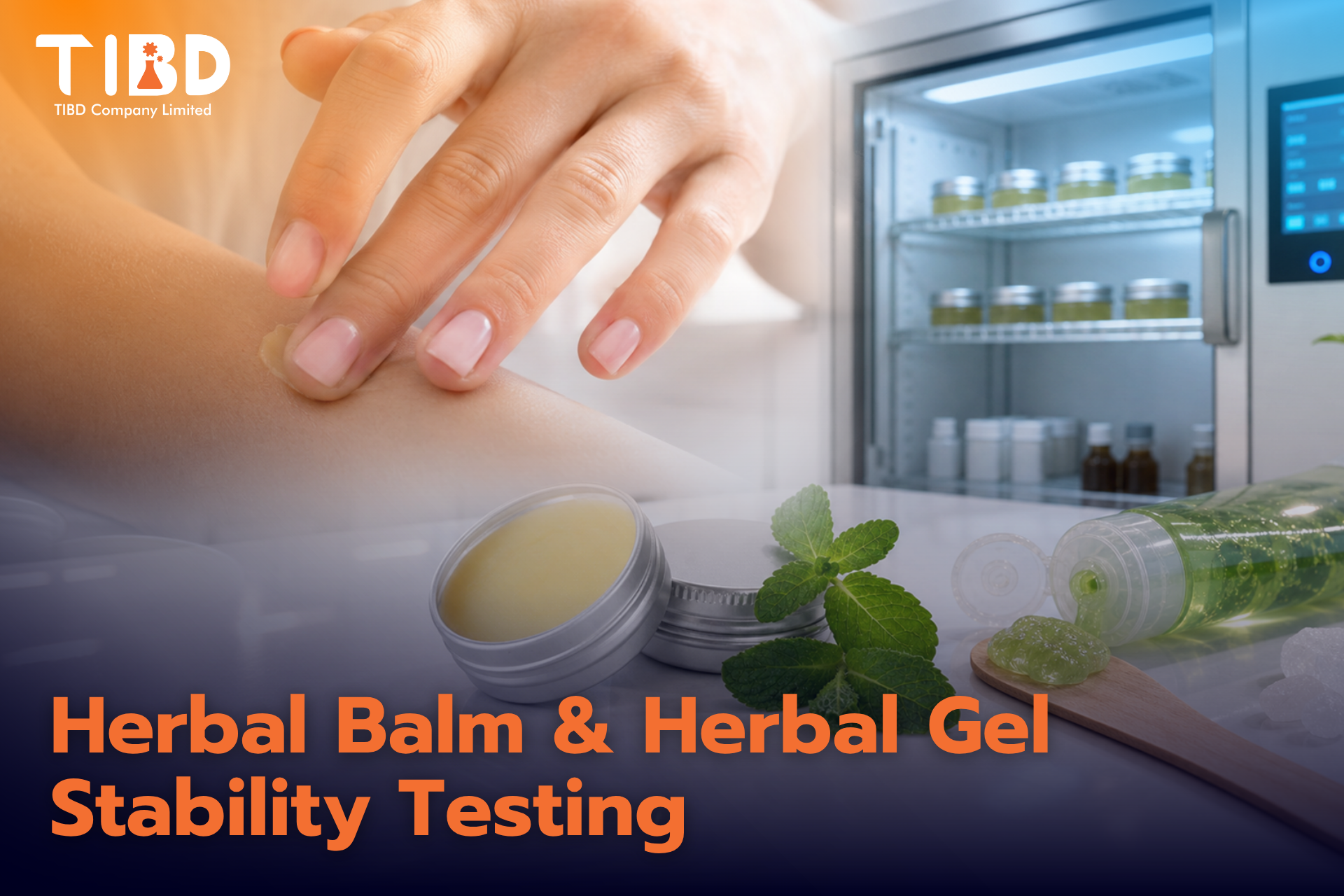
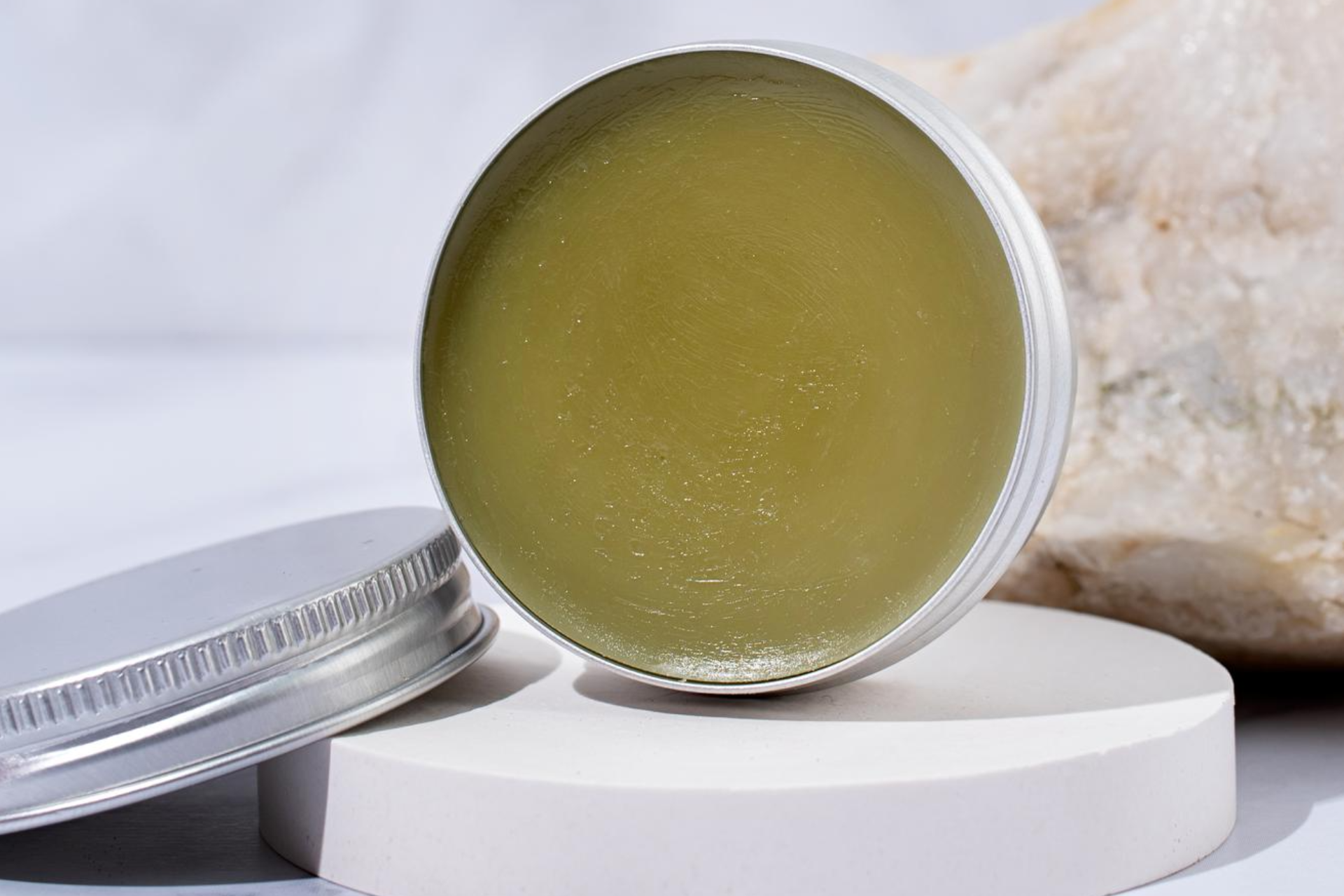
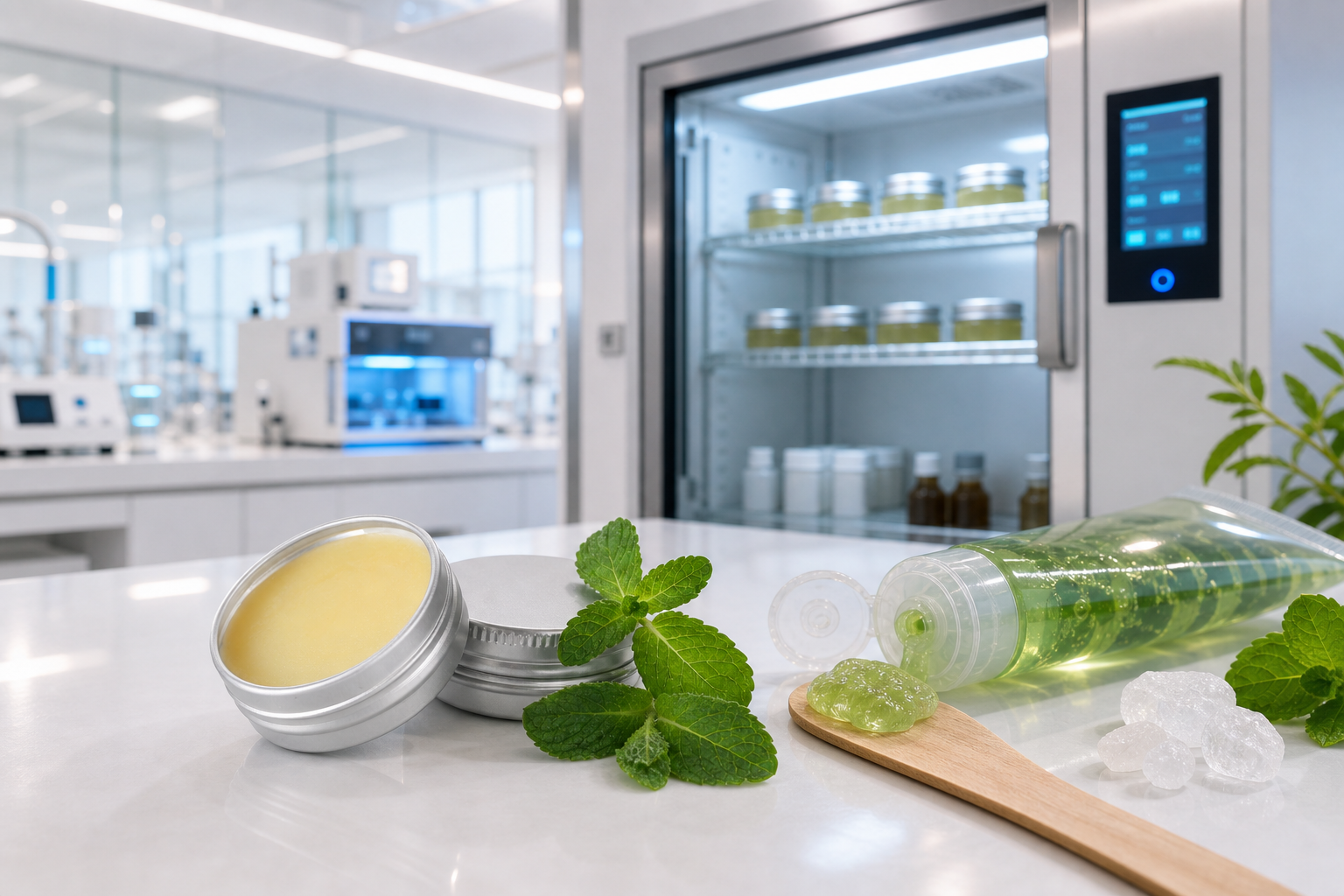
Herbal Balm is a topical product with an oil and wax base, packaged in metal tins or plastic jars. Primary ingredients include Vegetable Oil, Beeswax or Paraffin Wax, volatile compounds from herbs such as Camphor, Menthol and Borneol, and essential oils from Thai herbs including Eucalyptus Oil, Plai Oil, and Betel Leaf Oil.

Herbal Gel is a topical product with a water and Gelling Agent base using ingredients such as Carbomer, Hydroxyethylcellulose, or Xanthan Gum, packaged in squeeze tubes or pump bottles. Primary ingredients include herbal extracts such as Plai Extract, Centella Extract, and Turmeric Extract, along with a preservative system suitable for the product’s pH.

The target market for herbal balm and gel encompasses the domestic market where consumers use these products to relieve muscle aches, insect bites, and cough symptoms, and export markets where international consumers are increasingly accepting traditional Thai medicine. Key export markets include Singapore, Malaysia, Indonesia, Vietnam, the Philippines, Japan, South Korea, and the Middle East.

Specific Challenges of the Oil-Wax Matrix and Hydrophilic Gel Systems

Herbal balm and herbal gel operate on completely different systems, giving each format its own specific stability testing challenges.

In the Oil-Wax Matrix system of herbal balm, the first challenge is the Melting Point of the system. If the Melting Point is too low, the product may liquefy in the heat of a tropical humid climate and leak from the packaging, making it unusable. If the Melting Point is too high, the product becomes too hard to apply at the cooler room temperatures found in some markets. Designing the correct Wax-to-Oil ratio and testing Melting Point stability throughout the shelf life is therefore a critical requirement.

The second challenge in herbal balm is Volatile Loss. Volatile compounds from herbs such as Camphor, Menthol, Borneol, and Eucalyptus Oil have high Vapor Pressure and evaporate from the system at elevated temperatures, reducing both fragrance and symptom-relief efficacy over time. Stability testing must measure volatile compounds at each pull point using Headspace Gas Chromatography Mass Spectrometry (GC-MS).

In the Hydrophilic Gel system of herbal gel, the first challenge is Syneresis, which occurs when the Gel Network deteriorates and water separates from the gel body, changing the product’s form and making it unpleasant to use. Syneresis testing is performed by visual assessment and measurement of the weight of separated water.

The second challenge in gel is preservative system stability. Gel products with water as the primary ingredient are susceptible to microbial contamination, making Preservative Efficacy Testing (PET) per ISO 11930 a critical requirement.

The challenge shared by both systems is degradation of herbal Marker Compounds, such as Curcuminoids in Turmeric Gel and Asiaticoside in Centella Gel, which may degrade from oxygen, light, and temperature exposure. Marker Compound levels must be analyzed at each pull point by HPLC.

Stability testing for herbal balms and herbal gels

Testing Parameters Specific to Herbal Balm and Herbal Gel

TIBD’s stability testing protocols cover parameters designed specifically for herbal balm and herbal gel, integrating ICH Q1A(R2) criteria with Thai Herbal Pharmacopoeia requirements.

For herbal balm, parameters covered include Melting Point measured by Capillary Tube Method or Differential Scanning Calorimetry (DSC), Volatile Content by GC-MS Headspace, Marker Compound content of herbal extracts by HPLC, Appearance covering color, odor, and texture, Net Weight Loss to assess sublimation through packaging, and Peroxide Value for oils susceptible to oxidation.

For herbal gel, parameters covered include pH, which must stay within plus or minus 0.5 units from the initial value, Viscosity, which must stay within plus or minus 15% of the initial value, Syneresis, which must not occur, Marker Compound content of herbal extracts, Microbial Limit Test results, which must not exceed the limit, and PET results, which must pass ISO 11930.

Both systems must pass microbiological assessment per the Thai Herbal Pharmacopoeia, which requires total microbial count not exceeding 100 CFU/g and absence of specified pathogenic microorganisms.

Volatile Compound and Marker Compound Analysis

The core of herbal balm and herbal gel stability testing is simultaneous analysis of both volatile compounds and marker compounds, which are the primary active components of the products.

Volatile compound analysis uses Headspace GC-MS, which captures molecules in the space above the product without requiring solvent extraction. This technique is well suited to volatile compounds with high Vapor Pressure such as Camphor, Menthol, Borneol, and essential oils. The result is a Chromatographic Profile showing the relative content of each volatile compound, compared across each pull point.

Marker compound analysis uses HPLC with a Reverse Phase Column and UV Detector or Diode Array Detector (DAD) for compounds with a Chromophore such as Curcuminoids, Asiaticoside, and Andrographolide, or LC-MS/MS for compounds present in low concentrations or without a prominent Chromophore. A change of less than 10% in Marker Compound content throughout the shelf life is considered to meet the acceptance criterion.

For herbal balm and gel products containing multiple herbs, TLC/HPTLC Fingerprinting is an additional tool that captures the overall profile of multiple compound groups simultaneously. The Similarity Index between T0 and Tx must not fall below 0.95.

Testing Conditions and Sampling Schedule per ASEAN Zone IVb

TIBD’s testing protocols use conditions per ICH Q1A(R2) for ASEAN Zone IVb, with adjustments appropriate for products containing volatile compounds.

Long-term Stability testing is conducted at 30°C / 75% RH for a minimum of 12 months to simulate storage conditions in retail outlets and consumers’ homes in tropical humid climates.

Accelerated Stability testing is conducted at 40°C / 75% RH for 6 months to support shelf-life prediction. For herbal balm products that may have a Melting Point below 40°C, adjusted conditions such as 35°C / 75% RH are used, or a Cycling Test between 4°C and 40°C is added to detect deformation problems from temperature changes.

Standard pull points for long-term testing are at months 0, 3, 6, 9, 12, 18, and 24. For accelerated testing, pull points are at months 0, 1, 2, 3, and 6. For herbal balm products with high volatile content, TIBD adds monthly pull points in the first 6 months to capture volatile compound changes in detail.

Acceptance Criteria per Thai Herbal Pharmacopoeia (THP 2021)

The Thai Herbal Pharmacopoeia (THP 2021) specifies acceptance criteria for herbal balm and herbal gel, used in conjunction with ICH Q1A(R2) standards.

For herbal balm, total volatile content must not decrease by more than 15% from the initial value. Each major volatile compound such as Camphor or Menthol must not decrease by more than 20%. Texture and color must not change significantly. Melting Point must remain within plus or minus 2°C of the initial value. Peroxide Value must not exceed 10 mEq/kg.

For herbal gel, pH must remain within plus or minus 0.5 units. Viscosity must remain within plus or minus 15%. Syneresis must not occur during long-term testing. Marker Compound content must not fall below 90% of the initial value. Microbiological test results must meet the criteria at every pull point throughout the study.

Stability testing for herbal balms and herbal gels

Registration and Export

Herbal balm and herbal gel products sold in Thailand must obtain registration with the FDA under the Herbal Product Act B.E. 2562 (2019), or under the Cosmetics Act B.E. 2558 (2015) when classified as a cosmetic, depending on the claims stated on the label.

Products making Therapeutic Claims, such as claims to relieve or treat symptoms, are classified as herbal products requiring registration under the Herbal Product Act and must have complete stability data, Marker Compound data, and TLC/HPTLC Fingerprinting.

Products making cosmetic claims, such as a herbal skincare gel containing herbal extracts, are classified as cosmetics requiring a Cosmetic Notification under the ASEAN Cosmetic Directive.

For export, ASEAN markets use documentation per the ASEAN Cosmetic Directive or ASEAN Traditional Medicine Guidelines. Japan and South Korea require country-specific documentation. The Middle East requires Halal Certification alongside product qualification documentation.

VISBIO’s Role as an Independent Quality Assurance Verifier (IQAV)

VISBIO, acting as an Independent Quality Assurance Verifier (IQAV), performs volatile compound analysis by GC-MS, Marker Compound analysis by HPLC, TLC/HPTLC Fingerprinting, and microbiological testing on samples collected at TIBD’s pull points, using Validated Methods per ICH Q2(R1) with full traceability documentation at every step and operations conducted under ISO/IEC 17025 standards.

TIBD Team Expertise

The herbal balm and herbal gel stability testing service is conducted in partnership with Dr. Wuttipong Panitsettakorn, Advisor and Co-Founder, who specializes in commercial technology management for the health and beauty industry, and Ms. Mandhamon Uttamo, Advanced Formulator, with experience in Thai herbal balm and herbal gel formulation development in both Oil-Wax Matrix and Hydrophilic Gel systems. Our team includes researchers specializing in Pharmacognosy, Essential Oil Chemistry, and Botanical Standardization.

Is your herbal balm or herbal gel product ready for Thai FDA registration or for export? If you need stability data referenced to ICH Q1A(R2), the ASEAN Stability Guideline, and the Thai Herbal Pharmacopoeia (THP 2021), Contact TIBD for a customized protocol designed for your product. Related articles are available in the TIBD Thai Herbal Product Stability Testing Service Hub.

References

Apply for Herbal Balm and Herbal Gel Stability Testing Service

If you have any questions or would like to receive a free consultation regarding Herbal Balm and Herbal Gel Stability Testing Service, or if you would like to visit us in person in Bangkok, Thailand, you are warmly welcomed and feel free to contact us via the contact form below.

  • This field is for validation purposes and should be left unchanged.