Description

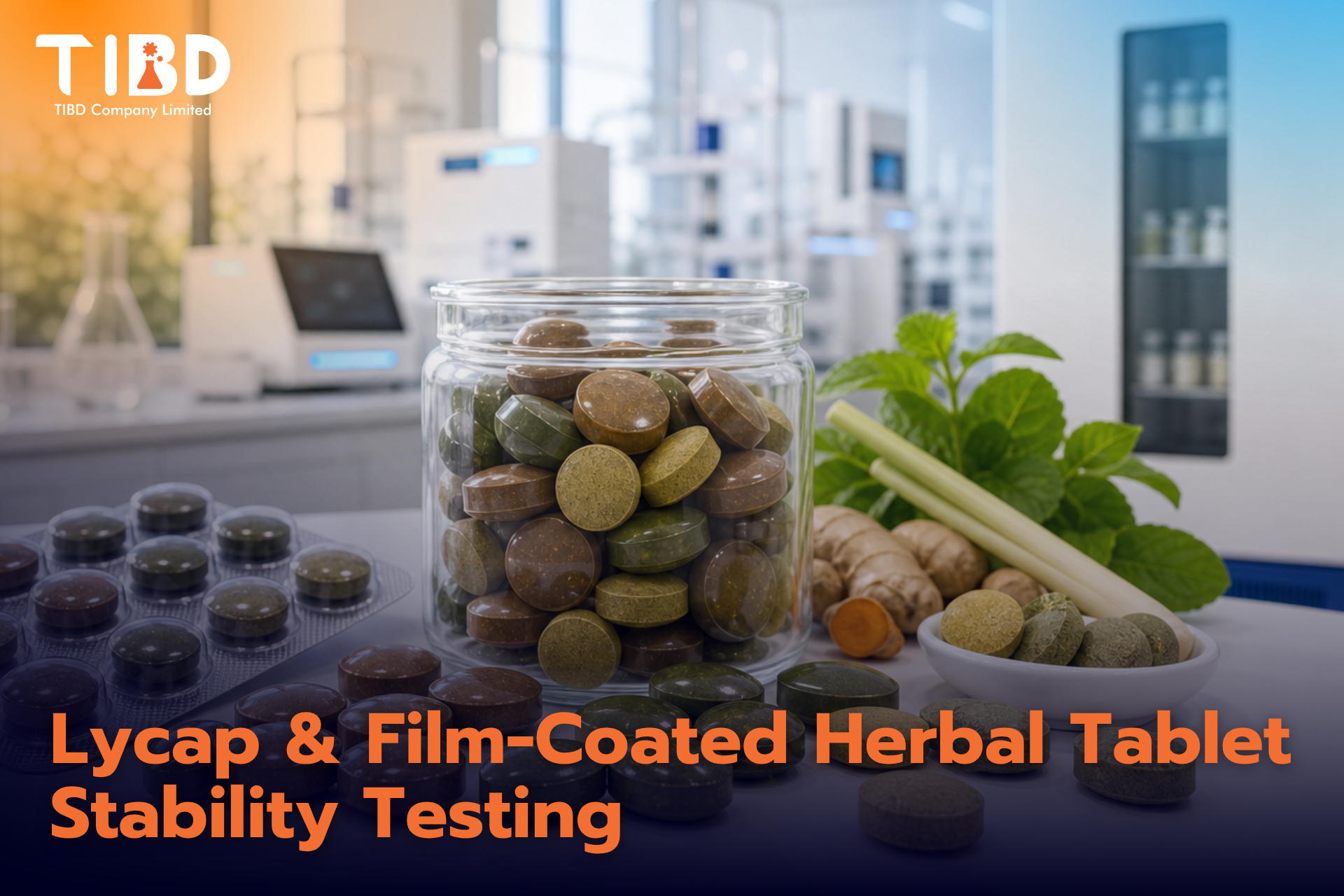
Lycap (ลูกกลอน) is a traditional Thai herbal dosage form prepared by mixing finely ground dried herbs with a binder such as honey or syrup and shaping the mixture into small spheres. This format has been used in Thai traditional medicine for centuries and remains widely produced under the Thai National Formulary and the Herbal Product Act B.E. 2562 (2019). Film-Coated Herbal Tablets apply a thin polymer coating over a compressed tablet core to protect the active herbal ingredient, mask bitter taste, and improve product presentation. Both formats present specific stability challenges in the hot and humid ASEAN Zone IVb environment, including Coating Film instability, moisture absorption affecting Disintegration, Marker Compound degradation, microbial growth in honey-bound Lycap with high Water Activity, and color change from natural pigment degradation.

TIBD’s service is designed specifically for Lycap and Film-Coated Herbal Tablets, covering Hardness, Disintegration Time, Friability, Weight Variation, Content Uniformity, Moisture Content, Water Activity, Coating Integrity, Coating Thickness, Dissolution, Color assessment by CIE Lab* Colorimeter, and Marker Compound Assay by High Performance Liquid Chromatography (HPLC) under ASEAN Zone IVb conditions per ICH Q1A(R2), in partnership with VISBIO as an Independent Quality Assurance Verifier (IQAV) using Validated Methods per ICH Q2(R1).
Herbal Tablet Product Types in the Thai and ASEAN Market

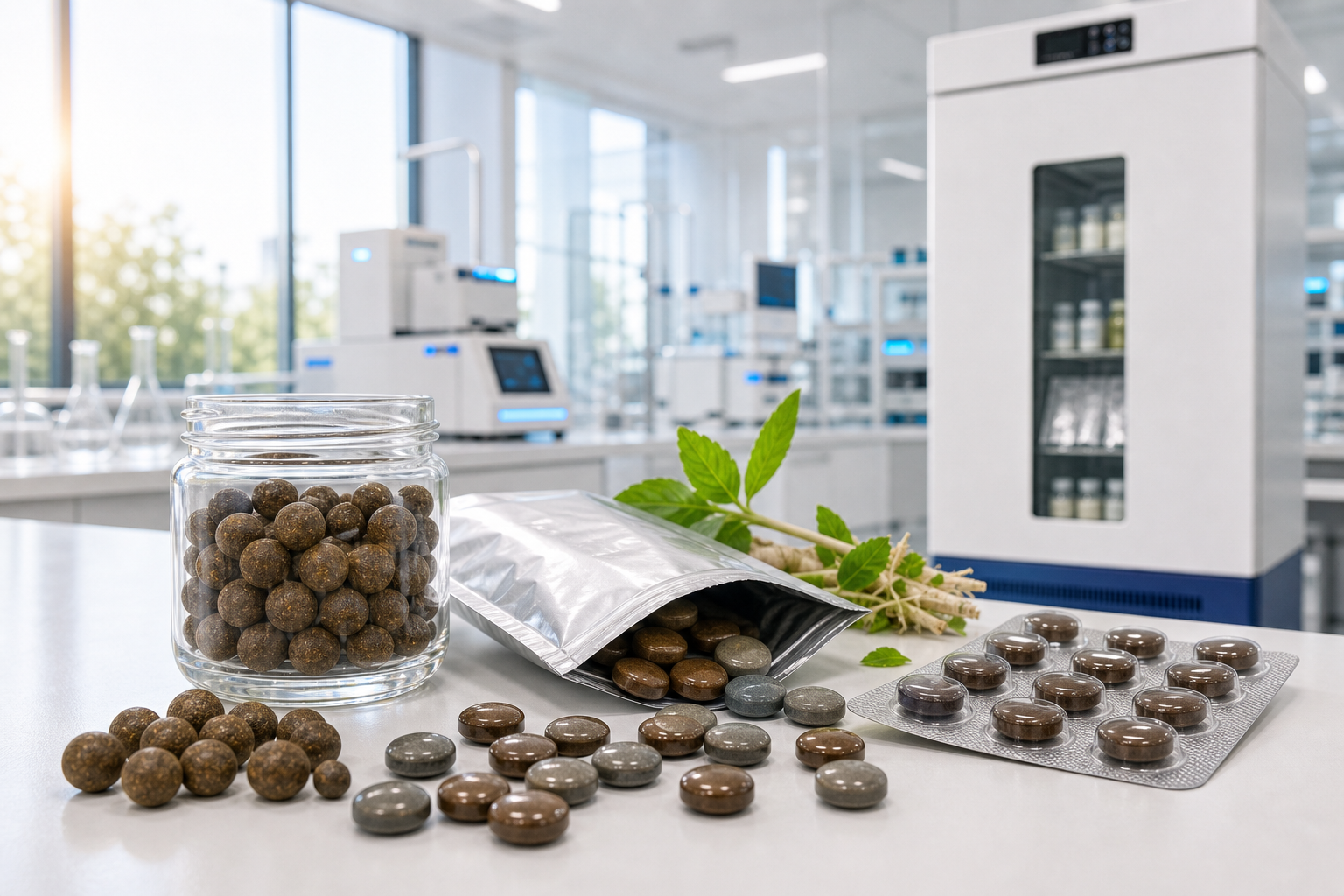
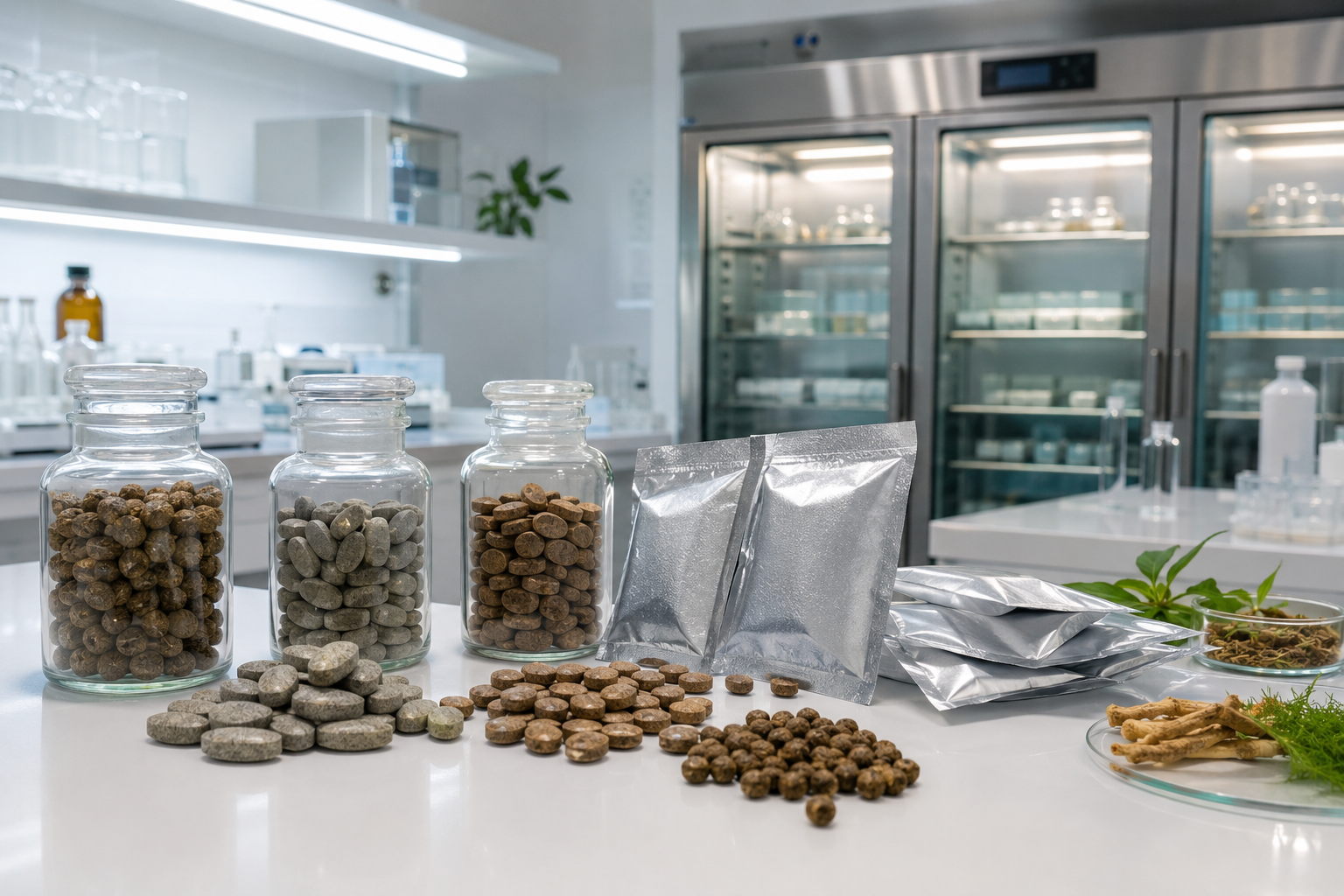
Six herbal tablet and Lycap product types are commercially produced in Thailand and the ASEAN region.

  • Traditional Lycap prepared per the Thai National Formulary includes classical formulas such as Sek Sam Sip (สักกะทิ้ง สามสิบ), Ya Hom (ยาหอม), Triphala (ตรีผลา), and Phaya Yo (พญายอ). These products must match the declared formula composition per the National Formulary specification and meet the identity, purity, and Marker Compound requirements of Thai Herbal Pharmacopoeia 2021 (THP 2021).
  • Contemporary Lycap is produced with concentrated herbal extracts and defined Marker Compound content, targeting the nutraceutical market. These products combine traditional format with modern quality control, allowing quantitative Marker Compound claims on product labeling.
  • Film-Coated Tablets use a water-soluble polymer film coating applied by spray coating, with HPMC (Hydroxypropyl Methylcellulose), PVA (Polyvinyl Alcohol), and PVP (Polyvinylpyrrolidone) as the most common film-forming agents. Film coating reduces moisture ingress, improves appearance, and masks the characteristic bitter taste of many herbal extracts.
  • Sugar-Coated Tablets apply successive layers of sucrose-based coating over the tablet core, producing a smooth, glossy appearance. This format has largely been replaced by film coating in modern production but remains in use for certain traditional products and pediatric formulations.
  • Enteric-Coated Tablets use an acid-resistant polymer coating (HPMCP, Eudragit L100, or Methacrylic Acid Copolymer) to prevent dissolution in gastric acid and ensure release in the intestine. This format is used for herbal actives that are degraded by gastric acid or that cause gastric irritation.
  • Sustained-Release Tablets are designed to release the active herbal ingredient gradually over an extended period. This format improves consumer compliance and maintains consistent plasma levels of the active compound.
Stability testing for herbal pills and film-coated herbal tablets

Specific Stability Challenges of Lycap and Herbal Tablets in Tropical Climates

Seven stability challenges specific to Lycap and Film-Coated Tablets must be addressed in a stability protocol designed for ASEAN Zone IVb conditions.

  1. The first challenge is Coating Film cracking, peeling, or stickiness under high temperature and humidity. Coating Film instability at 40°C / 75% RH causes visible appearance defects and exposes the tablet core to moisture, accelerating Marker Compound degradation and Disintegration Time changes.
  2. The second challenge is moisture absorption affecting Hardness, Disintegration, and Dissolution. A change of more than 30% from the initial Disintegration Time is considered significant per ICH Q1A(R2) stability criteria and triggers a formulation review.
  3. The third challenge is Marker Compound degradation. Curcuminoids, Andrographolide, and Asiaticoside are all sensitive to heat, moisture, and light exposure. Stability Indicating HPLC methods are required to distinguish the parent compound from its degradation products throughout the study.
  4. The fourth challenge is microbial growth in honey-bound Lycap products. Lycap prepared with honey or syrup binders have higher Water Activity than compressed tablets, creating conditions favorable for yeast and mold growth under tropical storage conditions. Water Activity monitoring and microbial limit testing are required throughout the shelf life.
  5. The fifth challenge is color change from Maillard reaction between reducing sugars and amino acids in the honey binder, or from degradation of natural colorants used in Sugar-Coated formulations. Color change is assessed quantitatively by CIE Lab* Colorimetry.
  6. The sixth challenge is taste change affecting consumer compliance. While taste is assessed organoleptically, it is generally correlated with Marker Compound content data from the HPLC assay.
  7. The seventh challenge is degradation of the Sustained-Release matrix for modified-release formulations, causing Release Profile changes and potential dose dumping. Dissolution testing at multiple time points is required for this format throughout the stability study.

Testing Parameters: Hardness, Disintegration, Friability, Coating Integrity

TIBD’s stability testing protocol for Lycap and Herbal Tablets covers the full set of physical and chemical parameters required to characterize dosage form integrity and active ingredient content.

  • Hardness is measured using a Hardness Tester per Ph.Eur. 2.9.8. The acceptance criterion for Plain and Film-Coated Tablets is typically 70 to 200 N depending on tablet size and formulation. For Lycap, the acceptance criterion is 30 to 80 N, reflecting the softer, more pliable structure of the traditional ball format.
  • Disintegration Time is measured using a Disintegration Tester per Ph.Eur. 2.9.1 in water at 37°C. The acceptance criterion for uncoated tablets is Not More Than 30 minutes; for Lycap it is Not More Than 60 minutes. For Enteric-Coated Tablets, the method requires a two-stage test: no disintegration in 0.1 M HCl at 37°C for 2 hours, followed by complete disintegration in phosphate buffer pH 6.8 within 60 minutes.
  • Friability is measured per Ph.Eur. 2.9.7 using 6.5 g of tablets in a Friability Tester. The acceptance criterion is Not More Than 1% weight loss. High Friability indicates insufficient tablet hardness or binder content and predicts breakage during distribution.
  • Weight Variation and Content Uniformity are assessed per Ph.Eur. 2.9.5 and 2.9.6 respectively, confirming consistent fill weight and Marker Compound distribution across the batch.
  • Moisture Content is measured by Karl Fischer Titration or Loss on Drying. The acceptance criterion is 3 to 5% for Film-Coated Tablets and 3 to 6% for Lycap formulations.
  • Water Activity (aw) is measured by Water Activity Meter. The acceptance criterion is Not More Than 0.6 to inhibit microbial growth. Lycap formulations prepared with honey binders must be particularly monitored for Water Activity, as honey-bound products may have aw values approaching 0.65 at manufacture.
  • Coating Integrity is assessed by Stereomicroscope examination at each Pull Point, documenting cracks, peeling, discoloration, or tackiness of the film surface.
  • Coating Thickness is measured by Optical Coherence Tomography (OCT) or SEM cross-section examination, confirming that the coating remains within the specified thickness range throughout the shelf life.
  • Dissolution is measured per Ph.Eur. 2.9.3 using USP Apparatus 2 (Paddle) in simulated gastrointestinal fluids at the specified pH. For Immediate Release tablets the criterion is Q not less than 75% within 30 to 45 minutes. For Sustained-Release tablets, dissolution profiles at multiple time points (0.5, 1, 2, 4, 6, 8 hours) confirm that the Release Profile is maintained throughout the shelf life.
  • Color assessment uses a CIE Lab* Colorimeter to quantify color change objectively. A color difference (Delta E) of more than 3 units is typically considered visually significant.

Marker Compound Analysis for Lycap and Herbal Tablets

TIBD and VISBIO apply compound-specific HPLC methods validated as Stability Indicating methods, capable of resolving the parent compound from its thermal and hydrolytic degradation products.

  • Andrographolide: Analyzed by HPLC with UV detection at 225 nm using a Stability Indicating Method that separates Andrographolide from Dehydroandrographolide, the primary degradation product. Andrographolide is the primary Marker Compound of Andrographis paniculata (Fah Talai Jone) tablets, one of the most commercially significant herbal tablet products in Thailand.
  • Curcuminoids (Curcumin, Demethoxycurcumin, Bisdemethoxycurcumin): Analyzed by HPLC with UV detection at 425 nm. The method resolves all three curcuminoid compounds, each of which has distinct degradation kinetics under thermal, photolytic, and hydrolytic stress conditions.
  • Berberine: Analyzed by HPLC with UV detection at 280 nm for tablets containing Clinacanthus nutans (Saled Phang Phon).
  • 6-Gingerol: Analyzed by HPLC with UV detection at 280 nm for ginger (Zingiber officinale) tablets.
  • Plumbagin: Analyzed by HPLC with UV detection at 268 nm for tablets containing Plumbago rosea (Jed Mu Pleng).
  • Asiaticoside: Analyzed by HPLC with ELSD or UV detection at 200 nm for Centella asiatica (Bua Bok) tablets. Asiaticoside is the primary Marker Compound of Centella-based Lycap formulations used in traditional Thai medicine.
  • Glycyrrhizin: Analyzed by HPLC with UV detection at 254 nm for tablets containing Glycyrrhiza glabra (licorice).
  • Withanolide: Analyzed by HPLC with UV detection at 220 nm for ashwagandha (Withania somnifera) tablets.
  • Hesperidin: Analyzed by HPLC with UV detection at 285 nm for tablets containing citrus peel.

Marker Compound content must be maintained at Not Less Than 90% of the initial labeled value throughout the declared shelf life. For products making Bioavailability or Bioequivalence claims for therapeutic efficacy, the HPLC data must confirm consistent active content throughout the study period.

Testing Conditions and Pull Point Schedule per ICH Q1A(R2)

Long-term Stability testing uses 30°C / 75% RH conditions per ASEAN Zone IVb for a minimum of 24 months. Accelerated Stability testing uses 40°C / 75% RH for 6 months. Intermediate Stability at 30°C / 65% RH is added for moisture-sensitive formulations.

Standard Pull Points for Long-term testing are months 0, 3, 6, 9, 12, 18, and 24. Standard Pull Points for Accelerated testing are months 0, 1, 2, 3, and 6.

Photostability testing per ICH Q1B in a Solar Simulator is required for light-sensitive Marker Compounds including Curcuminoids and Andrographolide, and for products in transparent or semi-transparent packaging.

Thai FDA Registration Requirements and THP 2021 Compliance

Under the Herbal Product Act B.E. 2562 (2019), Traditional Lycap must conform exactly to the declared formula as specified in the Thai National Formulary. New herbal tablet products require submission of a Drug Master File for each raw material, a Quality Specification document for the finished product, stability data covering the claimed shelf life, efficacy data if therapeutic claims are made, and safety data.

THP 2021 specifies acceptance criteria for identity, purity, Marker Compound content, Heavy Metal Limit, Pesticide Residue, Microbial Limit, and Aflatoxin Limit for each herbal monograph included in the Pharmacopoeia. Products intended for export must additionally comply with ASEAN Traditional Medicine Guidelines and the import requirements of the destination country.

Stability testing for herbal pills and film-coated herbal tablets

Formulation and Packaging Design Consultation

For manufacturers at the development stage, TIBD provides formulation consultation to improve the stability of Lycap and Herbal Tablet formulations before committing to a full stability study.

  • Lycap binders are selected based on the required Water Activity and the compatibility with the herbal matrix. Honey provides the traditional taste profile but has higher Water Activity; alternatives including Maltodextrin Solution, Acacia Gum, and Tragacanth provide lower Water Activity and improved microbial stability for modern products with regulatory shelf life requirements.
  • Film Coating polymers are selected based on the required functional performance: HPMC provides water-soluble film for standard Immediate Release tablets; PVA provides improved oxygen barrier properties; Eudragit L100 and HPMCP provide enteric protection; pigments and plasticizers are added to achieve the required color and film flexibility.
  • Disintegrants including Sodium Starch Glycolate, Croscarmellose Sodium, and Crospovidone are incorporated at optimized concentrations to maintain the specified Disintegration Time throughout the shelf life despite moisture absorption.
  • Packaging selection is guided by the moisture and light sensitivity of the formulation. Amber glass bottles protect light-sensitive Marker Compounds such as Curcuminoids and Andrographolide. HDPE bottles provide moisture barrier performance for compressed tablets. Blister Packs reduce repeated air and moisture contact between doses. Aluminum Strip Packs provide maximum protection for long-distance distribution in tropical climates. Silica Gel desiccant in bottles is recommended for all formulations with Moisture Content acceptance criteria below 5%.

VISBIO’s Role as an Independent Quality Assurance Verifier (IQAV)

VISBIO, acting as Independent Quality Assurance Verifier (IQAV), conducts Hardness, Disintegration Time, Friability, Moisture Content, Water Activity, Coating Integrity assessment, Marker Compound Assay by HPLC, TLC Fingerprinting, and microbiology testing on samples collected at each Pull Point, using Validated Methods per ICH Q2(R1) with full Traceability documentation at every step and operations conducted under ISO/IEC 17025 standards.

TIBD Team Expertise

The Lycap and Film-Coated Herbal Tablet Stability Testing service is conducted in partnership with Dr. Wuttipong Panitsettakorn, Advisor and Co-Founder, who specializes in commercial technology management for the health and beauty industry, and Ms. Mandhamon Uttamo, Advanced Formulator, who has extensive experience in the development of Thai traditional medicine and herbal supplement products across multiple dosage forms. Our team includes researchers specializing in Phytochemistry, Tablet Technology, Coating Technology, and Quality Control of Herbal Products.

Is your Lycap or Film-Coated Herbal Tablet ready for Thai FDA registration or ASEAN export? Contact TIBD for a customized stability protocol and starting price from ฿15,000.

References

  • International Council for Harmonisation of Technical Requirements for Pharmaceuticals for Human Use. (2003). Stability testing of new drug substances and products: Q1A(R2). ICH Harmonised Tripartite Guideline. https://database.ich.org/sites/default/files/Q1A%28R2%29%20Guideline.pdf
  • Royal Thai Government Gazette. (2019, April 30). Herbal Products Act B.E. 2562 (2019). Royal Thai Government Gazette, 136(56 Kor), 1–29. (In Thai)
  • Bureau of Drug and Narcotic, Department of Medical Sciences, Ministry of Public Health. (2021). Thai Herbal Pharmacopoeia 2021. Department of Medical Sciences. https://bdn-thp.dmsc.moph.go.th/home
  • European Directorate for the Quality of Medicines & HealthCare. (2023). European Pharmacopoeia 11.0: Tablets, Disintegration test (2.9.1), Dissolution test (2.9.3). Council of Europe. https://www.edqm.eu/en/european-pharmacopoeia
  • World Health Organization. (2007). WHO guidelines for assessing quality of herbal medicines with reference to contaminants and residues. World Health Organization. https://iris.who.int/handle/10665/43510

Apply for Lycap and Film-Coated Herbal Tablet Stability Testing Service

If you have any questions or would like to receive a free consultation regarding Lycap and Film-Coated Herbal Tablet Stability Testing Service, or if you would like to visit us in person in Bangkok, Thailand, you are warmly welcomed and feel free to contact us via the contact form below.

  • This field is for validation purposes and should be left unchanged.