Description

Many operators in Thailand’s health and beauty industry set product expiry dates by reference to competitors or default to 24 months as commonly seen in the market, without empirical test data to support the claim. The consequences are documentation rejected by the Food and Drug Administration (FDA) during registration, international importers declining purchase orders, or product recalls when active compounds fall below the label-stated quantity before the announced expiry date.

The cost of a Shelf Life Determination study is significantly lower than the cost of a product recall, consumer compensation, formula reformulation, or lost export market opportunities. Stability Data is the tool that transforms “estimated shelf life” into “data-backed shelf life determination,” which is the international standard under ICH Q1A(R2) and the ASEAN Stability Guideline for ASEAN Zone IVb (30°C / 75% RH).

TIBD’s service covers stability protocol design, sample storage management under defined conditions, statistical data analysis per ICH Q1E, and data interpretation in partnership with VISBIO as an Independent Quality Assurance Verifier (IQAV) using Validated Methods per ICH Q2(R1), to produce a shelf life report that can be used for Thai FDA registration, for negotiating with international importers, and for product labeling.
What is Shelf Life? Definition and Importance for Health and Beauty Products

Shelf Life is the period during which a product maintains the quality, safety, and efficacy stated by the manufacturer, when stored under normal conditions as specified on the label. Under the ICH Q1A(R2) definition, shelf life is the period during which the key attributes of a product, physical, chemical, microbiological, and pharmaceutical efficacy, remain within the Specification stated in the registration documents.

The importance of shelf life has three primary dimensions. The first is consumer safety: expired products may generate degradation products or microbial contamination that could be harmful. The second is regulatory registration: the Thai FDA, Indonesia’s BPOM, Malaysia’s NPRA, Singapore’s HSA, and Vietnam’s DAV all require stability data based on ICH Q1A(R2) and the ASEAN Stability Guideline before approval. The third is commercial credibility: international importers, retailers, and pharmacies use shelf life as a condition for purchasing products.

Products without shelf life data based on actual testing have a high probability of being rejected at the documentation stage, or must accept a disadvantage in price negotiations because buyers need to manage the additional risk themselves.

Shelf life determination from stability testing data

Differences between Expiry Date, Best Before, Use By Date, and Period After Opening (PAO)

Operators often confuse these terms. Using the wrong term on the label can result in registration documents being rejected or consumers being misled.

  • Expiry Date is used for products where safety or efficacy will deteriorate after the stated date. It is commonly used for medicines, food supplements, and cosmetics containing active ingredients such as Vitamin C, Retinol, or antimicrobial agents. After the Expiry Date, consumers should not use the product as it may be unsafe or ineffective as stated.
  • Best Before is used for food and beverage products where safety is maintained after the stated date, but quality in terms of taste, smell, colour, or texture may decline. Consumers can still consume the product, but the experience may not be as good as before.
  • Use By Date is used for products that may not be safe for consumption after this date, particularly chilled foods, functional foods containing live microorganisms (Probiotics), or products susceptible to growth of pathogenic microorganisms.
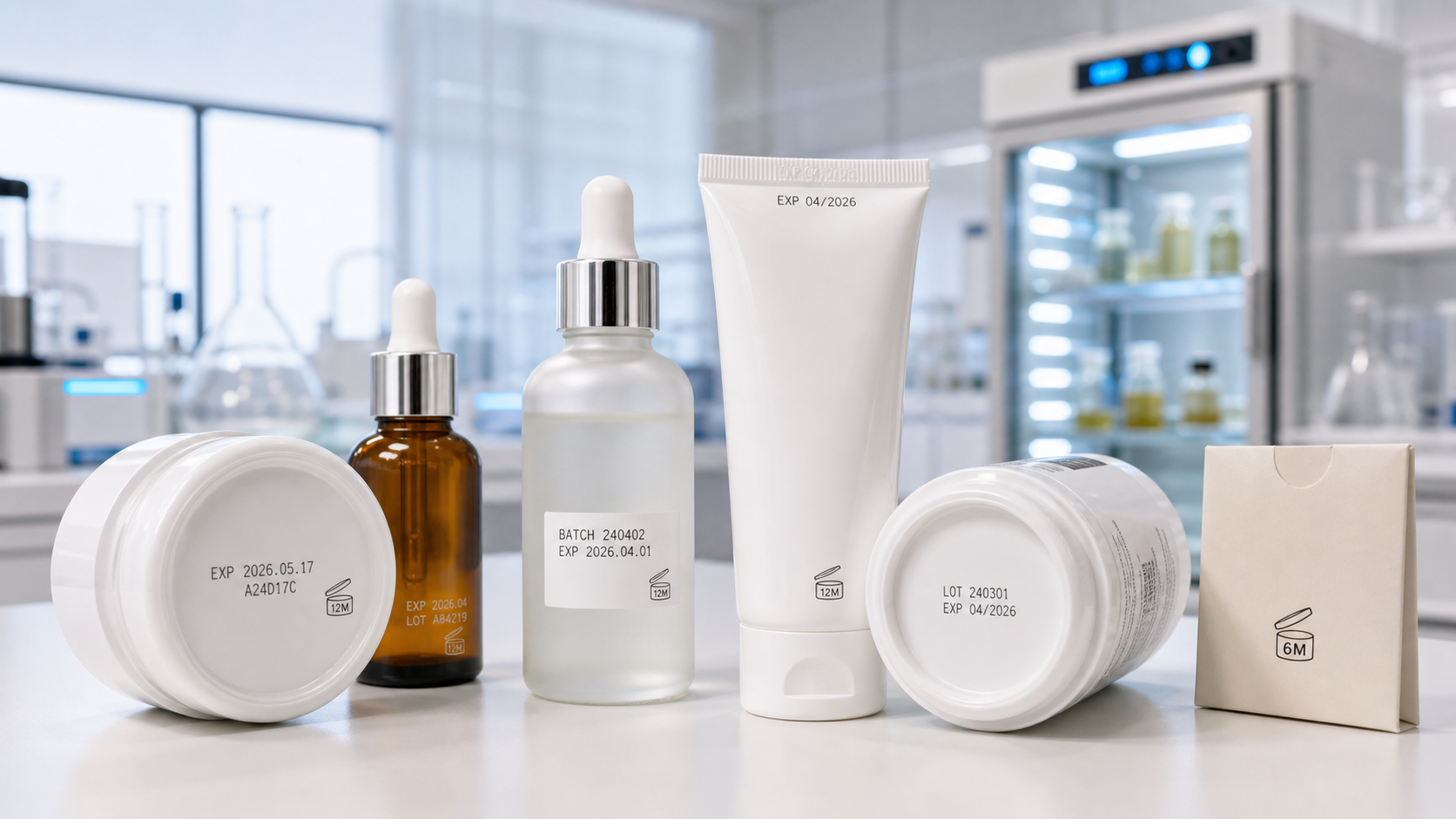
  • Period After Opening (PAO) is used exclusively for cosmetics under the requirements of the ASEAN Cosmetic Directive and the Cosmetics Act B.E. 2558 (2015). PAO specifies the period during which the product remains safe after the consumer first opens the packaging, since repeated opening and closing introduces moisture, air, and microorganisms into the product. The symbol used is an open cream jar, followed by a number of months such as 12M or 24M.
  • Retest Date is not an expiry date but a date set for retesting the properties of raw materials or Active Pharmaceutical Ingredients (API) to confirm they are still usable. Applying the Retest Date concept per ICH Q7 helps manufacturers reduce raw material costs and enables efficient purchase planning. Plant extracts stored at 2-8°C typically have a usable life of 24 to 36 months, depending on the marker compound profile and antioxidant levels.

How to Determine Shelf Life from Stability Testing Data

Correct shelf life determination is not about comparing to competitors or setting a default value, but is a process of statistical data analysis from actual testing.

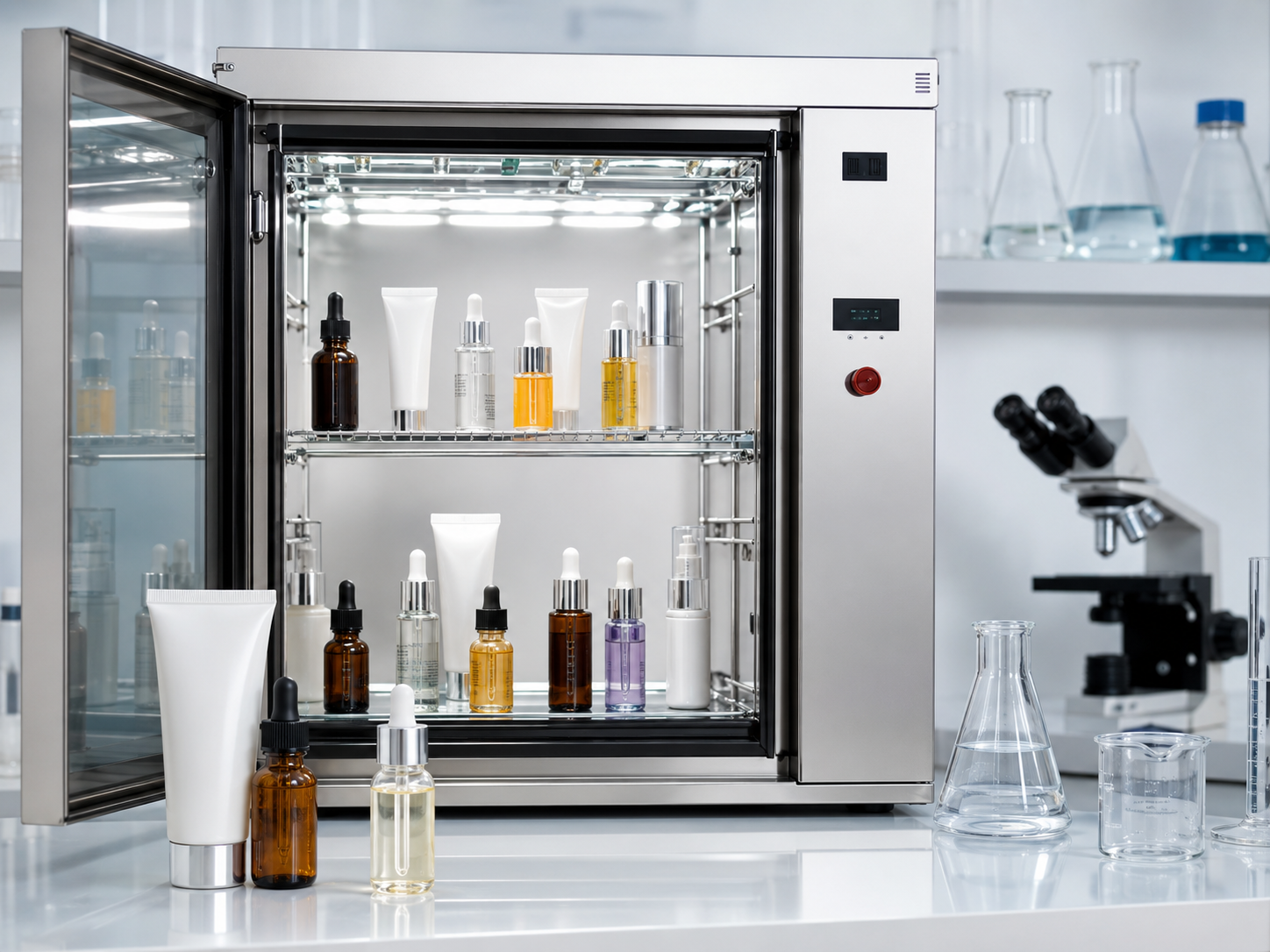
  • The first step is collecting product samples at Pull Points across multiple time intervals under conditions specified by ICH Q1A(R2). For Long-term Stability studies in Thailand and the ASEAN region, the standard condition is 30°C / 75% RH per ASEAN Zone IVb. For Accelerated Stability studies, the condition is 40°C / 75% RH. For Intermediate Stability studies, the condition is 30°C / 65% RH. Products sensitive to light must additionally undergo Photostability testing per ICH Q1B.
  • The second step is analyzing the relevant parameters. The physical group includes Appearance, colour, smell, Viscosity, and pH. The chemical group includes Assay (active compound content), Degradation Products, and Related Substances. The microbiological group includes Microbial Limit Testing. For products containing preservatives, Preservative Efficacy Testing (PET) per ISO 11930 or USP 51 must also be assessed.
  • The third step is establishing Significant Change Criteria. For pharmaceutical products, ICH Q1A(R2) specifies that the active compound must not decrease by more than 5% from the initial value. For cosmetics and food supplements, the criteria depend on the product specification stated in the registration documents.
  • The fourth step is data analysis by Linear Regression to find the Degradation Rate and the 95% Confidence Interval per the ICH Q1E guidelines. The calculated shelf life is the time at which the 95% Confidence Interval line intersects the specification limit line. Where test results across batches show low variance and data is Poolable, the determined shelf life has high credibility and can be submitted directly to regulatory authorities for registration.
  • The fifth step is evaluating transport and use conditions. Beyond normal storage conditions, products must also withstand transport conditions that may be more severe, such as container temperatures during sea freight, or conditions during consumer use after opening. In-Use Stability studies are often an additional requirement for multi-dose cosmetics and pharmaceuticals that are opened and closed repeatedly.

Extrapolation per ICH Q1E

In practice, operators often wish to declare a shelf life of 24 or 36 months when actual data covers only 12 or 18 months. ICH Q1E permits Extrapolation under strict conditions.

  • The first condition is that test results under Accelerated Conditions must not show significant change. A change in the slope of the graph (Slope Change) between long-term and accelerated conditions indicates the product has a non-linear degradation mechanism and cannot be extrapolated.
  • The second condition is that long-term data must pass statistical testing. Poolability Testing between batches and Trend Consistency verification are conditions that must be assessed before extrapolation.
  • The third condition is that extrapolation may not exceed twice the period for which actual data exists, and not more than 12 months beyond the data available. For example, if 12 months of long-term data exists, shelf life can be extrapolated to 24 months but not 36 months.
  • Extrapolation that does not meet the above conditions is considered high risk. Regulatory authorities may request additional evidence or require the manufacturer to conduct an Ongoing Stability Study on products already in market circulation to confirm that the declared shelf life is accurate. Ongoing Stability Studies are a requirement that pharmaceutical and food supplement manufacturers must maintain even after product registration.
Shelf life determination from stability testing data

Shelf Life Differences by Product Type

Achievable shelf life varies by dosage form and the properties of the active compound. The figures below represent ranges commonly observed in general studies and are not binding values. Actual shelf life must be based on stability data for the specific formula.

  • Food Supplements in tablet and capsule form in aluminium foil sachets or dark glass bottles typically achieve 24 to 36 months shelf life. Chewable Tablets and Probiotic-containing products may be shorter due to sensitivity to moisture and heat.
  • Cosmetics in cream and lotion form as emulsion systems with adequate preservative systems typically achieve 24 to 36 months. Serums containing unstable active ingredients such as Pure L-Ascorbic Acid may be as short as 6 to 12 months. Pure oil products typically achieve 12 to 24 months depending on Peroxide Value and oxidation protection.
  • Herbal Products under the Herbal Product Act B.E. 2562 (2019) must have Marker Compound stability data analyzed by Liquid Chromatography or Gas Chromatography techniques. Standardized extracts with clearly defined marker compounds typically achieve longer shelf life than herbal products using multi-compound blends.
  • Raw Materials and Active Substances use the Retest Date concept rather than Expiry Date. This approach reduces raw material waste and enables manufacturers to plan purchasing efficiently.

Three main factor groups determine shelf life differences. The first group is active compound properties: chemical structure stability, sensitivity to light, sensitivity to oxygen, and sensitivity to moisture. The second group is the packaging system: material type, wall thickness, Oxygen and Moisture Barrier properties, and the cap-seal system. The third group is storage and transport conditions: products sold in countries with high temperature and humidity, such as ASEAN Zone IVb, typically achieve a shorter shelf life than products sold in Europe or North America. Proper packaging system design and preservative system selection are therefore key components in extending shelf life.

How Stability Data Creates Business Value

Stability data based on actual testing creates business value in five dimensions.

  1. The first is regulatory registration. All ASEAN regulatory authorities, including the Thai FDA, require stability data as mandatory documentation in Module 3.2.P.8 of the Common Technical Document submission. Having data based on ICH Q1A(R2) and the ASEAN Stability Guideline reduces review time and lowers the risk of document rejection.
  2. The second is retail partner confidence. Retailers, pharmacies, and convenience store networks use the shelf life stated in the Product Specification Sheet as a condition for purchasing products. Products without supporting data are often subject to price negotiation downward, or are requested to reduce the shelf life stated on the label.
  3. The third is export market access. Exporting to Singapore, Malaysia, Vietnam, Indonesia, and the Philippines requires Stability data per ICH or ASEAN standards. Importers in Japan and European Union markets require more detailed data covering Transport Conditions and In-Use Stability studies.
  4. The fourth is evidence-based reformulation decisions. When data shows which parameter is a weakness, the product development team can precisely adjust the formula, modify the preservative system, or change packaging materials.
  5. The fifth is cost and inventory planning. A correctly determined shelf life enables production planning, storage, and distribution to operate efficiently, reducing excess inventory and reducing waste from recalls.

From the long-term industry perspective, having a robust stability data system is the foundation of the global trend toward transparency, traceability, and sustainable consumption. Consumers and retailers in premium markets are increasingly demanding science-backed evidence. Manufacturers with comprehensive Stability data systems therefore have a more sustainable competitive advantage.

VISBIO’s Role as an Independent Quality Assurance Verifier (IQAV)

The credibility of a shelf life report depends on the independence of the analyst. VISBIO, acting as an Independent Quality Assurance Verifier (IQAV), analyzes samples obtained from TIBD’s stability testing using Validated Methods per ICH Q2(R1), with full traceability documentation at every step and operations conducted under ISO/IEC 17025 standards.

The independence of VISBIO is what international importers and regulatory authorities place importance on. Data produced by the manufacturer itself may be questioned. Having an independent third-party IQAV makes the report credible and carries weight in registration submissions and trade negotiations.

TIBD Team Expertise

The Shelf Life Determination service is conducted in partnership with Dr. Wuttipong Panitsettakorn, Advisor and Co-Founder, who specializes in commercial technology management for the health and beauty industry, and Ms. Mandhamon Uttamo, Advanced Formulator, with experience in stability protocol design for cosmetics, food supplements, and herbal products. Our team includes researchers specializing in Analytical Chemistry, Pharmaceutical Sciences, and Regulatory Affairs, and a network of researchers covering stability data analysis, ICH Q1E statistical modeling, and ASEAN regulatory submission documentation.

Is your product ready for Thai FDA registration or for export? If you need shelf life data based on ICH Q1A(R2) and the ASEAN Stability Guideline, with statistical analysis per ICH Q1E and VISBIO as an independent IQAV, Contact TIBD for a customized protocol designed for your product.

References

Apply for Shelf Life Determination Service from Stability Testing Data

If you have any questions or would like to receive a free consultation regarding Shelf Life Determination Service from Stability Testing Data, or if you would like to visit us in person in Bangkok, Thailand, you are warmly welcomed and feel free to contact us via the contact form below.

  • This field is for validation purposes and should be left unchanged.