Description

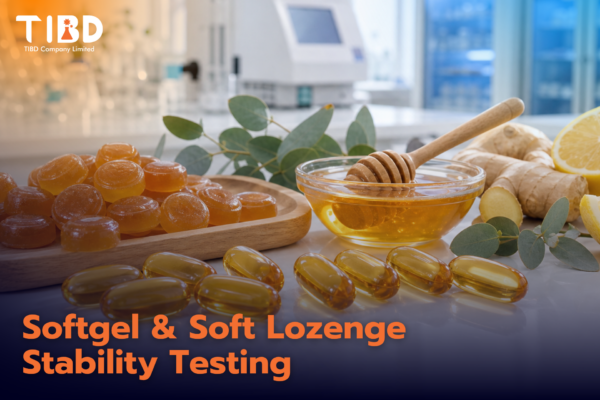
Softgel capsules (Soft Gelatin Capsules) and Soft Lozenges are dosage forms that combine a liquid or semi-solid fill with a flexible outer shell, creating a product format that is highly sensitive to temperature, humidity, and oxidation conditions. Under the hot and humid environment of ASEAN Zone IVb, Softgel shells are prone to softening and stickiness at high humidity, brittleness and cracking at low humidity, and gelatin cross-linking from aldehyde compounds formed during lipid oxidation in the fill. Omega-3 fish oil, krill oil, linseed oil, herbal extracts in oil carriers, and fat-soluble vitamins enclosed in Softgel capsules are all subject to oxidative degradation characterized by Peroxide Value (PV), Anisidine Value (AnV), and TOTOX index monitoring throughout the shelf life.

TIBD’s service is designed specifically for Softgel Capsules and Soft Lozenges, covering Shell Integrity assessment, Hardness by Texture Analyzer, Brittleness Drop Test, Disintegration Time, Fill Weight and Content Uniformity, Moisture Content, Peroxide Value (PV) per AOCS Cd 8b-90, Anisidine Value (AnV) per AOCS Cd 18-90, TOTOX index, Active Ingredient Assay by HPLC and GC-FID, Cross-linking assessment by Two-Tier Dissolution per USP Apparatus 1 in pepsin medium and by FTIR, and Microbiology including TSE Certificate verification, Heavy Metal, Pesticide Residue, and Persistent Organic Pollutants (POPs) for Fish Oil products under ASEAN Zone IVb conditions per ICH Q1A(R2) and ICH Q1B Photostability, in partnership with VISBIO as an Independent Quality Assurance Verifier (IQAV) using Validated Methods per ICH Q2(R1).
Softgel and Soft Lozenge Product Types in the Thai and ASEAN Market

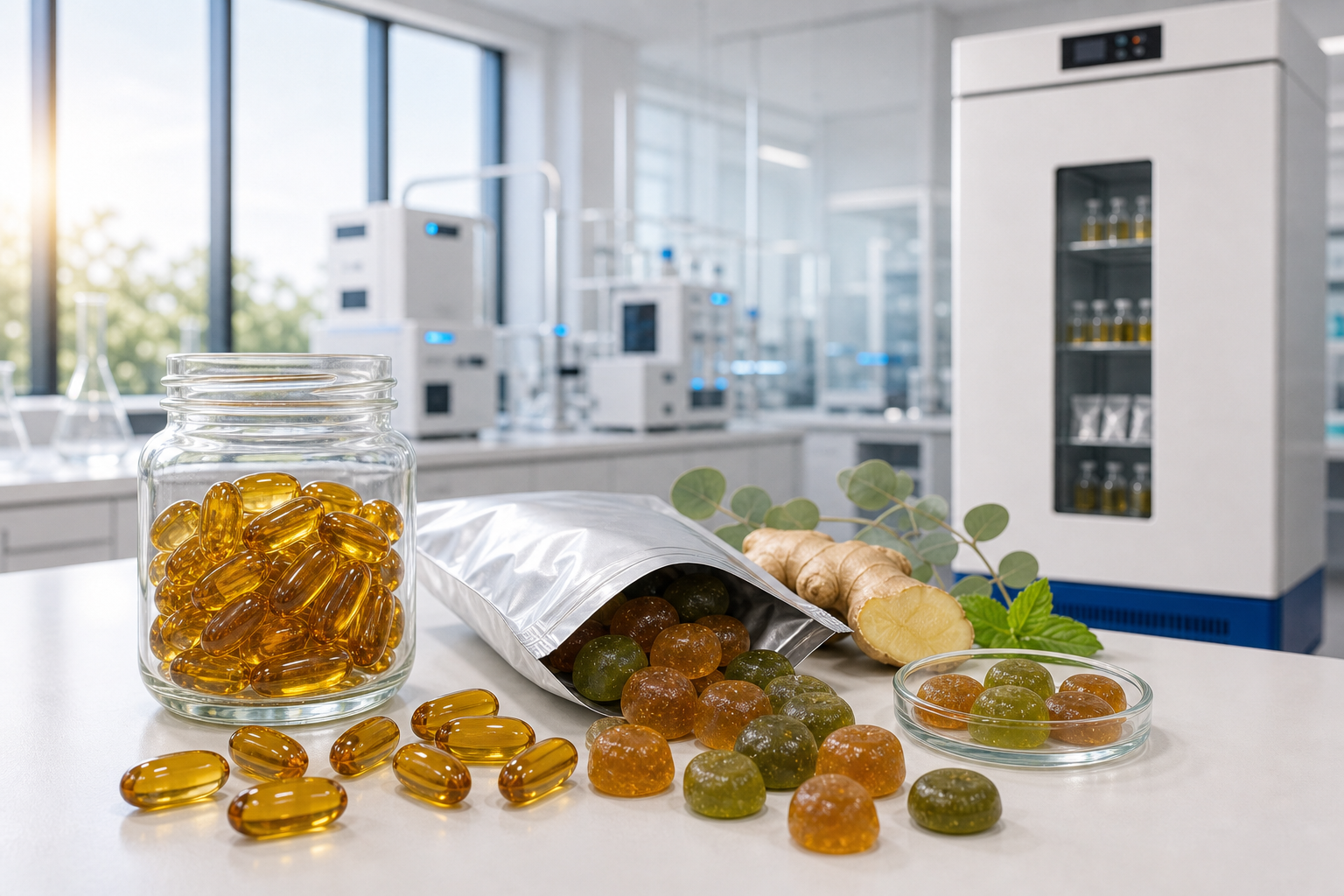
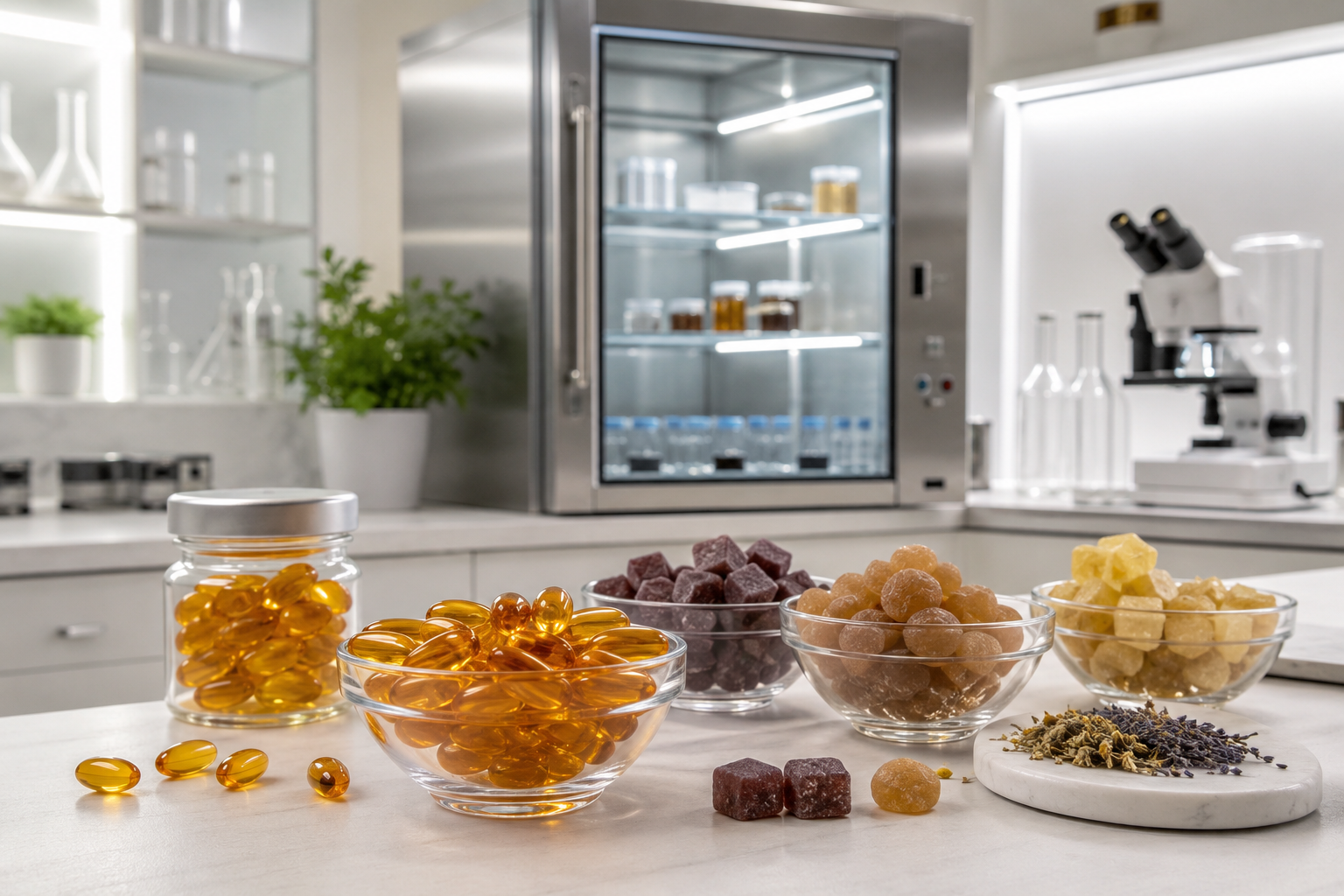
Seven product types covering the main Softgel and Soft Lozenge formats are commercially produced in Thailand and the ASEAN region.

  • Omega-3, Krill Oil, and Linseed Oil Softgels are produced by encapsulating polyunsaturated fatty acid oils from fish, krill, or flaxseed in a gelatin shell. These products are among the highest-volume softgel products in the Thai and ASEAN market and require monitoring of EPA and DHA content by GC-FID per AOCS Ce 1i-07, Peroxide Value, Anisidine Value, and TOTOX index throughout the shelf life to confirm that the oil quality remains within GOED Monograph limits: PV not more than 10 mEq/kg, AnV not more than 20, and TOTOX not more than 26.
  • Herbal Extract in Oil Softgels encapsulate lipid-soluble herbal extracts or CO2 supercritical extracts in oil carriers such as Olive Oil, MCT (Medium Chain Triglyceride) Oil, or Sunflower Oil. Products include Turmeric (Curcuminoids), Black Pepper (Piperine), Copaiba (Beta-Caryophyllene), and herbal essential oil extracts. Active Ingredient Assay by HPLC monitors both the active and the carrier oil oxidation status.
  • SEDDS (Self-Emulsifying Drug Delivery System) Softgels encapsulate an oil-surfactant-co-surfactant mixture that self-emulsifies upon contact with gastrointestinal fluids, providing improved bioavailability for poorly water-soluble herbal actives. SEDDS formulations are particularly sensitive to polymer precipitation and crystallization during storage, which must be monitored by Dissolution testing at each Pull Point.
  • Vitamin E, Vitamin K2, and Fat-Soluble Vitamin Softgels are produced by dissolving fat-soluble vitamins in a carrier oil at defined concentrations. Vitamin E (d-alpha-Tocopherol and mixed Tocopherols) and Vitamin K2 (MK-7 form) require monitoring by Fluorescence HPLC due to their sensitivity to oxidative and photolytic degradation.
  • Children Soft Candy Lozenge products are soft, chewable dosage forms for pediatric vitamin and herbal supplement delivery. These products use gelatin or Pectin as the base, sugar or sugar alcohols as plasticizers and sweeteners, and natural flavors and colors. Stability testing covers Hardness by Texture Analyzer, Moisture Content, Water Activity, and Vitamin Assay.
  • Gummy Lozenge products are high-sugar or sugar-free gummy formats produced from gelatin or Pectin base with Corn Syrup or Isomalt as humectant. These products are susceptible to moisture loss causing texture hardening, moisture absorption causing stickiness, and color and flavor degradation.
  • Functional Soft Lozenge products include CoQ10 Softgel, Astaxanthin Softgel, Lutein and Zeaxanthin Softgel, and other functional ingredient softgels for the health supplement market. Active Ingredient Assay, Isomer Ratio monitoring, and oxidation status monitoring are required for all these product types.
Stability testing for herbal softgels and soft lozenges

Specific Stability Challenges of Softgels and Soft Lozenges in Tropical Climates

Seven stability challenges specific to Softgel Capsules and Soft Lozenges must be addressed in a protocol designed for ASEAN Zone IVb conditions.

  1. The first challenge is shell softening, tackiness, and deformation at high temperature and humidity. Gelatin softgel shells contain Glycerin as plasticizer, which absorbs moisture from the environment at high relative humidity, causing the shell to become excessively soft, sticky, and prone to deformation and capsule-to-capsule adhesion. Shell Hardness by Texture Analyzer and visual assessment of tackiness are conducted at each Pull Point.
  2. The second challenge is shell brittleness and cracking at low relative humidity. When stored in dry conditions (below 30% RH), the gelatin shell loses plasticizer moisture and becomes brittle, forming cracks that allow the fill to leak. Brittleness is assessed by Brittleness Drop Test: capsules are dropped from 1 meter height and examined for cracking or leakage.
  3. The third challenge is gelatin cross-linking causing shell dissolution failure. Aldehydes formed from oxidation of polyunsaturated fatty acids in the fill react with the Amino Groups of the gelatin shell in a cross-linking reaction, forming covalent bonds that render the shell insoluble. Cross-linking is detected by Disintegration Time exceeding twice the initial value. It is confirmed by Two-Tier Dissolution testing per USP Apparatus 1 (Basket) in 0.1 M HCl with pepsin (simulating gastric digestion) for Stage 1, followed by phosphate buffer pH 6.8 without enzyme for Stage 2. Cross-linked shells fail Stage 1 Dissolution in pepsin medium. Cross-linking is confirmed structurally by FTIR spectroscopy showing characteristic Maillard or Schiff base absorption bands.
  4. The fourth challenge is oil oxidation in the fill. Peroxide Value (PV) reflects primary oxidation products (Hydroperoxides). Anisidine Value (AnV) reflects secondary oxidation products (Alkenals and Dienals). TOTOX index (TOTOX = 2 × PV + AnV) is the combined oxidation index per GOED Monograph: PV not more than 10 mEq/kg, AnV not more than 20, TOTOX not more than 26. Once these values exceed the GOED limits, the product is considered unfit for consumption regardless of the declared shelf life.
  5. The fifth challenge is active ingredient degradation in the fill. Astaxanthin, CoQ10, Vitamin D3, Curcuminoids, EPA, and DHA all degrade under oxidative conditions accelerated by the elevated temperature of ASEAN Zone IVb storage. Active content must be maintained at Not Less Than 90% of the labeled value throughout the shelf life.
  6. The sixth challenge is moisture absorption and texture change in Soft Lozenges. Gummy and soft candy lozenges absorb moisture at high humidity causing stickiness and shape loss, or lose moisture at low humidity causing hardening. Texture Profile Analysis (TPA) by Texture Analyzer measures Hardness, Gumminess, and Cohesiveness at each Pull Point.
  7. The seventh challenge is flavor and color degradation in Soft Lozenges and flavored Softgels. Natural flavors and colors derived from fruits, vegetables, and herbal extracts are sensitive to heat and light. Color assessment by CIE Lab* Colorimetry and sensory evaluation at each Pull Point document the color and aroma stability throughout the shelf life.

Testing Parameters: Shell Integrity, Hardness, PV, AnV, TOTOX

TIBD’s stability testing protocol for Softgel Capsules and Soft Lozenges covers the full set of physical, chemical, and microbiological parameters.

  • Shell Integrity is assessed by visual inspection under standardized lighting for cracks, leakage, deformation, tackiness, or discoloration at each Pull Point. Shell Integrity failure at any Pull Point triggers immediate investigation into the cause, which may be related to fill oxidation (cross-linking), storage temperature exceedance, plasticizer migration, or packaging inadequacy.
  • Hardness by Texture Analyzer (TA) measures the compression force required to deform the softgel shell or soft lozenge to a defined deformation percentage. The acceptance criterion is defined as a percentage change from the T0 value. For Softgel capsules, a reduction in Hardness below 50% of the initial value indicates excessive shell softening; an increase above 200% indicates cross-linking or brittleness.
  • Brittleness Drop Test assesses the mechanical resilience of the softgel shell by dropping samples from a height of 1 meter and recording the number of capsules showing visible cracking. Not more than 2 of 20 capsules may show cracking.
  • Disintegration Time is measured per Ph.Eur. 2.9.1 in water at 37°C. The acceptance criterion is Not More Than 30 minutes for Softgel Capsules. A Disintegration Time greater than twice the T0 value triggers Two-Tier Dissolution testing to confirm whether cross-linking is the cause.
  • Fill Weight and Weight Variation per Ph.Eur. 2.9.5 confirm consistent dosing of the liquid fill and detect leakage from failed shells by monitoring net fill weight change over the study period.
  • Content Uniformity per Ph.Eur. 2.9.6 confirms that the Active Ingredient is uniformly distributed across the batch throughout the shelf life.
  • Moisture Content of Shell is measured by Karl Fischer Titration. The acceptance criterion for softgel shells is 5 to 10%, reflecting the equilibrium moisture content of the plasticized gelatin shell under appropriate storage conditions. Moisture below 5% indicates brittleness risk; moisture above 10% indicates excessive plasticizer uptake and softening risk.
  • Peroxide Value (PV) per AOCS Cd 8b-90 measures Hydroperoxide formation in the oil fill. Acceptance criterion: Not More Than 10 mEq/kg (GOED Monograph for Omega-3).
  • Anisidine Value (AnV) per AOCS Cd 18-90 measures secondary aldehyde oxidation products. Acceptance criterion: Not More Than 20 (GOED Monograph).
  • TOTOX Index (2 × PV + AnV): Not More Than 26 (GOED Monograph for Omega-3 oil products).
  • Texture Profile Analysis (TPA) for Soft Lozenges: Hardness, Gumminess, Cohesiveness, and Springiness are measured by Texture Analyzer at each Pull Point to quantify texture changes during storage.
  • Moisture Content and Water Activity for Soft Lozenges: Moisture 10 to 15%, Water Activity not more than 0.85. Exceeding Water Activity of 0.85 indicates risk of mold growth in Gummy products.

Active Ingredient Analysis for Softgels and Soft Lozenges

TIBD and VISBIO apply compound-specific analytical methods validated as Stability Indicating methods for all active ingredients.

  • EPA (Eicosapentaenoic Acid) and DHA (Docosahexaenoic Acid) by GC-FID per AOCS Ce 1i-07: The fatty acid methyl ester (FAME) method converts the oil to methyl esters by transesterification and separates individual fatty acids by GC-FID using Nonadecanoic Acid (C19:0) as internal standard. EPA and DHA content is expressed as percentage of total fatty acids and as mg per capsule.
  • Astaxanthin by HPLC with PDA detection at 478 nm: The method resolves and quantifies both E (all-trans) and Z (cis) isomers of Astaxanthin. Total Astaxanthin is reported as the sum of all isomers. Free Astaxanthin and Astaxanthin esters are distinguished where required by the product specification.
  • Curcuminoids by HPLC with UV detection at 425 nm: Resolves Curcumin, Demethoxycurcumin, and Bisdemethoxycurcumin for Turmeric-based Softgels.
  • CoQ10 (Ubiquinone) and Ubiquinol by HPLC with UV detection at 275 nm and Electrochemical Detection (ECD): Ubiquinol is the reduced form of CoQ10 and is more bioavailable but more oxidation-sensitive. The HPLC method with ECD resolves Ubiquinol from Ubiquinone, allowing monitoring of the CoQ10:Ubiquinol ratio throughout the shelf life.
  • Vitamin D3 (Cholecalciferol) by HPLC with UV detection at 265 nm: Sample preparation for Softgels requires complete saponification or direct extraction to recover all Vitamin D3 from the oil matrix before HPLC analysis.
  • Vitamin E (d-alpha-Tocopherol, mixed Tocopherols) by HPLC with Fluorescence Detection (Excitation 295 nm, Emission 330 nm): The Fluorescence method provides superior sensitivity compared to UV detection for Tocopherol analysis in complex oil matrices.
  • Vitamin K2 (MK-7, Menaquinone-7) by HPLC with Fluorescence Detection post-column reduction: The method resolves MK-7 from MK-4 and other menaquinone homologs.
  • Lutein and Zeaxanthin by HPLC with PDA detection at 445 nm: The method resolves Lutein from Zeaxanthin and from other carotenoids present in marigold extract-based formulations.

Cross-linking Confirmation, Microbiology, and Impurity Testing

Two-Tier Dissolution per USP Apparatus 1 (Basket) in Pepsin Medium: Stage 1 uses 0.1 M HCl containing 0.32% Pepsin at 37°C for 60 minutes. Stage 2 uses phosphate buffer pH 6.8 without enzyme for 60 minutes. Cross-linked shells fail to dissolve in Stage 1 pepsin medium. This test is conducted whenever the Disintegration Time exceeds twice the initial value.

FTIR Spectroscopy confirms gelatin cross-linking structurally by identifying the Schiff base (imine) absorption band at approximately 1,550 to 1,650 cm-1 and the reduction in the free Amino Group absorption at approximately 1,600 cm-1 that characterizes cross-linking.

Microbial Limit Test per THP 2021 or USP microbial limit specifications: Total Aerobic Microbial Count, Total Combined Yeast and Mold Count, and absence of specified pathogens.

TSE/BSE Certificate verification: Gelatin derived from bovine or porcine sources must be accompanied by a Transmissible Spongiform Encephalopathy (TSE) / Bovine Spongiform Encephalopathy (BSE) risk assessment certificate from a qualified supplier. This documentation is required for Thai FDA registration and for export to the European Union.

Heavy Metal by ICP-MS per ICH Q3D: Lead not more than 10 mg/kg, Arsenic not more than 5 mg/kg, Cadmium not more than 0.3 mg/kg, Mercury not more than 0.5 mg/kg.

Pesticide Residue by Multi-Residue Method (QuEChERS) per LC-MS/MS or GC-MS/MS for fish oil and krill oil products.

Persistent Organic Pollutants (POPs) for Fish Oil and Krill Oil Softgels: Dioxins, Furans, and PCBs are tested by GC-HRMS per EU Regulation 2023/2419 and GOED Monograph limits. These contaminants bioaccumulate in marine species and are present in unrefined fish oils; they must be confirmed as below regulatory limits in the refined oil used for manufacturing.

Stability testing for herbal softgels and soft lozenges

Testing Conditions and Pull Point Schedule per ICH Q1A(R2) and ICH Q1B

Long-term Stability testing uses 30°C / 75% RH conditions per ASEAN Zone IVb for a minimum of 24 months. Accelerated Stability testing uses 40°C / 75% RH for 6 months.

Cycling Test between 5°C and 40°C for 3 cycles simulates temperature fluctuations during distribution, particularly important for detecting cross-linking initiation in Omega-3 Softgels.

Photostability testing per ICH Q1B in a Solar Simulator (D65 light source, 1.2 million lux-hours visible, 200 Wh/m2 UV) is required for Astaxanthin, Curcuminoids, CoQ10, Vitamin D3, Vitamin E, and Vitamin K2 products, and for products in transparent or semi-transparent blister or bottle packaging.

Standard Pull Points for Long-term testing are months 0, 3, 6, 9, 12, 18, and 24. Standard Pull Points for Accelerated testing are months 0, 1, 2, 3, and 6.

Formulation and Packaging Design Consultation

For manufacturers at the development stage, TIBD provides formulation consultation to improve the stability of Softgel and Soft Lozenge formulations.

  • Gelatin selection: Type A Gelatin (porcine, acid-hydrolysis) has a higher isoelectric point (pH 7 to 9) than Type B Gelatin (bovine, alkali-hydrolysis, isoelectric point pH 4.7 to 5.4). Type B Gelatin is generally preferred for Softgel shells containing acidic fill materials because it is less prone to pH-driven cross-linking. Vegetarian Softgel shells using Modified Starch (HPMC) or Carrageenan-based systems are available for markets requiring non-animal gelatin.
  • Plasticizer selection: Glycerin is the standard plasticizer at 20 to 30% concentration in the gelatin shell formulation. Sorbitol is used as a co-plasticizer to reduce hygroscopicity and improve shell firmness at high humidity. The Glycerin-to-gelatin ratio must be optimized for the target storage conditions; a higher Glycerin content provides more flexible shells at the cost of increased hygroscopicity.
  • Fill composition optimization: Antioxidant system for Omega-3 and lipid-soluble vitamin fills must include both primary antioxidants (Vitamin E, Rosemary Extract) and chelating agents (Citric Acid, EDTA) to prevent metal-catalyzed oxidation. Nitrogen headspace in the blister or bottle significantly reduces oxygen ingress and extends the Peroxide Value stability period.
  • Packaging selection: Omega-3 Softgels must be protected from oxygen, light, and moisture simultaneously. Aluminum-Aluminum Blister Packs provide oxygen barrier performance of less than 0.005 cc/100 cm2/day, suitable for Omega-3 and Astaxanthin products with strict PV and AnV limits. Nitrogen gas flushing before sealing reduces the oxygen content in the headspace to below 1%. Opaque packaging with UV-blocking film is required for Astaxanthin, Vitamin D3, and Vitamin E products.

VISBIO’s Role as an Independent Quality Assurance Verifier (IQAV)

VISBIO, acting as Independent Quality Assurance Verifier (IQAV), conducts Shell Integrity assessment, Hardness by Texture Analyzer, Disintegration Time, Moisture Content of Shell, Peroxide Value, Anisidine Value, TOTOX index calculation, Active Ingredient Assay by HPLC and GC-FID, Two-Tier Dissolution, FTIR cross-linking confirmation, Microbiology, Heavy Metal, Pesticide Residue, and POPs analysis on samples collected at each Pull Point, using Validated Methods per ICH Q2(R1) with full Traceability documentation at every step and operations conducted under ISO/IEC 17025 standards.

TIBD Team Expertise

The Softgel and Soft Lozenge Stability Testing service is conducted in partnership with Dr. Wuttipong Panitsettakorn, Advisor and Co-Founder, who specializes in commercial technology management for the health and beauty industry, and Ms. Mandhamon Uttamo, Advanced Formulator, who has extensive experience in the development of health supplement and functional food products across multiple dosage forms. Our team includes researchers specializing in Lipid Oxidation Chemistry, Softgel Technology, HPLC and GC-FID Analytical Method Development, Fatty Acid Analysis, and Fat-Soluble Vitamin and Carotenoid Analysis.

Is your Softgel or Soft Lozenge product ready for Thai FDA registration or ASEAN export? Contact TIBD for a customized stability protocol and starting price from ฿15,000.

References

  • International Council for Harmonisation of Technical Requirements for Pharmaceuticals for Human Use. (2003). Stability testing of new drug substances and products: Q1A(R2). ICH Harmonised Tripartite Guideline. https://database.ich.org/sites/default/files/Q1A%28R2%29%20Guideline.pdf
  • Global Organization for EPA and DHA Omega-3s. (2022). The GOED voluntary monograph for EPA and DHA-containing oils. Global Organization for EPA and DHA Omega-3s. https://goedomega3.com/goed-monograph
  • United States Pharmacopeial Convention. (2024). Disintegration ⟨701⟩, Dissolution ⟨711⟩. United States Pharmacopeia 47-NF 42. https://www.usp.org
  • American Oil Chemists’ Society. (2017). Official Methods and Recommended Practices of the AOCS (7th ed.). AOCS Press. https://www.aocs.org/attain-lab-services/methods
  • Royal Thai Government Gazette. (2019, April 30). Herbal Products Act B.E. 2562 (2019). Royal Thai Government Gazette, 136(56 Kor), 1–29. (In Thai)

Apply for Softgel and Soft Lozenge Stability Testing Service

If you have any questions or would like to receive a free consultation regarding Softgel and Soft Lozenge Stability Testing Service, or if you would like to visit us in person in Bangkok, Thailand, you are warmly welcomed and feel free to contact us via the contact form below.

  • This field is for validation purposes and should be left unchanged.