TIBD and ITERG Host “The Ingredient Advantage 2026,” a Branded Ingredient Forum Linking Research to the Health and Beauty Business and Advancing Evidence-Backed Thai Ingredients
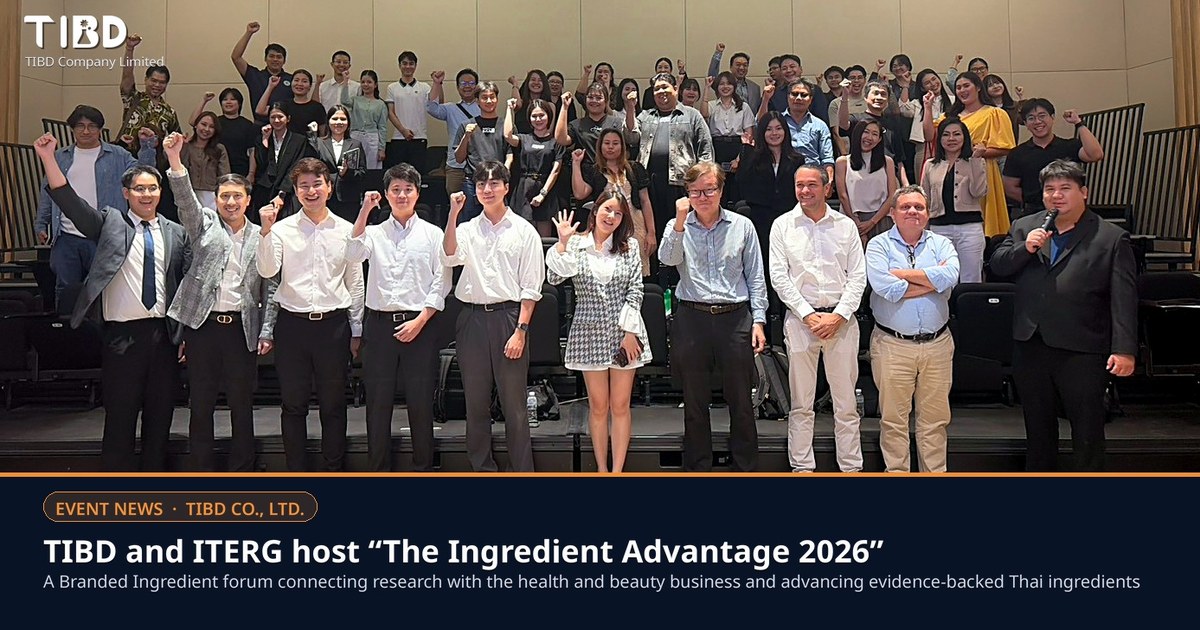
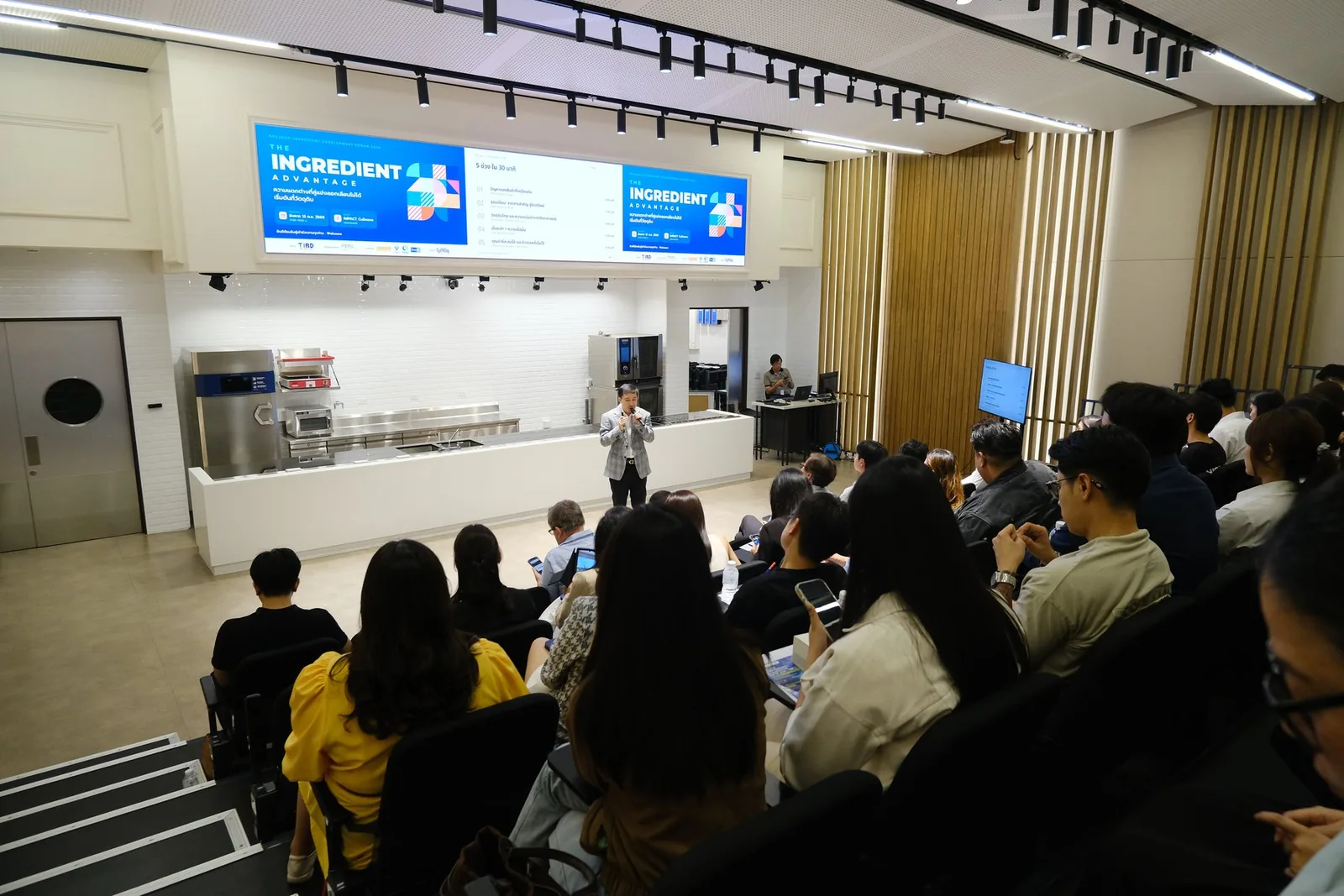
On 13 October 2026, TIBD Co., Ltd. hosted “The Ingredient Advantage 2026” (TIA 2026) at IMPACT Culinova, Muang Thong Thani. Billed as a Branded Ingredient Development Forum, the event was built around one central theme: “The difference competitors cannot copy starts with the ingredient.” Running from 13:00 to 19:00, the forum brought together business owners and product development executives from the health and beauty industry.
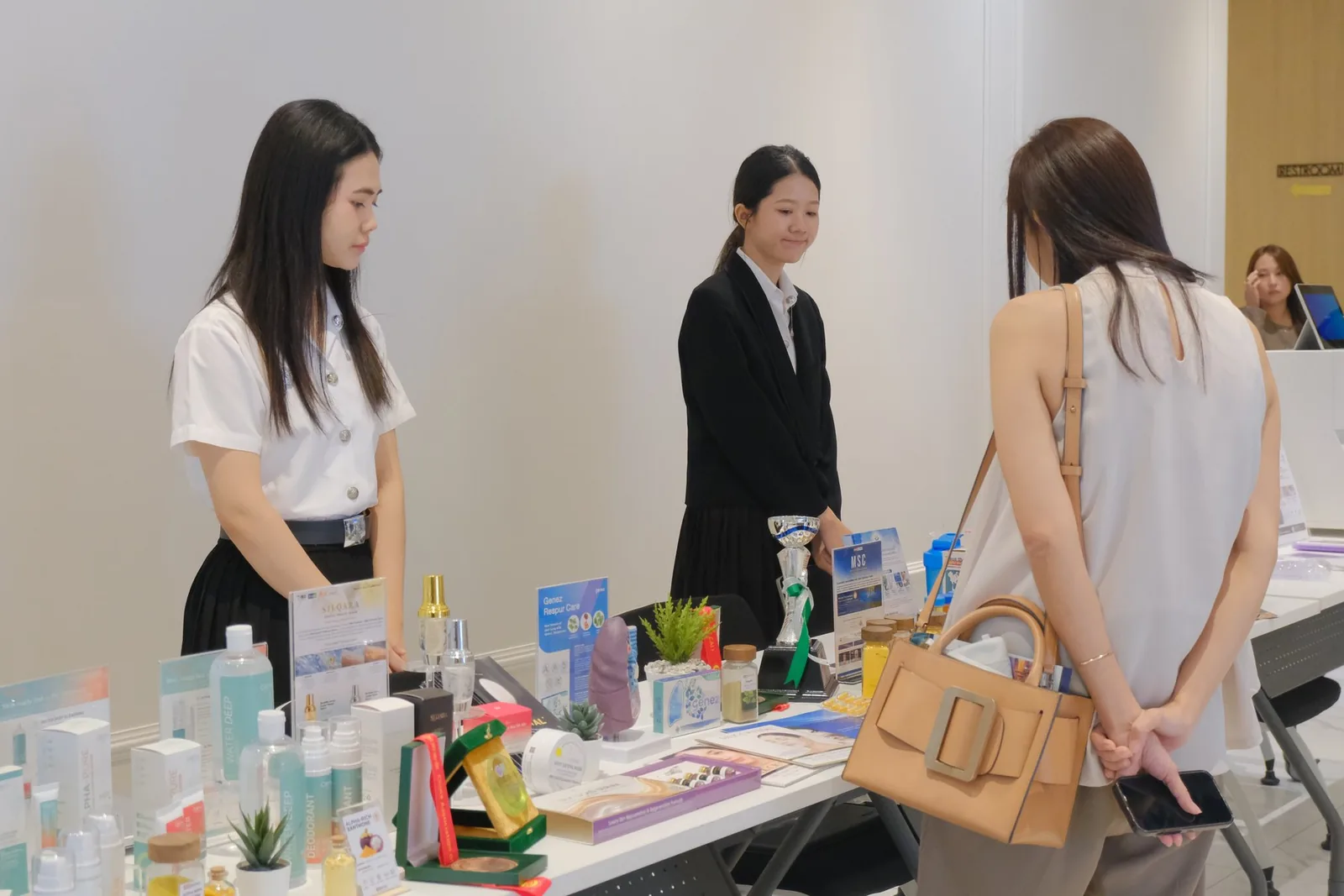
The event was held with ITERG, the French technical institute for the fats and oils industry, as its international partner, with support from sponsors NICHAMAE INTER, VisBio, TEBC, and FINECO. The program featured five speaker sessions, an Ingredient Showcase, and a Partnering Dinner for business matchmaking at the end of the day.
| Time | Session |
|---|---|
| 13:00 | Registration and Ingredient Showcase |
| 14:00 | Opening ceremony |
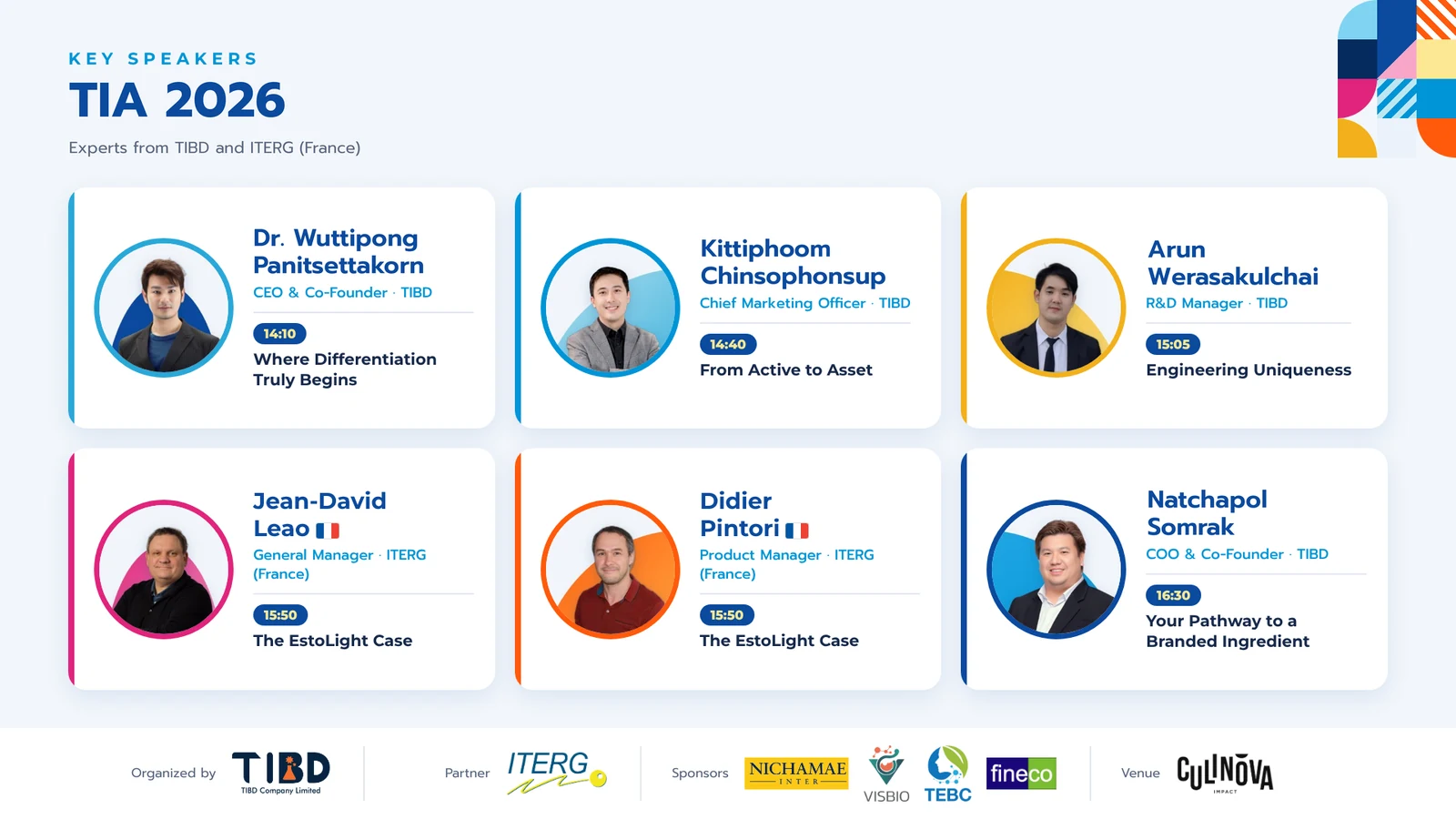
| 14:10 | Where Differentiation Truly Begins Dr. Wuttipong Panitsettakorn, CEO & Co-Founder, TIBD |
| 14:40 | From Active to Asset Kittiphoom Chinsophonsup, Chief Marketing Officer, TIBD |
| 15:05 | Engineering Uniqueness Arun Werasakulchai, R&D Manager, TIBD |
| 15:30 | Refreshment break and Ingredient Showcase |
| 15:50 | The EstoLight Case: Green Modification by ITERG Highlight from France: Jean-David Leao, General Manager, and Didier Pintori, Product Manager, ITERG |
| 16:30 | Your Pathway to a Branded Ingredient: Introducing the TEBC Program Natchapol Somrak, COO & Co-Founder, TIBD |
| 16:45 | Open Forum: Q&A with the speakers |
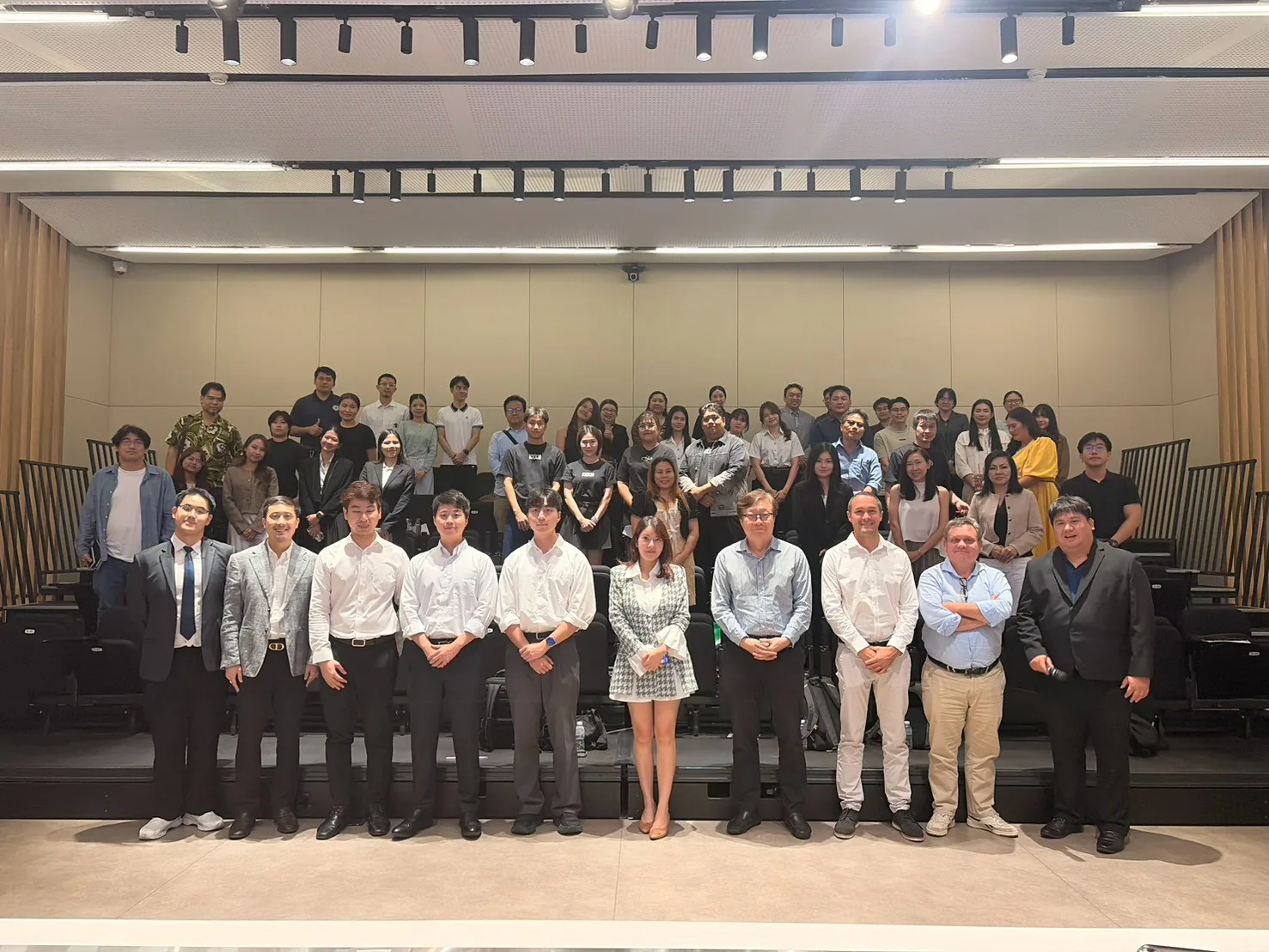
| 17:15 | Seminar close and group photo |
| 17:30 | Partnering Dinner & Ingredient Showcase Networking and partnership discussions until 19:00 |
Where Differentiation Truly Begins
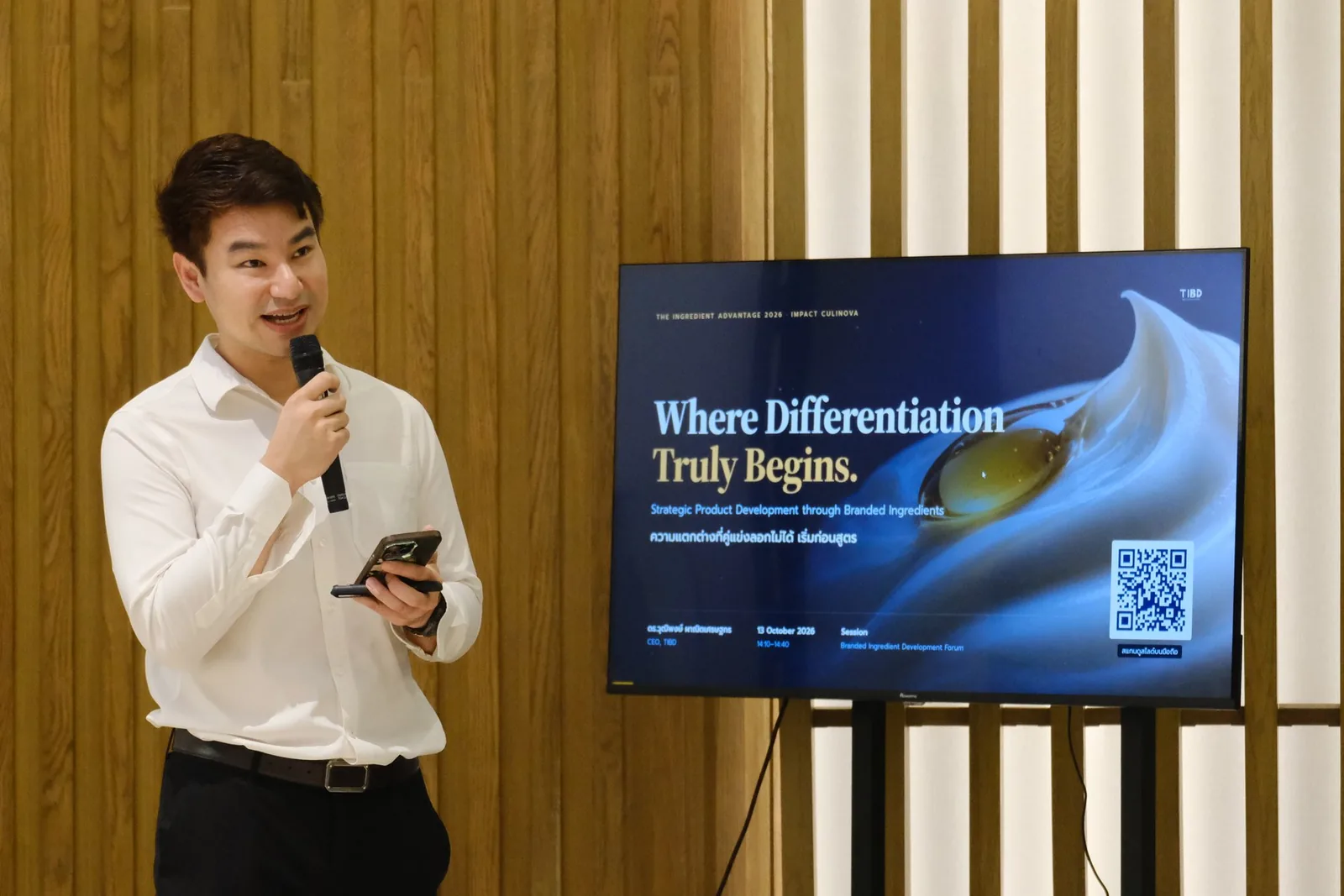
The first session (14:10–14:40) was presented by Dr. Wuttipong Panitsettakorn, CEO & Co-Founder of TIBD, under the title “Where Differentiation Truly Begins” (in Thai, “the difference competitors cannot copy begins before the formula”). The talk argued that product differentiation does not come from texturizers, colorants, fragrances, or preservatives, which almost every manufacturer sources from the same places, but from active ingredients that carry a name, are backed by scientific evidence, and have a clear owner.
The talk drew on a survey by the TIBD team in April 2025, which interviewed eight product managers and seven R&D managers at Thai OEM manufacturers. The survey found that formula cost accounts for about 11% of the retail price, and that active ingredients account for roughly 68% of that formula cost. The session also offered comparative examples, such as declaring the curcuminoid content of turmeric using different analytical methods, and specifying or omitting triterpenoids in gotu kola (Centella asiatica) leaf extracts, to show how the clarity of scientific evidence affects an ingredient’s credibility.
| 11% | Formula cost as a share of the retail price |
| 68% | Share of active ingredients in formula cost |
| 15 | Product and R&D managers surveyed (April 2025) |
“Value does not increase at the moment of discovery; it increases every time risk is reduced.”
— Dr. Wuttipong Panitsettakorn, from his “Where Differentiation Truly Begins” slides (translated from Thai)
From Active to Asset
Next (14:40–15:05), Kittiphoom Chinsophonsup, Chief Marketing Officer of TIBD, presented “From Active to Asset,” built around the idea of a turning point: “from product manufacturer to the owner of value the market remembers.”
The session argued that competing with widely shared actives makes it hard for brands to stay different over the long term. It proposed moving away from competing on shared raw materials and toward owning brand-specific assets, such as proprietary know-how, extracts with distinctive characteristics, controlled production processes, and traceable scientific evidence. It also outlined a starting point: establishing proof of concept before scaling up to commercial production.
“Branded Ingredient: giving that property an identity, an origin, evidence, and a meaning the market remembers.”
— Kittiphoom Chinsophonsup, from his “From Active to Asset” slides (translated from Thai)
Engineering Uniqueness
In the third session (15:05–15:30), Arun Werasakulchai, R&D Manager of TIBD, presented “Engineering Uniqueness,” on how common extracts can be modified into proprietary active ingredients. His central point was that the active molecule is usually not the problem; the problem is the particle, which determines how well the body can absorb it. He explained this through four gates an active must pass: breaking free of the crystal lattice, getting the powder wet, dissolving quickly enough, and entering intestinal micelles for absorption.
As an illustration, the talk looked at curcuminoids from turmeric, whose particles overseas developers have modified in several ways, such as dissolving them in a solid lipid, grinding them to submicron particles, binding them to phospholipids, and coating the crystal surface so it wets more easily. It noted that the performance figures each manufacturer reports are measured using different methods and under different conditions, so they cannot all be compared directly. The talk then used MSC (Modified Surface Curcumin), a surface-modified curcumin made from turmeric grown in Yan Yao subdistrict, Surat Thani province, as a case study of a five-step process: diagnose the problem, pick the modification pathway, match the product format, prove the results, and establish ownership. MSC was co-developed by Zubb Biotech and Lin Biotech, with TIBD as development advisor, and won awards at IEI 2026 in Guangzhou.
“Evidence is what turns a botanical extract into a proprietary asset.”
— Arun Werasakulchai, from his “Engineering Uniqueness” slides
The EstoLight Case: Green Modification by ITERG
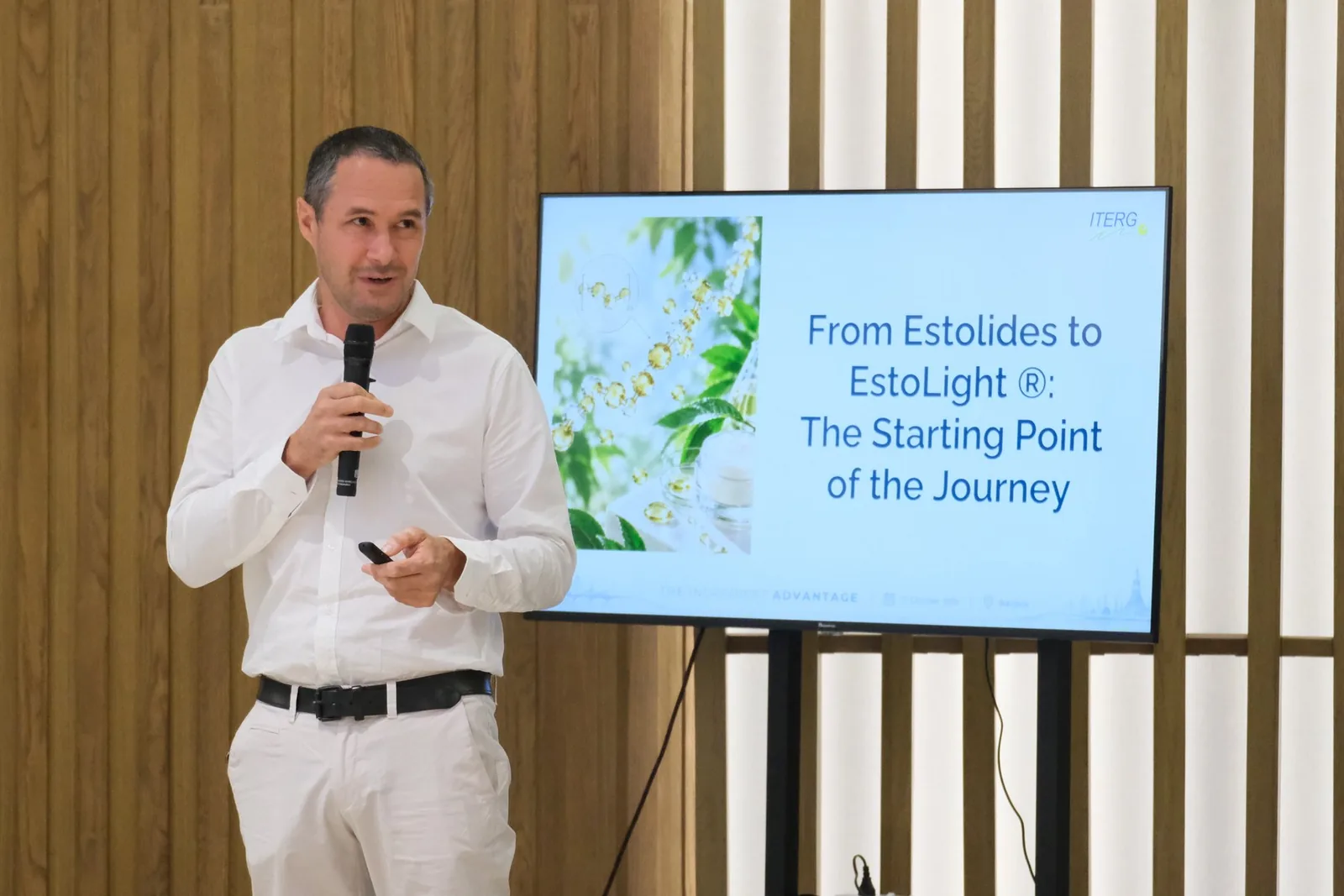
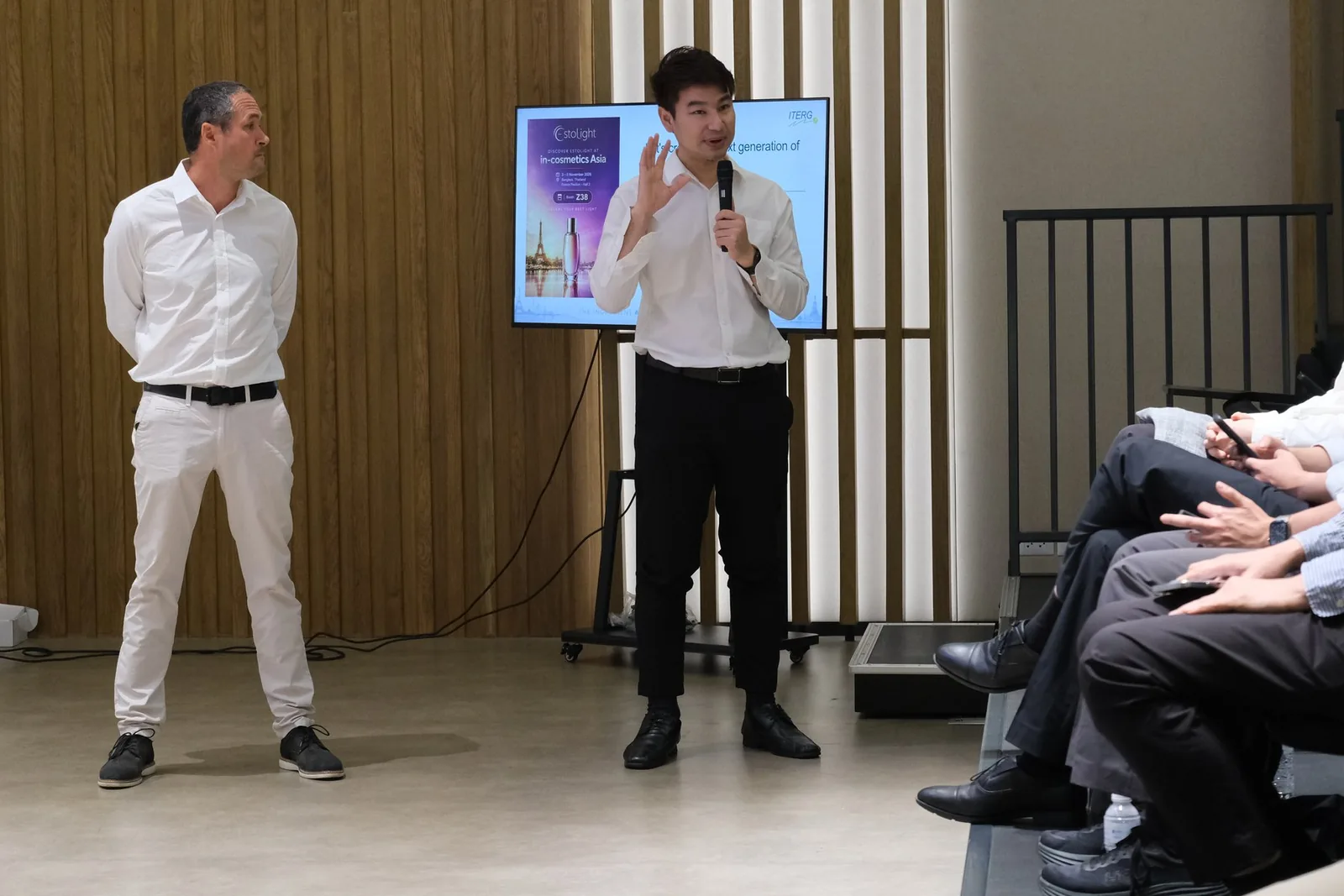
The highlight session from France (15:50–16:30) was presented by Jean-David Leao, General Manager, and Didier Pintori, Product Manager, of ITERG, the Industrial Technical Center for Oils and Related Products. Founded in 1943 and based in Canéjan, near Bordeaux in southwestern France, ITERG provides end-to-end services across the fats and oils value chain, from analytical laboratory work and pilot-scale R&D to industrial production. ITERG has 97 employees, serves more than 500 customers worldwide, and handles more than 5,000 contracts a year.
Their presentation, titled “From Research to Branded Ingredient: The EstoLight Case,” traced the development of EstoLight, ITERG’s brand of bio-based cosmetic ingredients. EstoLight builds on estolides, bio-based polymers derived from fatty acids that are designed to replace petroleum-derived materials in many industries. The case reflects the idea of Green Modification, which shifts production toward renewable plant-based lipid chemistry instead of fossil-based feedstocks.
| 1943 | Year ITERG was founded |
| 97 | Employees |
| 500+ | Customers worldwide |
| 5,000+ | Contracts per year |
“By joining forces with the right partners and refining our market positioning, we turned technical challenges into commercial opportunities.”
— Jean-David Leao and Didier Pintori, from ITERG’s presentation “The EstoLight Case”
Your Pathway to a Branded Ingredient: TEBC Program
Closing the talks (16:30–16:45), Natchapol Somrak, COO & Co-Founder of TIBD, introduced TEBC, an incubation program for herbal entrepreneurs run by K-API Co., Ltd. together with the Kasetsart Agricultural and Agro-Industrial Product Improvement Institute (KAPI), Kasetsart University. The program combines six days of lectures and hands-on work on participants’ own business models with a five-day, three-night study visit to herbal manufacturing plants abroad. It covers developing raw materials into products in four categories: health foods and beverages, cosmetics, dietary supplements, and products for wellness establishments.
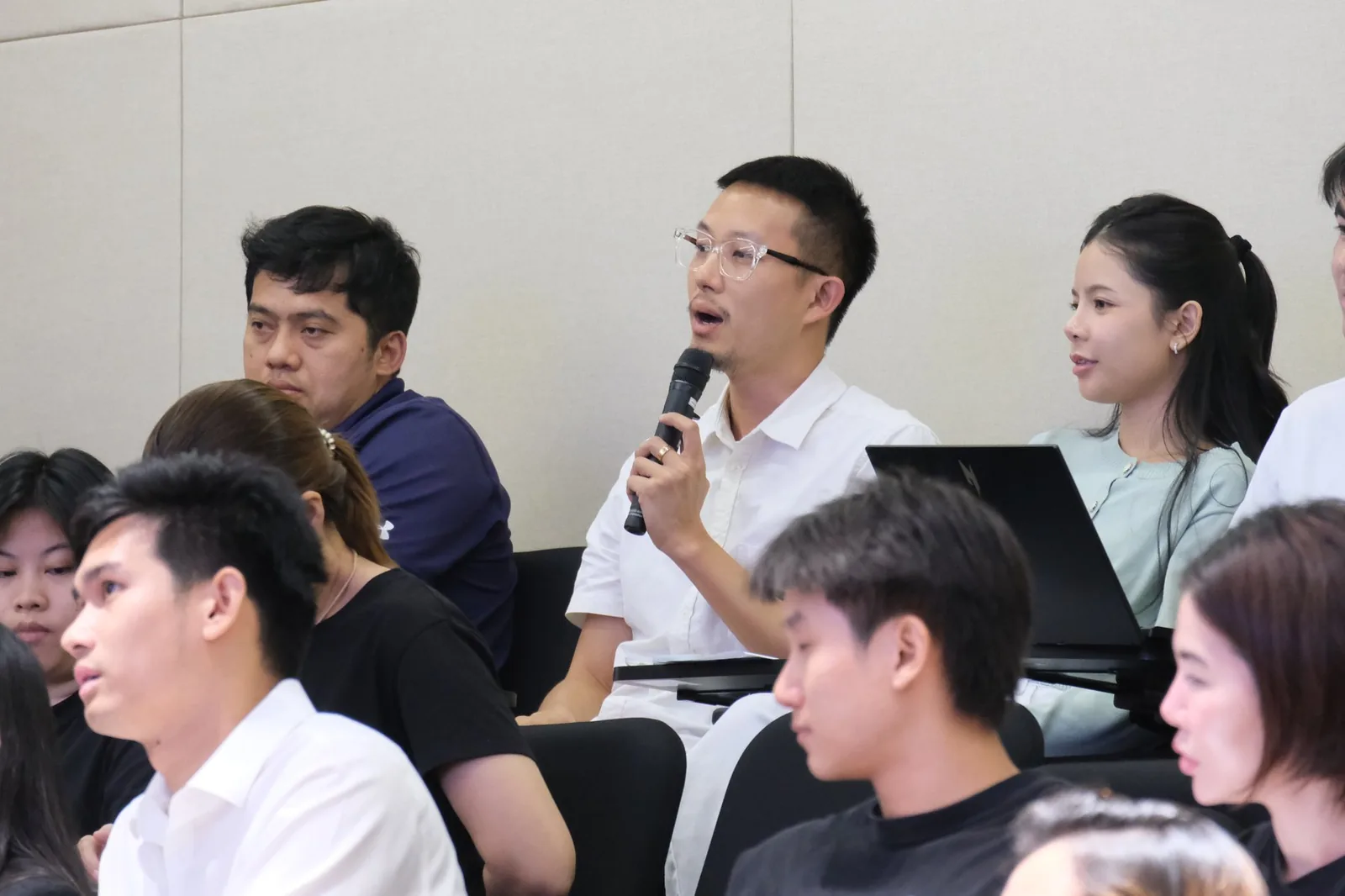
Since 2019, TEBC has run five cohorts with more than 110 graduates in total, and it is now recruiting a sixth cohort with a target of 25 participants. According to the program, most participants are business owners or executives with decision-making authority. The speakers then took questions in an Open Forum from 16:45 to 17:15, before the seminar closed with a group photo, after which guests moved on to the Partnering Dinner.
| 5 | Cohorts completed since 2019 |
| 110+ | Graduates in total |
| 25 | Target participants for the sixth cohort |
A Long-Term Collaboration Ecosystem
TIBD sees this collaboration with ITERG as one link in the active-ingredient development ecosystem it runs with its affiliated companies and partners, covering the whole value chain: research and extraction through Zubb Biotech and K-API, independent testing and verification through VisBio, a partner laboratory, and entrepreneur incubation through the TEBC program.
TIA 2026 thus brought scientific knowledge, business strategy, and international case studies together in one place, with the aim of laying the groundwork for long-term collaboration between Thai entrepreneurs and international networks of ingredient and innovation partners.
Businesses interested in developing their own Branded Ingredient, or in joining the sixth TEBC cohort, can reach the TIBD team through our contact page.