What Is Rainbow Rice? From the Pink-Leaf Rice of Thai Breeders to a Raw Material from Rice Leaves
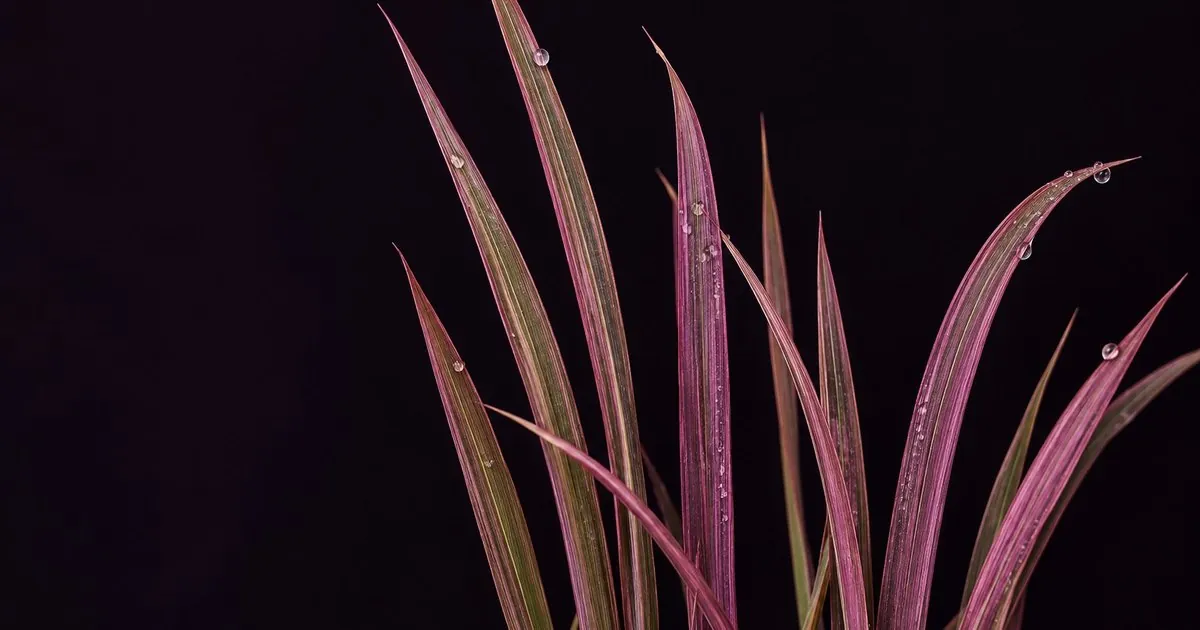
A rice field where the plants have pink, purple, white and green leaves arranged in patterns may look like a computer-generated image. But this rice really exists in Thailand. It is called Rainbow Rice (Khao Sanpasi), a breeding achievement of the Rice Science Center, Kasetsart University.
Rainbow Rice became widely known when an image of it appeared on the cover of the journal Nature Food in May 2020. It was later planted in patterned fields for agritourism in several areas. For industry, though, what matters more than its beauty is the coloured rice leaf, which is being developed as a raw material for food and cosmetics.
This article explains what Rainbow Rice is, where it came from, how its lines differ, and why the leaves of this rice are a new opportunity for Thai businesses.
Rainbow Rice is rice with colour on its leaves
Ordinary rice has green leaves. Rainbow Rice is a group of lines whose leaves are pink or purple, or carry white and green stripes. These colours come from pigments of the anthocyanin group that accumulate in the leaf, together with chlorophyll and carotenoids, which gives each line a different shade.
The Rice Science Center has made Rainbow Rice one of the main targets of its research, under the concepts of Super Nutrient Rice and “the whole rice plant is food” (Whole-plant Food), which hold that the value of the rice plant is not only in the grain.
Where Rainbow Rice came from
Rainbow Rice is the work of the breeding team at the Rice Science Center, Kasetsart University, Kamphaeng Saen campus, led by Prof. Dr. Apichart Vanavichit, the variety developer. His team is known for discovering the fragrance gene of jasmine rice and for developing Riceberry rice.
From a white-leaf mutant to pink-leaf rice
According to the Rice Science Center, Rainbow Rice comes from crossing two groups of rice:
- A white-leaf mutant of Jao Hom Nin rice, found in the rice mutant library that the center created by irradiating Jao Hom Nin seeds
- Kam Hom Nin rice, a rice that is purple through the whole plant, which is itself a cross between Kam Doi Saket rice and Jao Hom Nin rice
The center began crossing in 2010 and continued selection over many generations, arriving at five Rainbow Rice lines in 2015–2016. All of them were obtained through crossing and line selection, not genetic modification. This matches the Nature Food cover caption, which states that Rainbow Rice was “created through conventional breeding”.
It started as ornamental rice
At first, Rainbow Rice was selected for its appearance, shade, pattern and leaf shape, to suit ornamental use. Prof. Dr. Apichart described the origin of the name this way:
“Our breeders crossed the white-striped Jao Hom Nin with a rice that is purple through the whole plant … selected for form, shade, pattern and leaf shape to suit ornamental use, and named it “Khao Sanpasi” (Rainbow Rice).”
Interview with the Kaset Tham Kin website, 10 January 2020 (in Thai)
Later, the research expanded from beauty to the value of the leaf: as food, as a raw material, and as a tool for reducing burning in rice fields.
How the five Rainbow Rice lines differ
The Rice Science Center divides Rainbow Rice into five lines by leaf colour and plant height.
| Line | Leaf characteristics | Plant height |
|---|---|---|
| Rainbow Rice 01 | Ruby-pink leaves | Tall |
| Rainbow Rice 02 | Ruby-pink leaves | Short |
| Rainbow Rice 03 | Pink leaves with green and white stripes | Tall |
| Rainbow Rice 04 | Pink leaves with green and white stripes | Short |
| Rainbow Rice 05 | White leaves | – |
According to the Rice Science Center, all five Rainbow Rice lines are in the process of being filed for new plant variety protection (Plant Variety Protection).
Rainbow Rice 02 (RBR02) and raw material work
In the project to develop raw materials from rice leaves, the line used is Rainbow Rice (Khao Sanpasi) RBR02, with ruby-pink leaves on a short plant. The project plans to grow it for leaf harvest in an organic farmer network in Uthai Thani province.
How Rainbow Rice differs from Riceberry and other coloured rice
Many people may confuse Rainbow Rice with the coloured rice sold in shops. The key difference is which part of the rice plant carries the colour.
| Ordinary coloured rice, such as Riceberry | Rainbow Rice | |
|---|---|---|
| Part with prominent colour | Grain | Leaves and plant |
| Main use | Grain as food | Leaves as raw material; plants for ornament and agritourism |
| What farmers sell | Paddy or milled rice | Leaves (market in development) alongside grain |
Riceberry is also the work of the same team. The Rice Science Center began crossing Jao Hom Nin rice with Khao Dawk Mali 105 in 2002, eventually producing the deep-purple brown rice now widely known in Thailand. Rainbow Rice therefore builds on the team’s knowledge of coloured rice, moving from the grain to the leaf.
What is in a Rainbow Rice leaf?
Information published by the Rice Science Center and in Prof. Dr. Apichart’s articles indicates that Rainbow Rice leaves have several notable components.
- A mix of anthocyanins, namely cyanidin, peonidin, pelargonidin and delphinidin in glucoside form, which give the pink and purple colours
- High dietary fibre and little starch, unlike rice grain, which is mainly starch
- Chlorophyll and carotenoids, present together in the leaf, which give each line a different shade
These data describe Rainbow Rice leaves in the center’s research. The values used to set the quality of the actual raw material will come from measuring RBR02 leaves in the project’s fields, which is the first proof gate before production.
Rainbow Rice and agritourism
Before becoming a raw material, Rainbow Rice was known for rice fields planted in patterns using rice of different colours. Prof. Dr. Apichart’s article in Open Access Government (2021) describes a demonstration field at Ban Sang, Mae Rim district, Chiang Mai province, from late 2020 to early 2021, which used Rainbow Rice to create a field that changed colour as the rice grew and drew visitors to the community.
This concept shows that one rice variety can create value in several ways: beauty, tourism and raw materials. It fits the idea of “the whole rice plant is food”, which makes use of every part of the rice plant.
Rainbow Rice on the world stage
Rainbow Rice’s distinctive character has drawn international attention.
- Cover of Nature Food, Volume 1, Issue 5 (May 2020), used an image of Rainbow Rice as its cover under the theme “Disruptive vision”. Image by Anat Sukeewong, Rice Science Center, Kasetsart University.
- Case studies of leaf use: the center has published examples of turning rice leaves into powder for baked goods and making containers from the leaves.
From beautiful rice to a raw material from rice leaves
What sets Rainbow Rice apart from other coloured rice is that the colour is in the leaf, not only in the grain. Farmers can still harvest the grain as usual, and can earn extra income from the leaves if a leaf-harvest timing that does not affect grain yield can be found.
Rainbow Rice leaves have several strengths as a raw material:
- Built-in colour from anthocyanins, suited to development as a natural colour extract
- Almost no starch, with dietary fibre as the main component
- Protein in the leaf, which can be developed into a protein hydrolysate
- Traceable origin when grown in a farmer network certified to organic standards
The project to develop raw materials from RBR02 leaves is therefore designed as a two-stream biorefinery process, producing three raw materials from one batch of leaves: protein hydrolysate, anthocyanin extract and dietary fibre. All of these raw materials are currently still in development and are passing through proof gates one step at a time. Read more about the extract in the article What is rice leaf extract?
TIBD’s role
TIBD is a commercialisation partner of the RBR02 rice leaf project, together with K-API Co., Ltd. The variety and the know-how are developed by Kasetsart University. TIBD and K-API are partners and do not own the variety.
TIBD’s work is to:
- Bring raw materials from rice leaves to food and cosmetics manufacturers with real briefs
- Assess with the research team how the raw materials should be tested in manufacturers’ formulas
- Set up the quality assurance documentation so it is ready for business-to-business buyers
Rainbow Rice is page 3 in TIBD’s Deep Tech Innovators series, following Cold Plasma and Silk Crystal. Follow the full story at Deep Tech Innovators 03: Rainbow Rice RBR02.
Rainbow Rice: when the beauty of the rice leaf becomes a raw material
Rainbow Rice began with the aim of creating beautiful rice for ornament. But with a view that sees the whole rice plant as a source of value, the pink rice leaf is moving from tourist fields into the laboratory and the factory. For Thai businesses, it is an example of innovation from a Thai university that may, in the near future, become a raw material with a story and a verifiable origin.
If you are interested in testing raw materials from rice leaves in your products, click to contact the TIBD consulting team
References
- Rice Science Center, Kasetsart University. Rainbow Rice (Khao Sanpasi) (in Thai). https://dna.kps.ku.ac.th/research/breeding/rainbow-rice
- Nature Food, Volume 1 Issue 5, May 2020 (cover). https://www.nature.com/natfood/volumes/1/issues/5
- Kaset Tham Kin (10 January 2020). News on Rainbow Rice (in Thai). https://kasettumkin.com/agriculture-news/36880/
- Open Access Government (2021). Rainbow rice: A paradigm shift in future foods. https://www.openaccessgovernment.org/rainbow-rice/112325/
- Rice Science Center, Kasetsart University (2022). Leaves from a new rice variety boost, nourish both people and planet. https://dna.kps.ku.ac.th/research/articles/leaves-from-a-new-rice-variety-boost-nourish-both-people-and-planet