

Deep Tech Innovators · 03
Rainbow Rice RBR02Rice leaves once burned,now functional ingredients
Research from the Rice Science Center
Kasetsart University
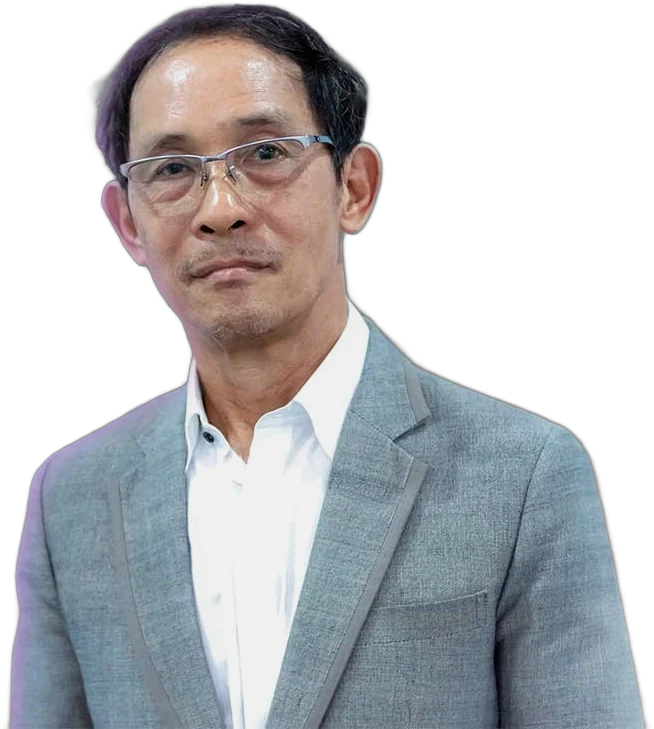
Deep Tech Innovator · Rice breederProf. Dr. Apichart VanavichitAdvisor to the Director, Rice Science Center, Kasetsart UniversityProfile and contact ↓
From field to ingredient
Zoom in, one level at a time
From rice leaves in an organic field, down to the colour inside the leaf, and back out as three ingredients from one batch of leaves
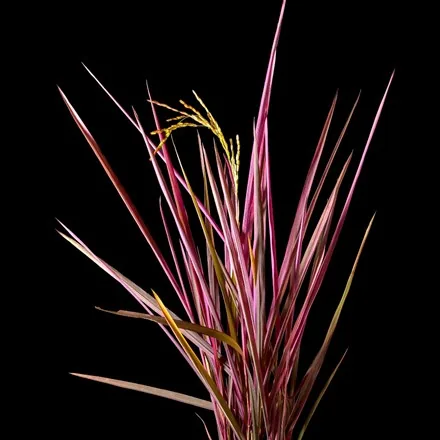 01Rainbow Rice RBR02 leaf
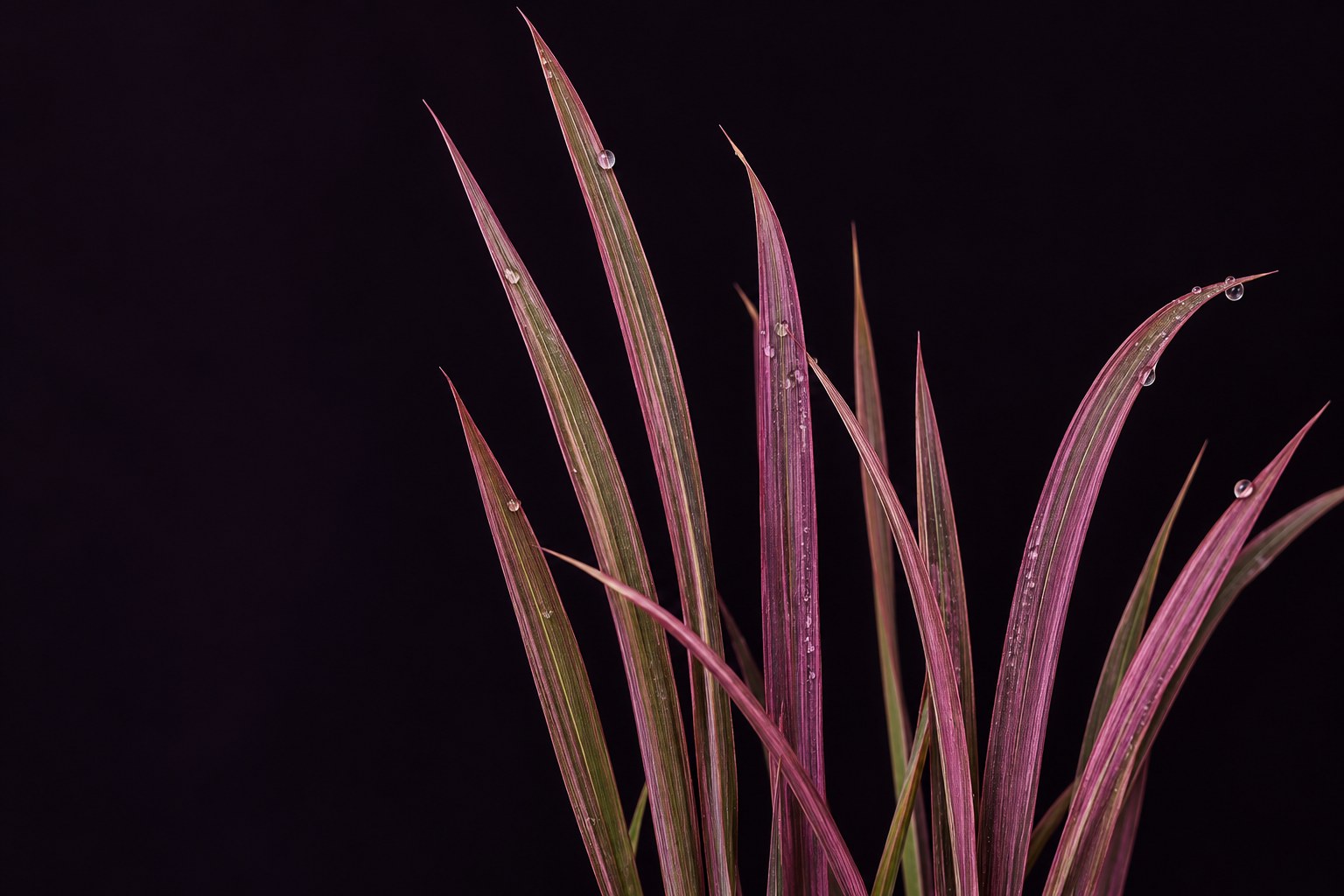
Rainbow Rice line 02, ruby-pink leaves on a short plant, grown by an organic network in Uthai Thani
EU and NOP organic standards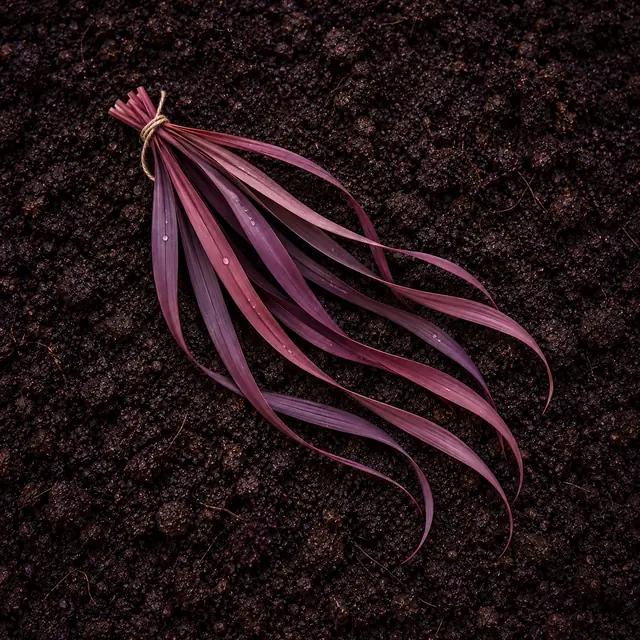 02Leaf harvest before flowering
Leaves are a co-product: harvest timing must capture the pigment without hurting the grain
First proof point: Gate 0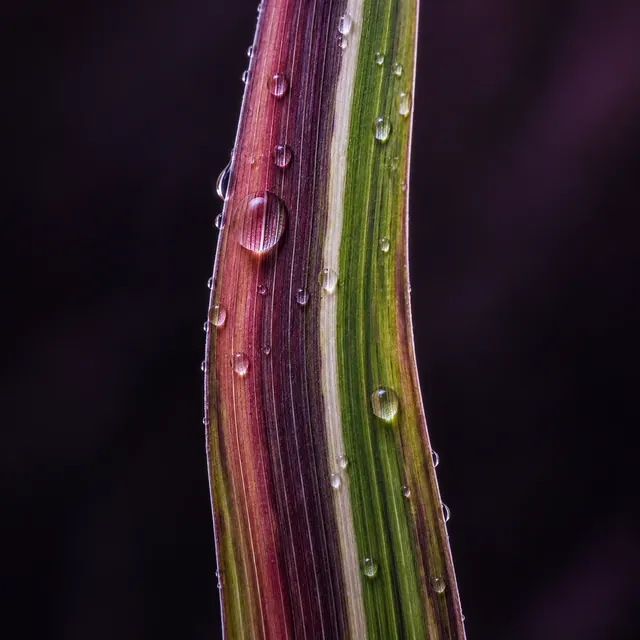 03Three pigment families in one leaf
Chlorophyll, carotenoids and anthocyanins sit together in the leaf
Split into two process tracks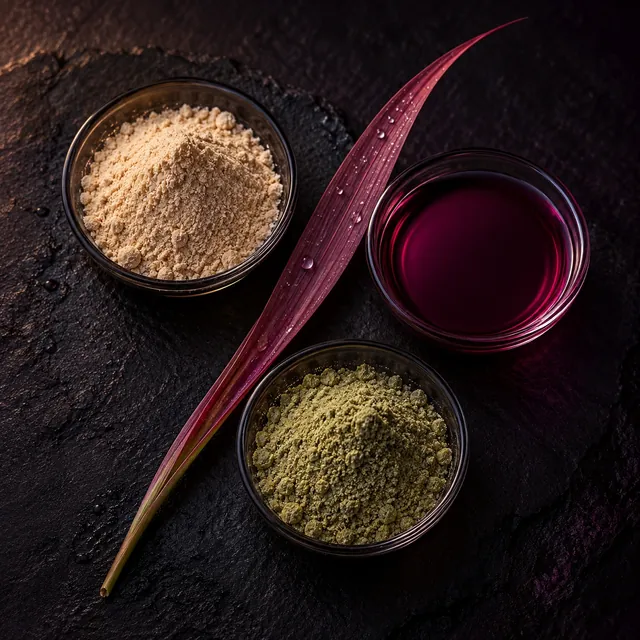 043 ingredients
Protein hydrolysate, anthocyanin extract and dietary fibre
Prototype · in development
Deep Tech Innovator · Rice breeder
The scientist who found
jasmine rice’s fragrance gene
now looks for value in the rice leaf
Prof. Dr. Apichart VanavichitAdvisor to the Director, Rice Science Center, Kasetsart University
Prof. Dr. Apichart Vanavichit is a genomic rice breeder at the Rice Science Center, Kasetsart University, Kamphaeng Saen campus. His team cloned the fragrance gene of jasmine rice and developed Riceberry, the purple rice every Thai household knows. His latest work is rainbow rice, a rice with colourful leaves.
His view is that “the whole rice plant is food” (Whole-plant Food). Breed the leaf to be valuable, and leaves once burned after harvest become an ingredient, without genetic modification (Non-GMO Precision Breeding).
[Link to the full interview] not available yet · awaiting interview Current title and profile to be confirmed with him
How Rainbow Rice began
Our breeders crossed the white-striped Jao Hom Nin with a rice that is purple through the whole plant … selected for form, shade, pattern and leaf shape … and named it “Khao Sanpasi” (Rainbow Rice).
Prof. Dr. Apichart VanavichitTranslated from an interview with Kaset Tamkin, 10 Jan 2020
- 1989Ph.D. in Crop Science, Oregon State University, USA
- 2002Began crossing Jao Hom Nin with Khao Dawk Mali 105, the work that became Riceberry, the deep-purple whole-grain rice now known across Thailand
- 2004His team cloned the fragrance gene of Thai jasmine rice (BADH2), patented in several countries
- 2020A Rainbow Rice image from the center made the cover of Nature Food, and the Rockefeller Foundation funded the Rainbow Rice project
- 2026Leads the green biorefinery project on Rainbow Rice leaves, with TIBD and K-API
Selected awards
- 2006National Outstanding Researcher, Agriculture and Biology (NRCT)
- 2012Outstanding Person of the Nation, Science and Technology
- 2019Outstanding Research and Innovation Award, NRCT 60th anniversary
Source: the profile in the project website kit (15 Oct 2026) · the Riceberry release year, the Rockefeller grant mention and use of the Nature Food cover await his confirmation
Reach the research team through TIBDRice Science Center, Kasetsart University
For technical questions and research collaboration, contact the TIBD team, who coordinate with the researchers
Coordinated by TIBDContact through the TIBD team
TIBD LINE Official@tibdglobal
Research team emailAwaiting permission
Rice Science Center websitedna.kps.ku.ac.th
The technology
What is a green biorefinery?
A process that draws several ingredients out of one batch of rice leaf, where the usual route extracts a single compound and discards the rest.
The leaf is split into two tracks because anthocyanins break down during enzymatic hydrolysis. Track 1 hydrolyses the protein, track 2 extracts the pigment, and the residue from both tracks goes on to become dietary fibre
One biomass streamTraceable to the fieldLeaf bought on qualityNon-GMO breedingLow-temperature extraction
One batch of leaf, split into two tracksExtraction conditions (time, ratio, pressure, temperature) are not shown; they are the research team’s intellectual property
1Track 1 · enzymatic protein hydrolysisProteinYields protein hydrolysate and peptides
2Track 2 · counter-current extraction tanks4 × 200 L316L stainless tanks from the engineering study; a design size, not a proven production capacity
3Ingredients from one batch of leaf3 kindsProtein, anthocyanin and dietary fibre
- 01Organic cultivationStep 1 · Field
The Uthai Thani organic community enterprise network, certified to EU and NOP standards.
- 02Leaf harvest before floweringStep 2 · Harvest
Bought on quality. Heavy metals and residues are checked before the leaf enters the line.
- 03Dual-track processingStep 3 · Processing
Pilot extraction unit in an existing Kasetsart University building, Kamphaeng Saen campus, Nakhon Pathom
- 04B2B supplyStep 4 · Supply
With Spec, TDS, MSDS and COA from an external laboratory.
Where rice leaves used to go
BeforeBurned in the field
Leaves and straw burned after harvest, never worth anything
BeforePloughed under
Returned to the soil, earning farmers nothing
BeforeSingle-compound extraction
Take one compound out and throw the rest away
Dual-track biorefineryThe whole leaf is used
Three ingredients from one batch of leaves; the residue from both tracks becomes dietary fibre
3 ingredients
3 ingredients from one batch of leaves
One batch of rice leaves, three ingredient forms, for makers of functional food and cosmetics. Buyers register their own finished products.
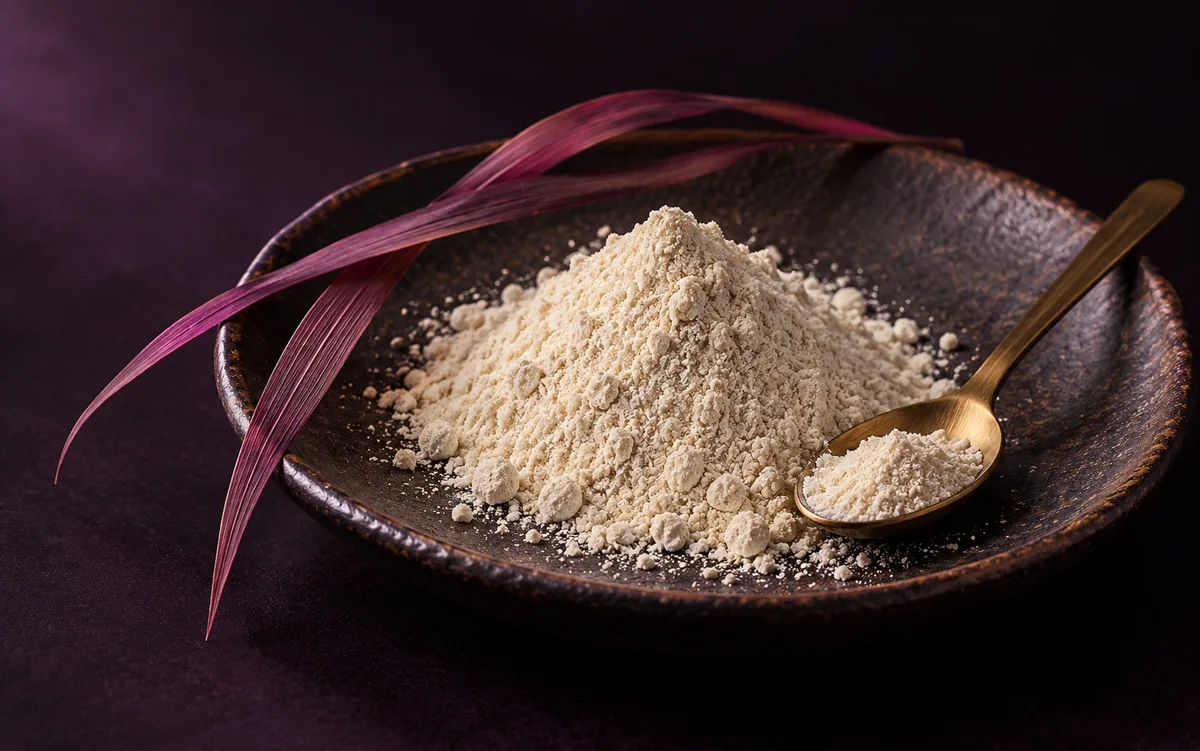 01PrototypeRice leaf protein hydrolysateTrack 1
- Source
- Track 1 · leaf protein hydrolysed with enzymes
- First target market
- Functional food and drinks, and cosmetics
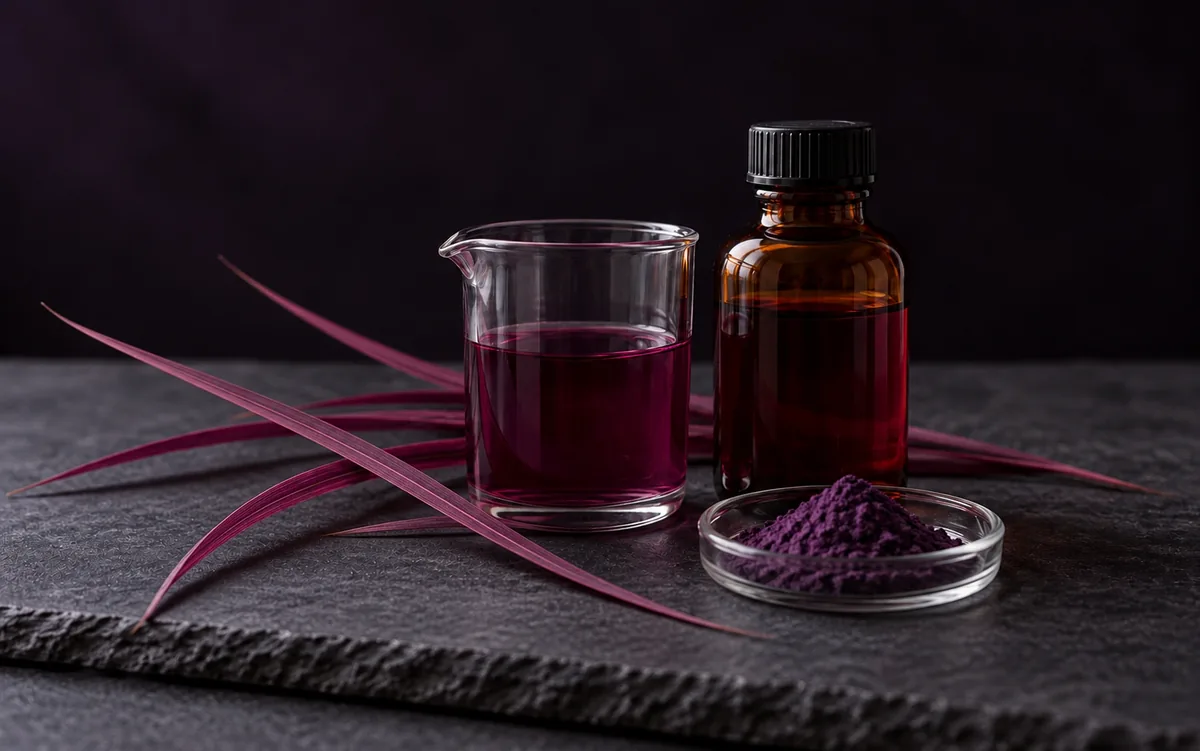 02PrototypeRice leaf anthocyaninTrack 2
- Source
- Track 2: cold extraction, then concentrated at low temperature
- INCI name (cosmetics)
- Oryza Sativa Leaf Extract
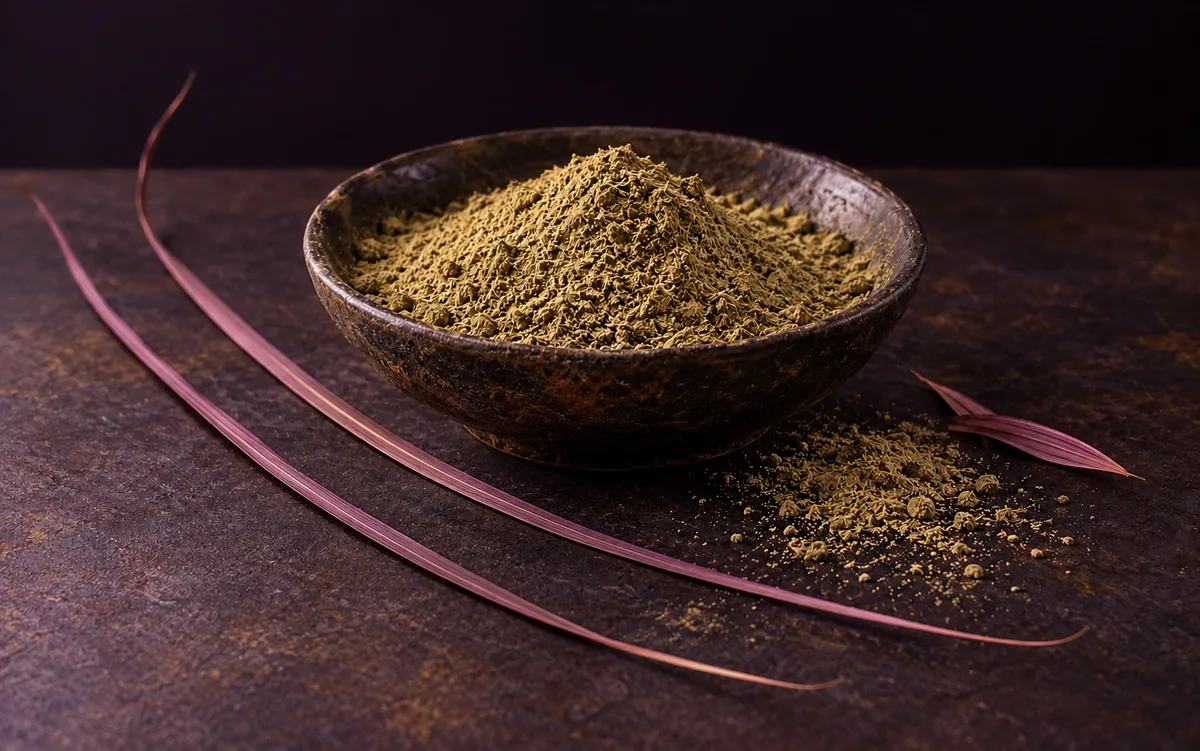 03PrototypeRice leaf dietary fibreCo-product of both tracks
- Source
- Fibre residue from both tracks, conditioned
- What sets it apart
- Origin and organic status traceable to the field
- INCI name of the pigment extract
- Oryza Sativa Leaf Extract
- Starting material
- Organic rainbow rice leaf RBR02
- Documents supplied
- Spec · TDS · MSDS · COA
- Use in food
- Regulatory pathway under assessment
Ingredients for manufacturers, business to business (B2B), not finished products · no health claims in people
Research and evidence
What we know and what must be proved
Published studies, developer data and open questions are kept apart, so you can see what each level of evidence can answer. Results from real production lots follow once the extraction unit is running.
Peer-reviewed publicationDeveloper institute data, or test-tube and cell resultsOpen question, still to prove
Published study
Anthocyanin in purple rice leaves at the tillering stage
1.70–2.10grams per kilogram dry weightFrom Yamuangmorn et al. (2018), Journal of the Science of Food and Agriculture · a literature value, not yet measured on RBR02
Question 1 · when to harvest the leaves
Rice leaves are a co-product, and timing matters
Published work found useful anthocyanin levels in purple rice leaves at tillering, but the pigment above ground falls sharply by grain harvest. So the leaves are not a free leftover after harvest.
Before building any equipment, the project set a first proof gate (Gate 0): measuring anthocyanin across several plots and growth stages by HPLC to find the best harvest window.
Open questionSources disagree on how leaf cutting affects grain yield. Gate 0 will answer it.
- A palette of three pigment families
Leaf colour comes from chlorophyll, carotenoids and anthocyanins together in one leaf.
- Leaves are not starch
Compared with the grain, the leaf has almost no starch, is mostly dietary fibre, and has more protein.
- C-glycoside flavones
Found in young jasmine rice leaves (Ayuni et al. 2024); not yet data from RBR02.
- Purity comes from selectivity
Counter-current extraction raises recovery, but purity has to come from a selective separation step such as membranes or resins.
Comparisons are used instead of composition figures because published values differ between sources · not a health claim
- Gate 0 resultsAnthocyanin in RBR02 leaves across plots and stages
- Pilot-lot results and COAfrom real production lots of the pilot extraction unit
- Heavy metal, pesticide and prohibited-microbe testsEvery lot, by an external laboratory
- Photographs from the field and the laboratoryAwaiting real photographs from the research team
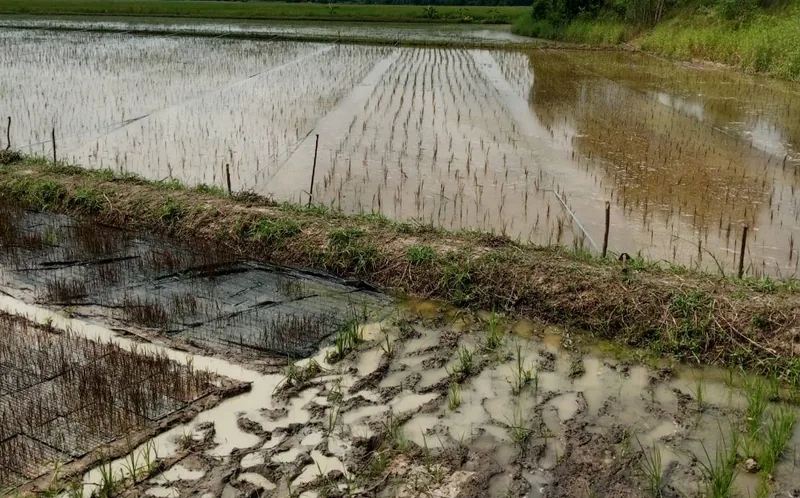
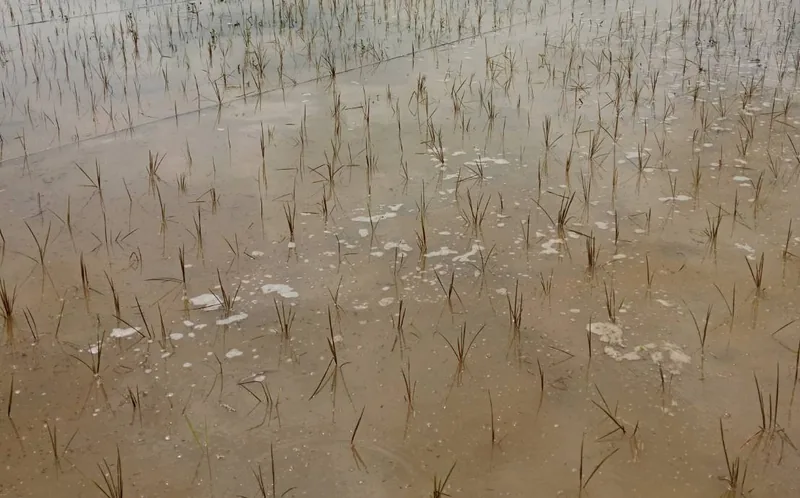
From the field
Transplanting and the plots after it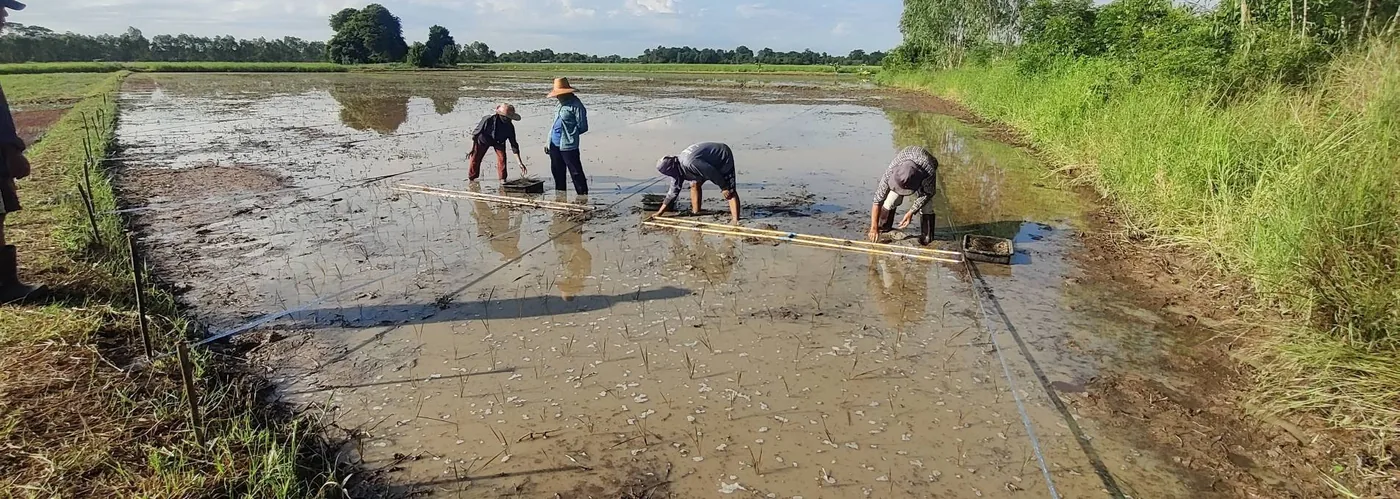
 Extraction unitLaboratoryIngredient powders
Proof path within the 18-month project plan (31 Jul 2026 – 31 Jan 2028, per PMU-A terms)
No contract manufacturer in Thailand extracts anthocyanins from fresh organic rice leaf. So the project is installing its own extraction unit to prove the process under real working conditions.
Gate 0Confirm the leaf before building
Measure leaf anthocyanin across plots and growth stages by HPLC to find the harvest window
PlannedGate 1Measure liquid left in the residue
A protocol to measure liquid held in the pressed residue, because that liquid is lost pigment
PlannedInstall the unitCommissioning and pilot lots
Commission the unit and run pilot lots from farmers’ real leaves
Per project planTRL 7Ready for buyers
Real production lots, documents from an external lab, real unit cost, and a PO or letter of intent from B2B customers
TargetPlanned planting: 30 rai in year 1, rising to 100 rai in year 2, from the Uthai Thani organic network · targets TRL 4 → 7 and SRL 4 → 7 · no claim of TRL 8–9
Applications
What can rice-leaf ingredients be used for?
Three needs rice-leaf ingredients can meet. Each still has to be tested in its own formula.
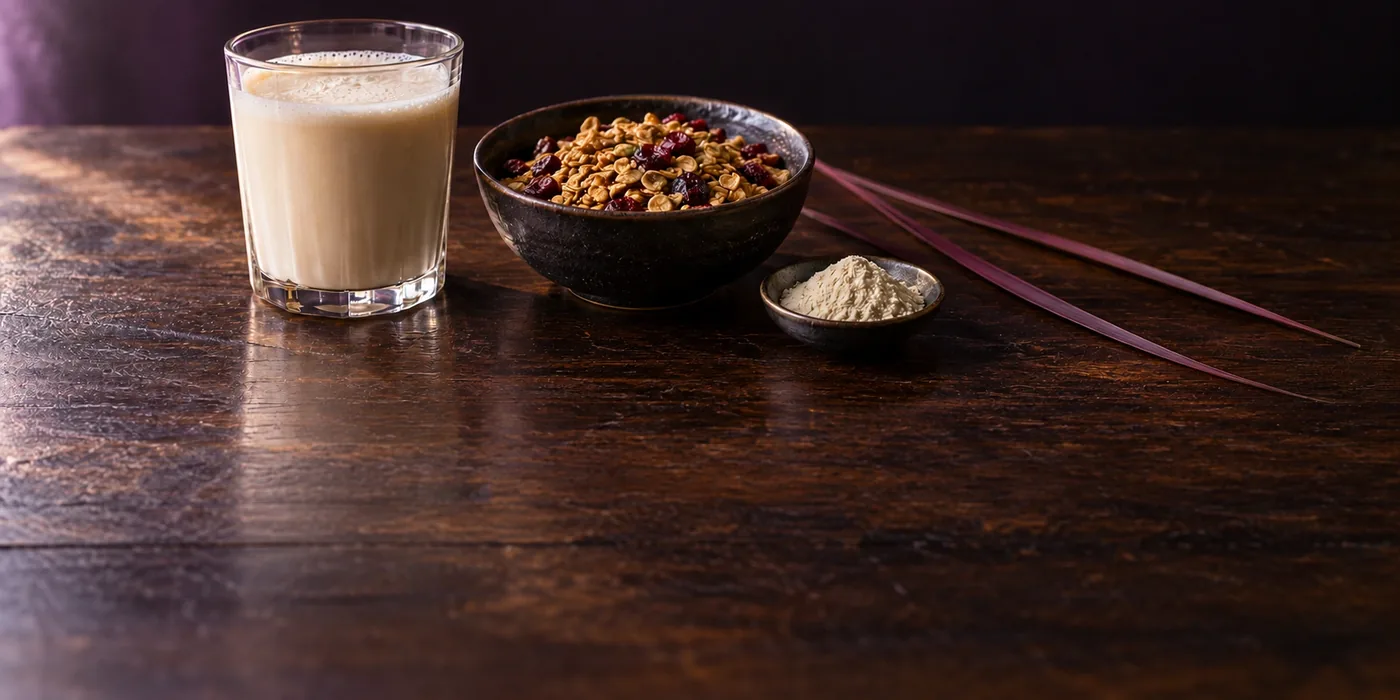
Functional food
Used for
- 1Plant protein
Protein hydrolysate and peptides from track 1; the first target market is functional food and drinks
- 2Dietary fibre
Made from the residue of both tracks; the leaf has almost no starch, and fibre is its main component
- 3Regulatory status
Use in food and supplements is under regulatory-pathway assessment
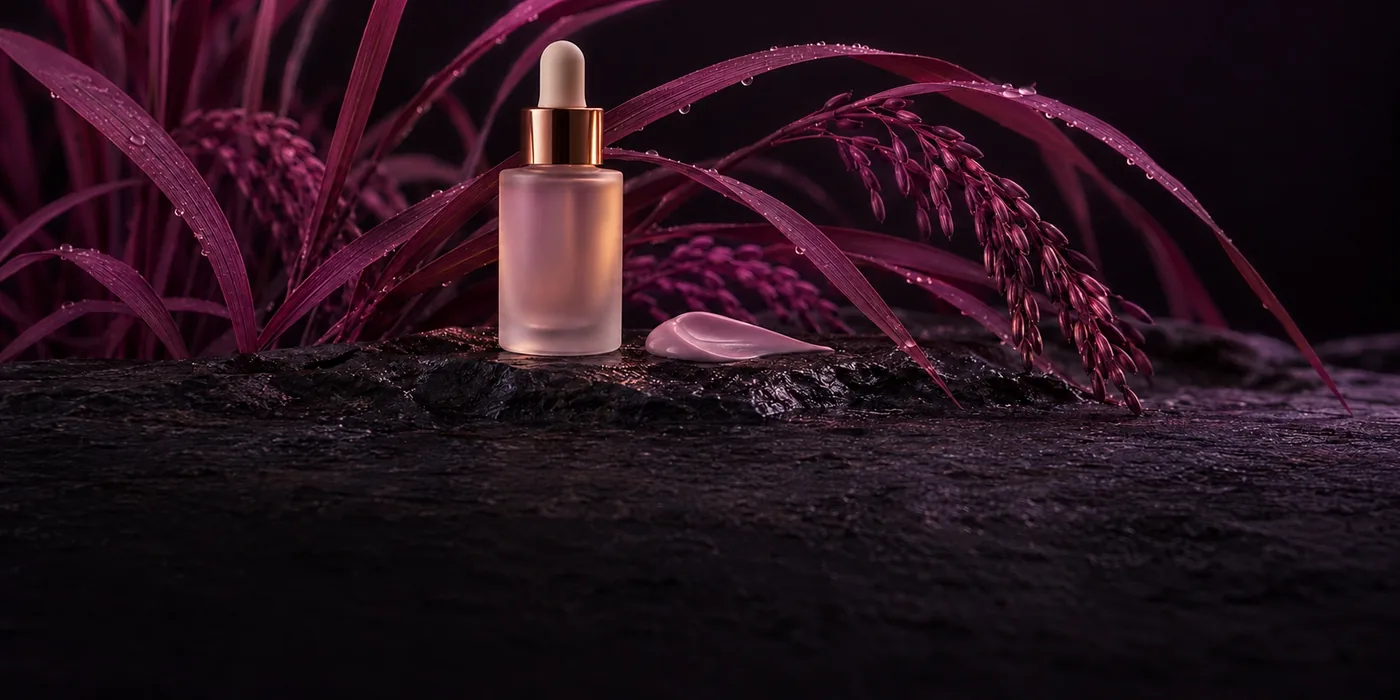
Cosmetics and natural colour
Used for
- 1Rice leaf colour extract
INCI name Oryza Sativa Leaf Extract; the cosmetics route is open
- 2Protein for cosmetic formulas
Rice leaf protein hydrolysate targets cosmetics alongside food
- 3Low-temperature extraction
Anthocyanins break down under enzyme digestion, so they are extracted on a separate track and concentrated at low temperature
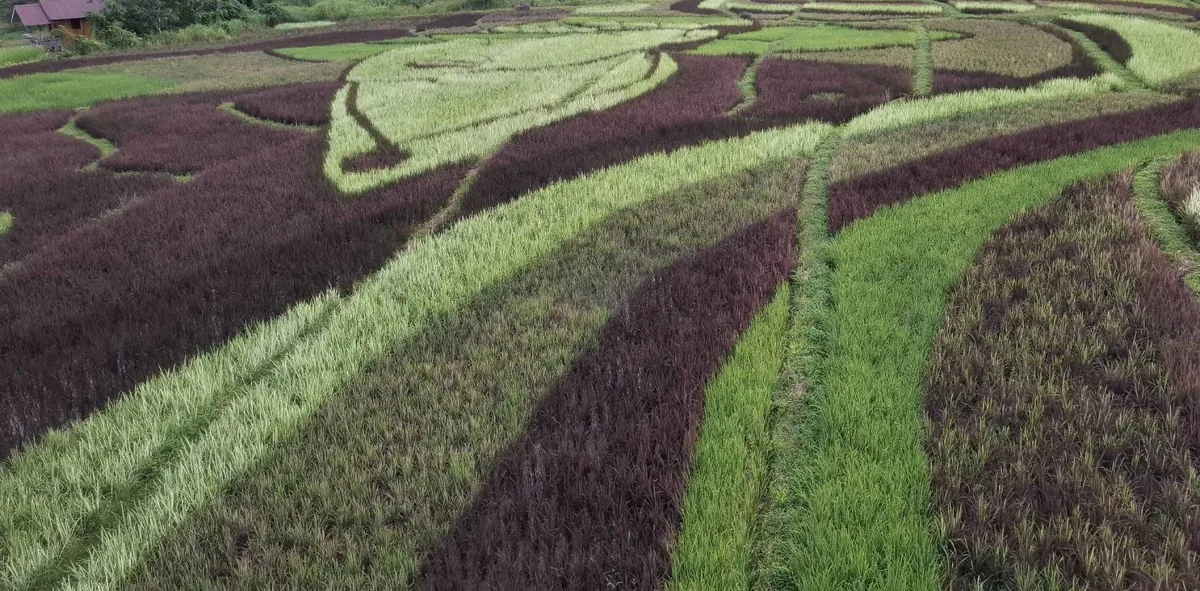
Brands that tell an origin story
Used for
- 1Traceable to the field
Leaves from an organic farming network in Uthai Thani, EU and NOP standards
- 2New income for farmers
Leaves once burned or ploughed under become an ingredient, bought on quality
- 3A gap in natural colours
The project’s survey found no commercial natural-colour maker worldwide using leaves of higher plants as the main raw material
Working with TIBD
Step 1Share your product brief
Which ingredient, in what kind of formula, for which market
Step 2Assess with the researchers
TIBD and the research team assess whether the ingredient fits and how to test it
Step 3Test samples
Test in your formula once samples from the prototype unit’s pilot lots are available
Ingredients are still in development and not yet for sale · product claims must be checked against the law of each target market · no health claims in people
Team and partners
Three parties in one chain
The university holds the variety and the know-how. The private side takes it to market. Farmers are both producers and beneficiaries.
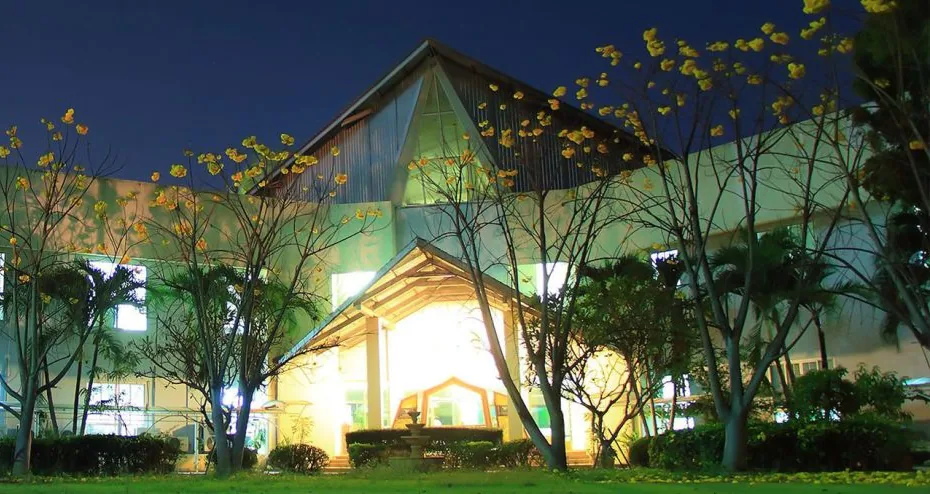
Kasetsart University
Role
- 1Developer of the RBR02 line
The Rice Science Center develops the variety and the standard practice for growing and cutting the leaf
- 2Process and analysis
The Kasetsart Agricultural and Agro-Industrial Product Improvement Institute handles extraction and analysis
- 3Working space
An existing building on the Kamphaeng Saen campus, housing the pilot extraction unit
- [In-depth article] not available yet
TIBD and K-API
Role
- 1Taking the technology to market
TIBD develops the business-to-business market with cosmetic and health food manufacturers
- 2Quality documentation
TIBD prepares the ingredient document set and the traceability system
- 3Running the extraction line
K-API develops and produces the actives in the pilot extraction unit
- [How manufacturers can work with us] awaiting terms from TIBD
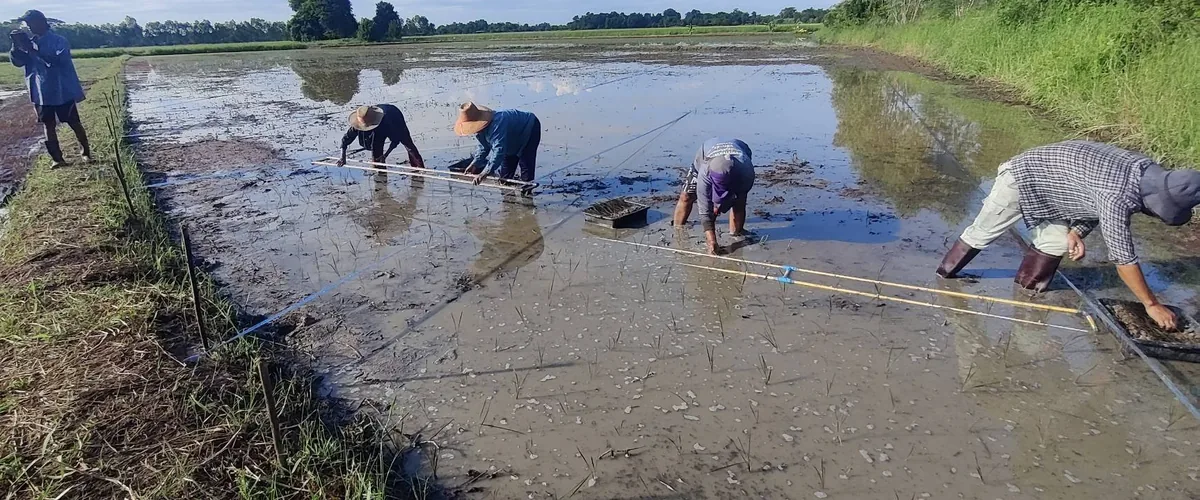
Farmer network
Role
- 1Growing quality leaf
The Uthai Thani organic community enterprise network grows under organic standards
- 2Post-harvest handling
Leaf is sorted and handled locally before it goes to processing
- 3Sharing the benefit by agreed rules
Quality-based buying prices and benefit-sharing rules through the social enterprise
- [Stories from the field] not available yet
The partnership runs through KU INNORICE SIE, a university social innovation enterprise under Kasetsart’s KUniverse · TIBD and K-API are partners and do not own the SIE
FAQ
Questions about ingredients from Rainbow Rice leaf
Questions businesses ask most, answered from the research team’s and project’s own information.
These answers are a draft, awaiting review by the research team and the regulatory team.
Still have a question about your own product?
Send the details to LINE @tibdglobal. The TIBD team will help assess whether these ingredients suit your formulation.
Talk to the TIBD teamCan I order the ingredients now?
Not yet. The project is installing the pilot extraction unit and producing pilot lots. Manufacturers who want to test samples can register their interest through TIBD.
Why the leaf and not the grain?
Leaves and straw are usually burned or ploughed in, so harvesting leaves creates new income from a part of the plant that had no price. When to cut them without hurting the grain harvest is what the project must prove in Gate 0.
How is Rainbow Rice different from ordinary coloured rice?
Ordinary coloured rice stands out for the colour of its grain; Rainbow Rice stands out for the colour of its leaves, in pink, purple, green and white. It comes from crossing a white-striped-leaf rice with a deep-purple-leaf rice and selecting the lines, not from genetic modification (Non-GMO). RBR02 is Rainbow Rice line 02, with ruby-pink leaves on a short plant.
Which product categories can it be used in?
The cosmetics route is open: rice leaf extract has the INCI name Oryza Sativa Leaf Extract. Use in food and supplements is under regulatory-pathway assessment.
Are there efficacy test results yet?
There is no data in people yet. The project follows a clear order of proof: test tube, then cells, then human data, and makes no claims until the data supports them.
How does a manufacturer get started?
Start by stating the product brief clearly: which ingredient you need and what kind of formulation it goes into. The TIBD team then works out with the research team how the sample should be tested.
News and articles
Read more about Rainbow Rice
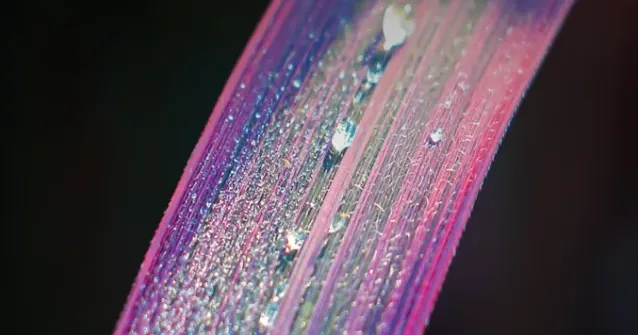 Article · Nature FoodRainbow Rice on the cover of Nature Food
A Rainbow Rice image from the Rice Science Center made the May 2020 cover, themed Disruptive vision
May 2020 · Nature FoodRead on Nature Food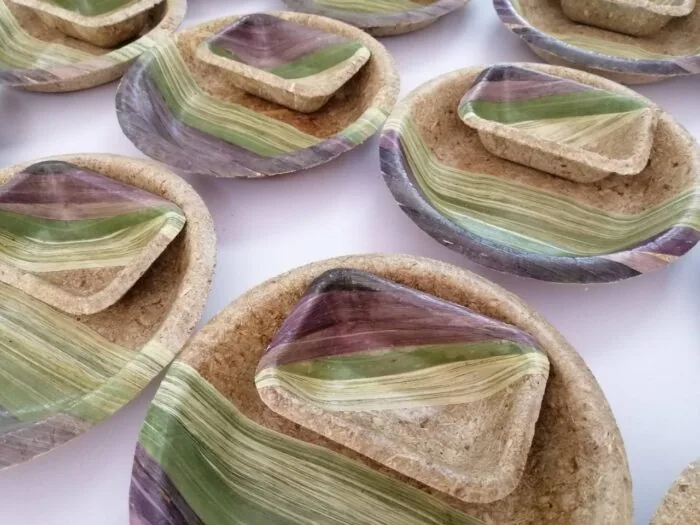 Case study · Rockefeller FoundationLeaves from a new rice variety nourish both people and planet
Rainbow Rice fields, rice-leaf powder in baking, and tableware made from the leaves
12 Sep 2022 · Rice Science CenterRead the case study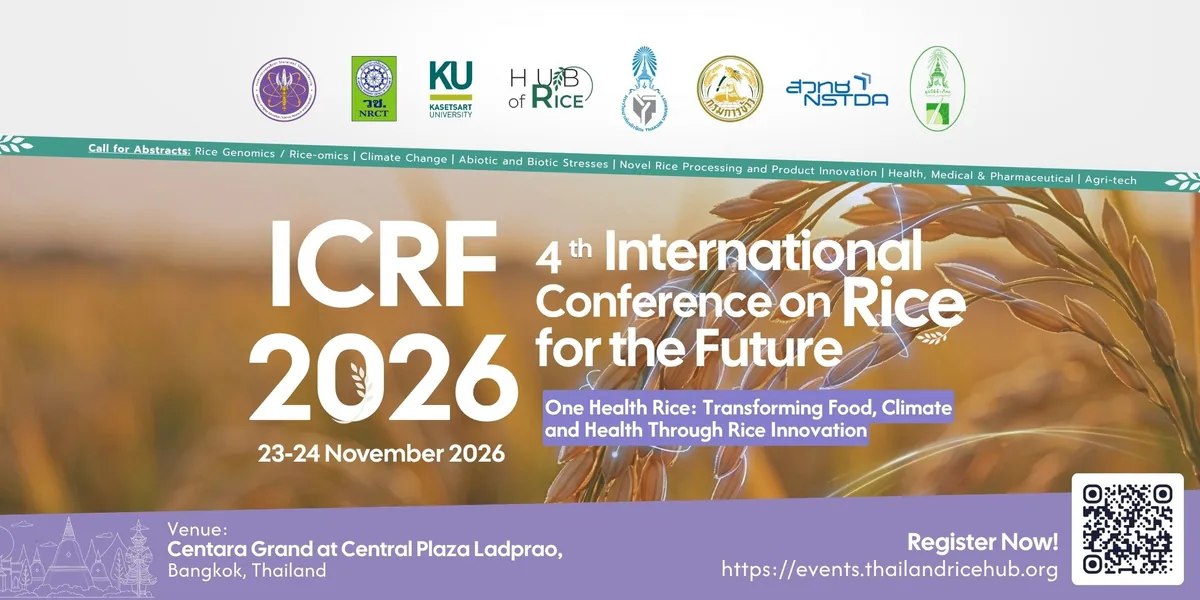 Conference · ICRF 2026Prof. Apichart speaks at the International Conference on Rice for the Future
The 4th international rice conference, themed One Health Rice
23–24 Nov 2026 · BangkokView the conferenceTalk to the TIBD team
Have a product idea for rice leaves?
If you need natural colour, plant protein or dietary fibre traceable to the field, or want to try a rice-leaf ingredient in your formula, let’s talk.
Developer of the variety and the know-howProf. Dr. Apichart Vanavichit and the research team
Rice Science Center, Kasetsart University
Taking it to productTIBD Company Limited
Taking the technology to market, testing on real problems, and market development
TIBD Company Limited · Rice Science Center, Kasetsart University · K-API Company LimitedPhotographs from the Rice Science Center, Kasetsart University, and the sources named in each caption · Images marked as AI-generated are concept images