

Cold plasma in the food industry / Article 04
Reducing mycotoxins in agricultural raw materials with cold plasma: where the research stands before you decide
Plasma mycotoxin reduction — aflatoxin, deoxynivalenol and zearalenone · what the research reports, why TIBD keeps this at research stage, and which partners suit a project like this.
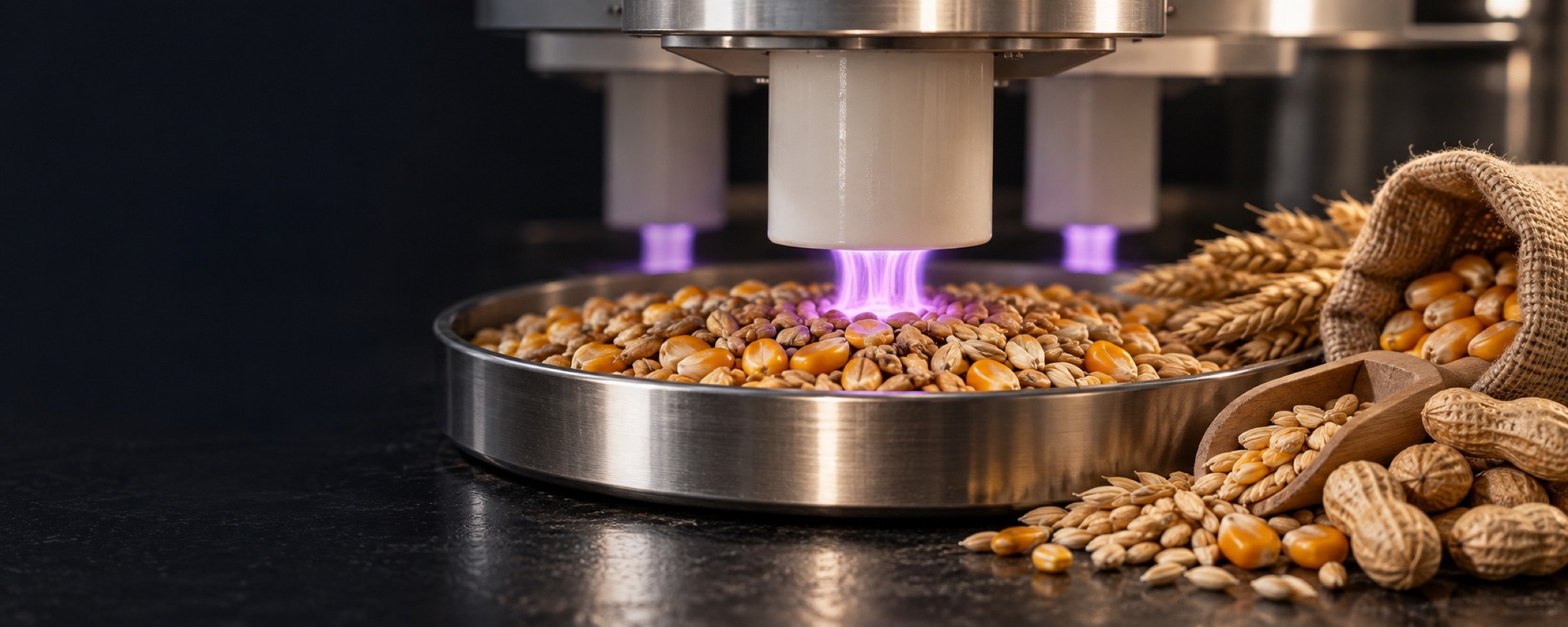
Mycotoxins are substances produced by certain fungi in agricultural raw materials, and they are one of the hardest quality risks in the food and feed chain to manage, because they do not disappear when the fungus is removed and they cannot be seen with the naked eye.
Cold plasma has been studied in the international literature as a potentially viable route for breaking down the structure of some mycotoxin groups. This article summarises how far the research has gone, and states plainly what is not yet ready for a real production line.
TIBD places this group of work in joint research and development with partners, not as a commercial service guaranteeing a percentage reduction at plant scale. The reasons for that position are all set out in this article.
01How mycotoxins affect Thai industry
Thailand is a major regional producer, consumer and exporter of cereal and feed products. The feed industry uses maize, imported wheat, broken rice and soybean at the level of millions of tonnes a year. Contamination in those raw materials hits three ways at once.
Three ways mycotoxin contamination hits
- The health of the animals consuming it, which comes back as farm performance for the customer.
- Residue risk in meat and milk products entering the human food chain.
- Risk of rejection in export markets that set strict maximum limits.
Three groups matter most: aflatoxin B1, produced by Aspergillus in maize, peanut and oilseed; deoxynivalenol and zearalenone, produced by Fusarium in wheat, barley, maize and feed; and ochratoxin A, found in coffee, cereals and meat products.
On regulation, Codex Alimentarius CXS 193-1995 sets a maximum limit for total aflatoxins in cereals for direct human consumption at 15 parts per billion, and for aflatoxin B1 in maize for direct consumption at 2 parts per billion. The European Union works under Regulation (EU) 2023/915, which repealed and replaced Regulation 1881/2006 as the current framework.
International surveys published annually report consistently that aflatoxin contamination levels in Southeast Asian feed raw materials sit at a level requiring close management, particularly maize grown in hot, humid conditions and stored at high moisture.
02What the current methods can and cannot do
| Method | What it does | Limits |
|---|---|---|
| Physical sorting, both optical and by density | Separates visibly affected grain out of the lot. | Does not help with grain that is contaminated but looks normal. |
| Binders added to the feed formulation | Bind the toxin in the animal's digestive tract. | An ongoing cost on every lot, and effectiveness varies by toxin type. |
| Degrading enzymes | Break down the structure of certain toxin groups. | Specific to certain substances, not comprehensive. |
| Moisture and temperature control in storage | Limits fungal growth that would produce more toxin. | Prevention before the fact, not a remedy once contamination has happened. |
The clear gap: once a raw material is already contaminated and has been through sorting, there are few options left for reducing the toxin level in the material itself. That is the point at which cold plasma has been studied.
03How far the research on plasma and mycotoxins has gone
The literature of recent years has advanced both technically and in explaining the mechanism.
| Study | Journal | What it reports |
|---|---|---|
| Wang et al. (2017) | Journal of Agricultural and Food Chemistry | Studies the structure of the degradation products and the degradation pathway of aflatoxin B1 under high-voltage atmospheric cold plasma. |
| Feizollahi et al. (2021) | Food Engineering Reviews | A review of the factors affecting DBD plasma effectiveness, and degradation of deoxynivalenol by plasma combined with follow-on treatment. |
| Zhang et al. (2023) | Journal of the Science of Food and Agriculture | Degradation of deoxynivalenol in wheat using double-dielectric cold plasma, identifying the degradation pathway and products. |
| Suwannarat et al. (2021) | ACS Applied Materials & Interfaces | The effect of discharge plasma in liquid on reducing Alternaria brassicicola, a filamentous fungus of the same family as several toxin producers. |
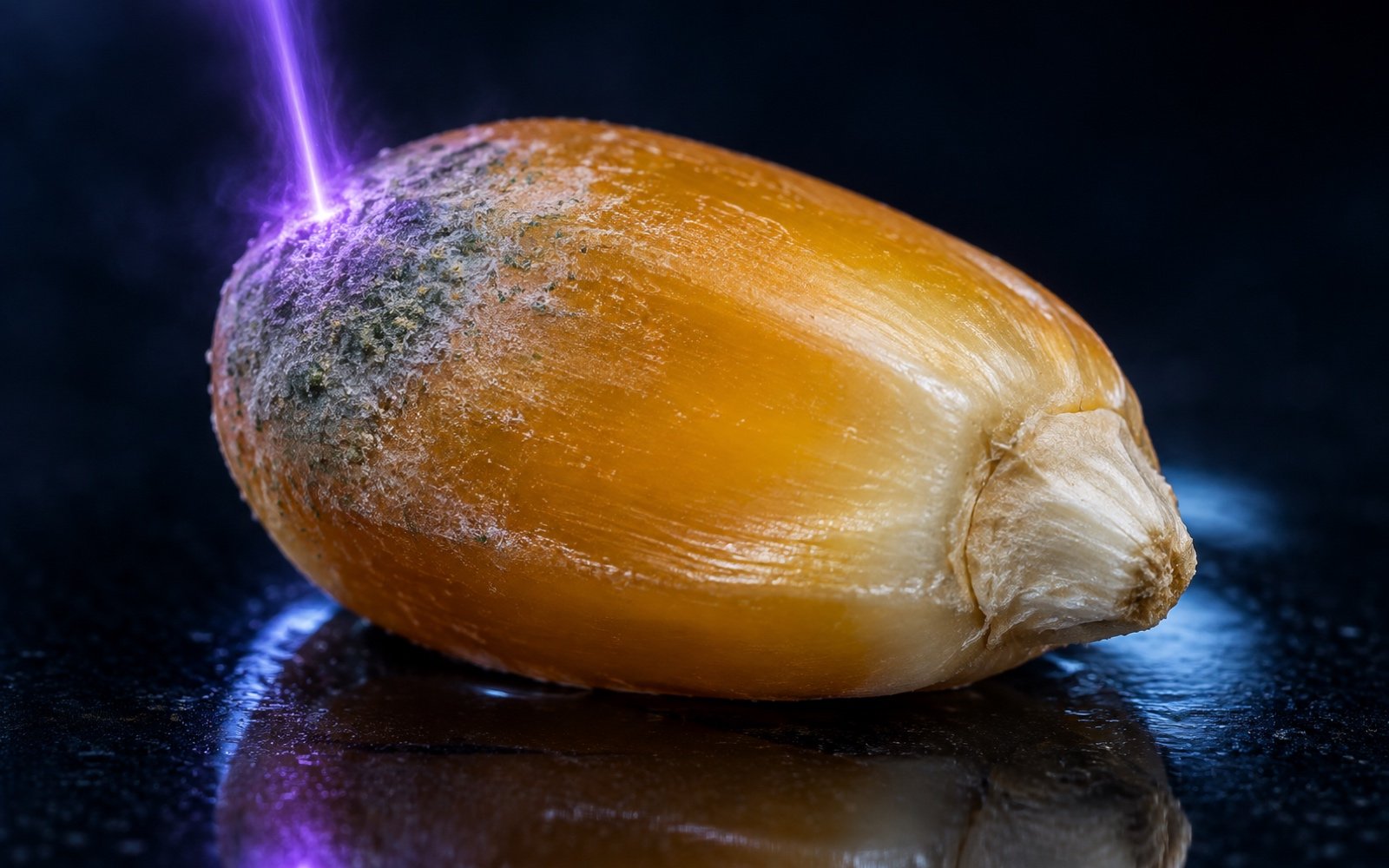
Mechanistically, aflatoxin B1 has a lactone ring and an epoxide ring sensitive to oxidation, while the deoxynivalenol molecule has an epoxide ring, double bonds and hydroxyl groups open to attack. That is the chemical reason this group responds to plasma at laboratory scale.
Confirming that the molecule has genuinely changed requires liquid chromatography with tandem mass spectrometry, LC-MS/MS, the technique regulators worldwide accept as more sensitive and specific than rapid screening methods.
04Why this is still research rather than a commercial service
There are four reasons, and every one of them is checkable.
Four reasons this is not announced as a commercial service
- Reduction levels in the laboratory show a very wide range, depending on voltage, frequency, treatment time, gas type, the moisture of the material, and the structure of the material the toxin sits in.
- The effect on the nutritional value of the material — protein, fat, essential amino acids and oxidation-sensitive vitamins — has to be tested separately for each raw material before scaling.
- A treatment system at tonnes per hour still has to be purpose-designed, and that engineering work is ongoing.
- Registering the process under HACCP and feed industry rules relies on a data set that the research phase has to produce first.
Declaring a percentage reduction without testing against each company's own real raw material would be a promise the evidence cannot yet support, which is a risk neither side should take on.
05Which partners suit a project like this
This kind of project suits organisations with a continuous volume of at-risk raw material, who see a research data set as a company asset rather than a one-off expense.
Who fits as a research partner
- Large feed producers with in-house research and development.
- Rice mills and maize processors with lot-specific problems looking to explore options.
- Infant formula and specialty food producers who need levels below the international limits.
- Exporters of cereals and cereal products into markets with strict testing.
- Government research agencies and academic institutes working on feed safety.
06How the research project runs
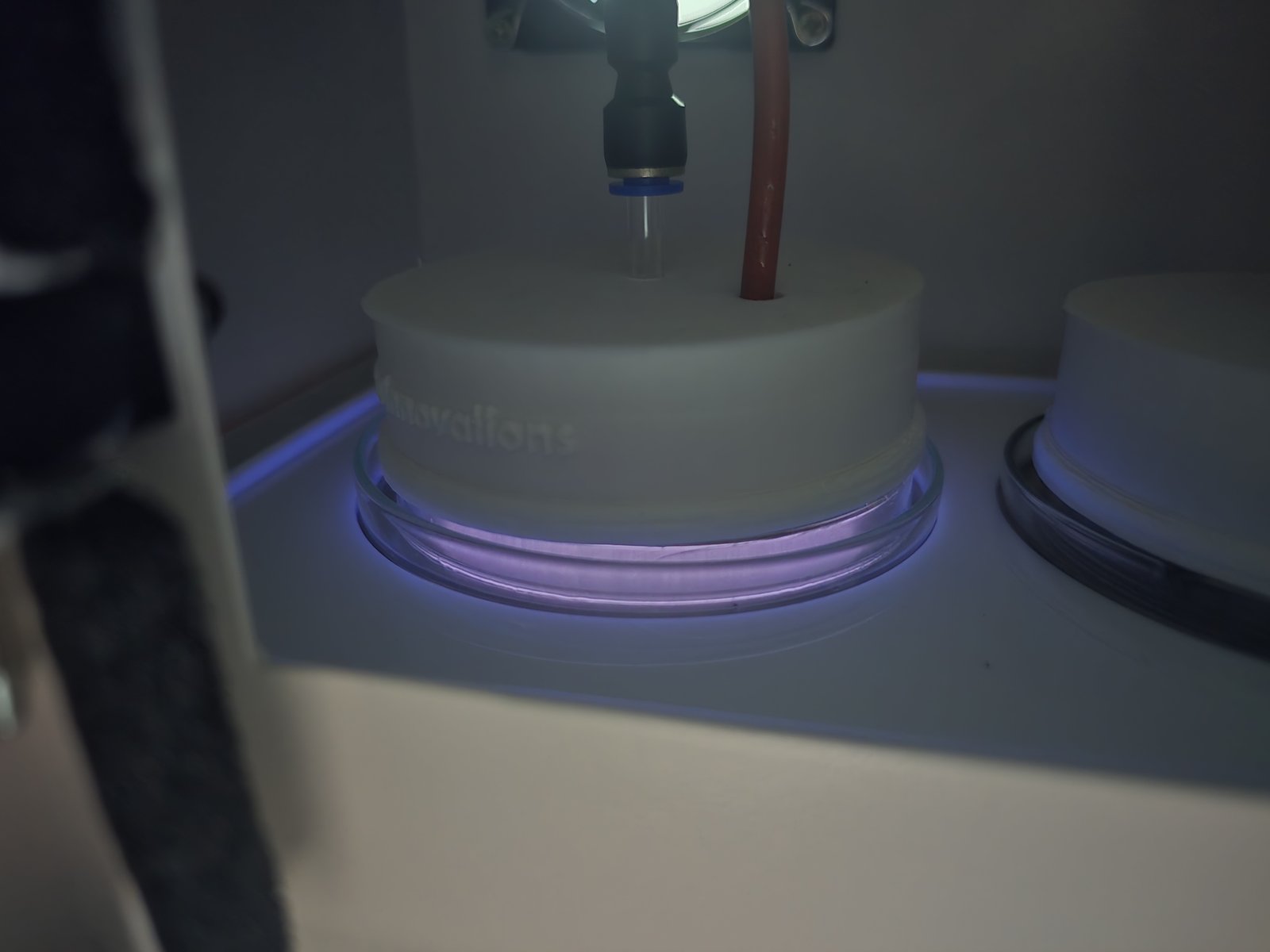
It starts with a literature review and measurement of the incoming raw material: moisture, starting microbial count, and the relevant toxin levels, measured by LC-MS/MS through VISBIO, to establish a baseline before treatment.
Next is a preliminary efficacy study at small batch scale in the laboratory against a control group, assessing nutritional value before and after treatment alongside it, because reducing the toxin while destroying the nutritional value is not a usable result.
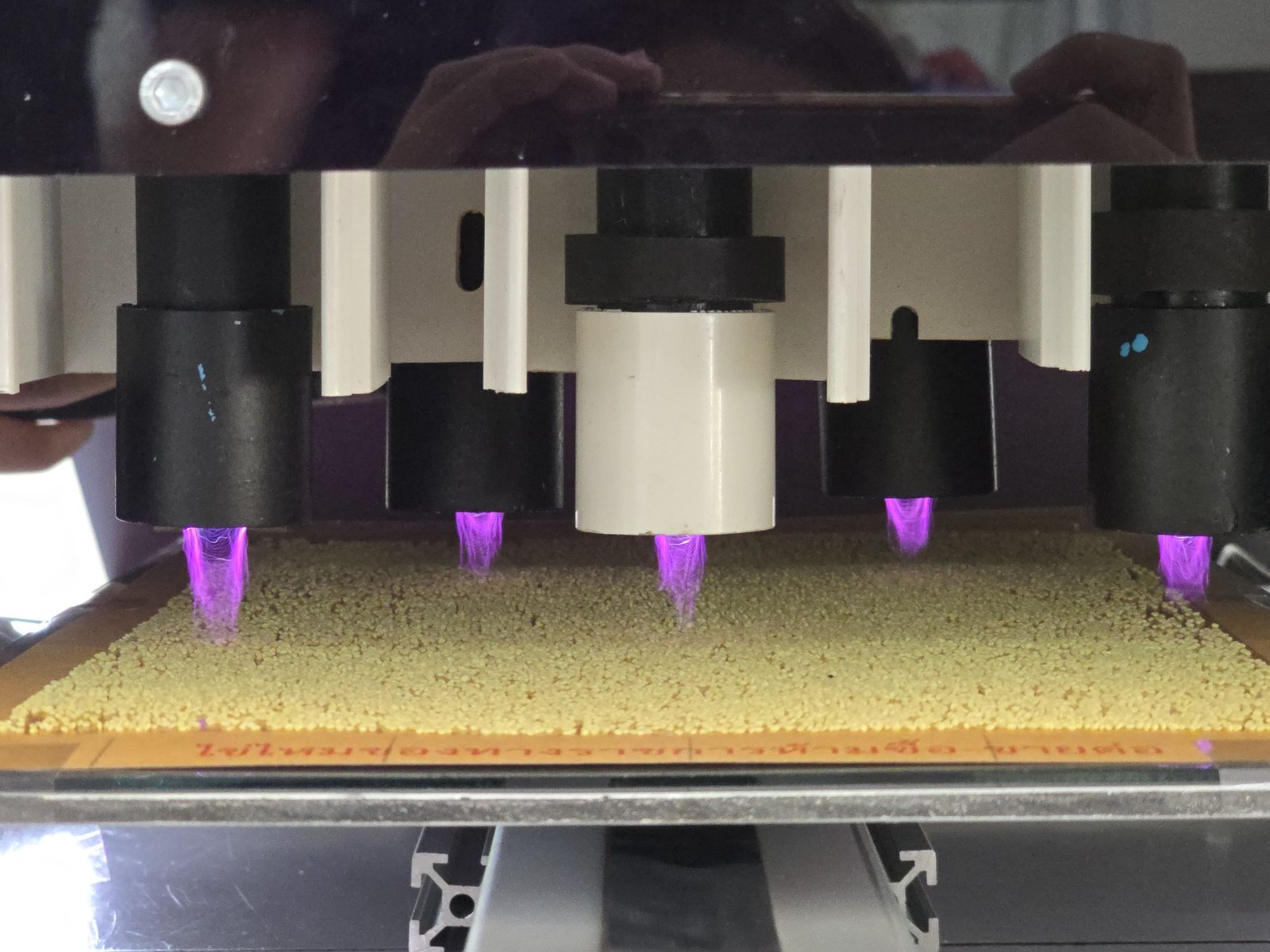
Where the results support it, the process and a pilot-scale machine are designed around the flow rate and conditions the partner needs, with operating procedures and team training.
All verification is carried out by VISBIO as the independent tester, covering toxin levels by LC-MS/MS, nutritional assessment, and sensory assessment for material entering human food. Separating the technology developer from the verifier gives the partner's food safety team documentation they can present to regulators and to end buyers.
07In summary: four points before deciding
Four things to remember before deciding
- Thailand uses feed raw materials at the level of millions of tonnes a year. The current methods carry an ongoing cost on every lot and work differently depending on the toxin.
- Research on plasma and mycotoxins has advanced both technically and in explaining the mechanism.
- But laboratory reduction levels still span a very wide range depending on voltage, frequency, treatment time, gas type, moisture and material structure. That is why this remains research rather than a commercial service.
- Measurement by LC-MS/MS is needed to establish a baseline before treatment. It suits organisations that treat a research data set as an asset rather than a one-off expense.
08Frequently asked questions
What percentage of aflatoxin does plasma remove?
There is no single number that answers this. The research reports a very wide range because the result depends on treatment parameters, the toxin, and the structure of the material. Giving a figure without stating the conditions is meaningless in practice.
Are the degradation products safe?
Studies of the degradation pathway report products less toxic than the parent compound, but confirming the safety of the degradation products in each raw material has to be done case by case, and is part of the work of the research phase. It cannot be carried across from a study on a different material.
Why LC-MS/MS rather than a rapid test kit?
Rapid kits suit day-to-day lot screening, but measuring the change in a molecule before and after treatment needs higher sensitivity and specificity, and has to distinguish what the parent compound turned into. That is what LC-MS/MS does.
How long before we know whether it works?
It depends on how many conditions have to be tested and on the raw material, but the project is structured with a decision point after the preliminary study, so it can stop early if the results do not support continuing, rather than committing budget for a long run from the outset.
09Talk through your problem with the TIBD team
If your organisation takes in raw material at continuous mycotoxin risk and is interested in building its own data set, this runs as joint research, not as buying a service.
TIBD works alongside researchers and technology owners so that research carries on from the laboratory through to a real production line. The first thing we do is assess together whether your problem genuinely suits this technology. If it does not, we will say so at the start.
Message us on LINE @tibdglobal or use the contact form at tibdglobal.com/contact and tell us about the problem in your process.
Read next
- Extending the shelf life of fresh produce with cold plasmaReducing post-harvest microorganisms without adding a residue
- Cold plasma and vegetable seedReducing seed-borne microorganisms without a chemical coating
- Cold plasma and rice seedWhy a plasma-treated seed takes up water faster, and how far the research goes
← Back to Cold Plasma · Cold plasma services · Talk to the team
Sources Wang et al. (2017) Journal of Agricultural and Food Chemistry DOI: 10.1021/acs.jafc.7b01604 · Feizollahi, Misra and Roopesh (2021) Food Engineering Reviews DOI: 10.1007/s12393-020-09241-0 · Zhang et al. (2023) Journal of the Science of Food and Agriculture DOI: 10.1002/jsfa.12393 · Suwannarat et al. (2021) ACS Applied Materials & Interfaces · Misra, Schlüter and Cullen (eds., 2016) Cold Plasma in Food and Agriculture, Academic Press · Regulatory framework: Codex Alimentarius CXS 193-1995, Regulation (EU) 2023/915, Thai Ministry of Public Health notification on mycotoxin standards in food, US FDA Compliance Policy Guide Sec. 683.100 · Cold plasma research in Thailand by Assoc. Prof. Dr. Siwapon Srisonphan Kasetsart University
About TIBD TIBD Company Limited works alongside researchers and technology owners so that research carries on from the laboratory into real industrial use, from feasibility assessment and test design to prototyping and scale-up of production, with VISBIO, an affiliated company, acting as the independent verifier. The office is at the Kasetsart Agricultural and Agro-Industrial Product Improvement Institute, Kasetsart University, Bangkhen.