

Cold plasma and active compounds / Article 06
Plasma and fermentation: using controlled stress to push microorganisms into producing active compounds
Plasma-enhanced fermentation for postbiotic cosmetic brands and fermentation laboratories — the principle, the research, the limits, and the registration route.
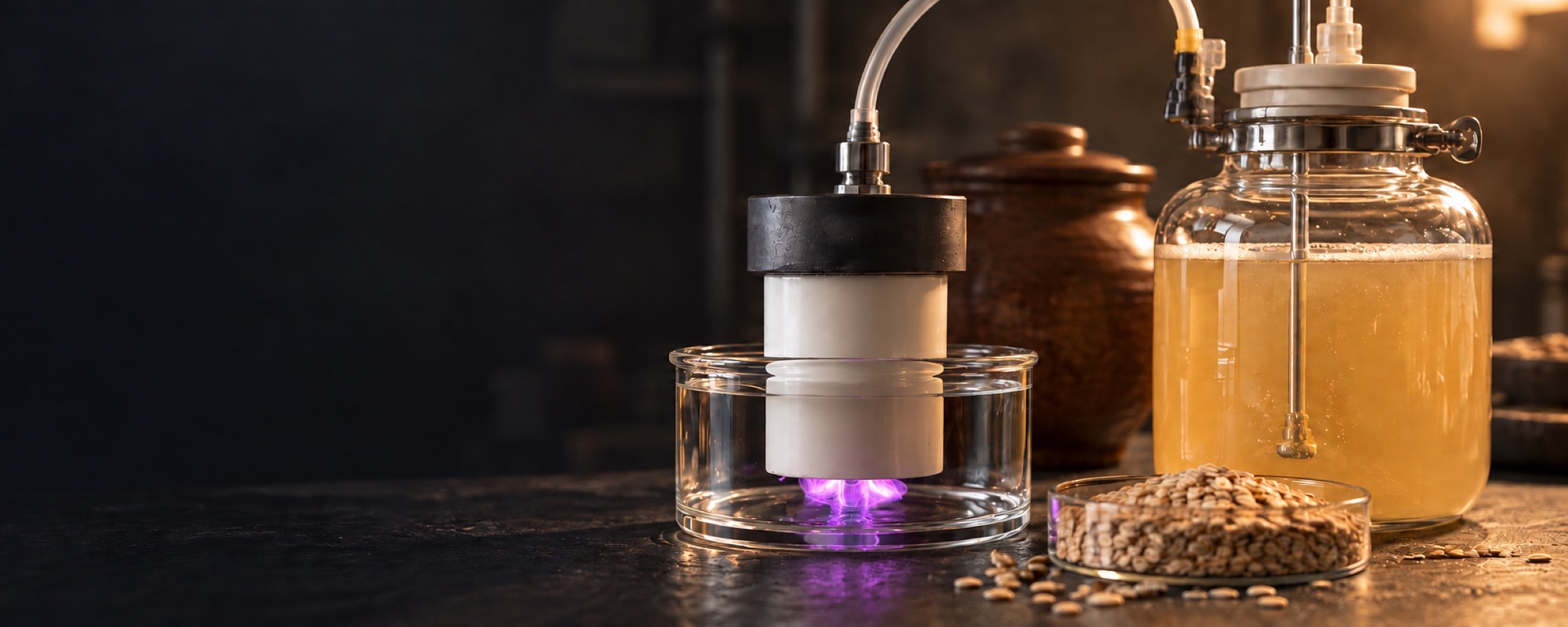
Plasma-enhanced fermentation means using cold plasma as a physical trigger in a fermentation system, so that the microorganisms shift how they produce compounds and generate secondary metabolites in amounts or of kinds different from ordinary fermentation, with nothing chemical added to the vessel.
The thinking behind it is simple. Microorganisms respond to stress. Put under pressure short of lethal, they open production pathways they normally keep closed. Cold plasma acts as a form of stress whose intensity can be tuned and which leaves no residue.
This article summarises how far the research has gone, what still has to be proven, and the registration route for a new active obtained this way.
01Why the market is interested in fermentation-derived actives
Postbiotic actives produced by microbial fermentation have been one of the fastest-growing groups in the cosmetics industry in recent years. Several global brands have brought this group into premium products, citing benefits for skin balance and barrier repair.
What makes this group sell is that it combines two things that rarely come together: scientific evidence of a measurable mechanism, and the natural story of a fermentation process that consumers accept more readily than a synthetic.
By definition, a postbiotic is a substance or a fragment of a microorganism that is no longer alive but retains a beneficial biological property. That differs from a probiotic, which is a living microorganism requiring strict storage conditions. The distinction matters a great deal in practice, because a postbiotic is more stable, easier to register, and demonstrates its performance through measurable chemical composition.
The gap a Thai developer can reach is postbiotics from locally occurring microorganisms, or from fermentation processes that integrate a new generation of trigger technology. That is where cold plasma comes in.
02Where plasma goes into a fermentation system
There are four points where plasma can be introduced, and each gives a different result.
| Where the plasma goes | What it does | What goal it suits |
|---|---|---|
| On the cells before fermentation starts | Triggers the stress response from the outset. | Changing the behaviour of the organism across the whole fermentation cycle. |
| On the culture medium before inoculation | Changes the composition of the medium. | Controlling the environment rather than the organism. |
| During cultivation | Applies stress in pulses whose frequency and intensity can be controlled. | Driving a specific compound within a defined window. |
| Through plasma-activated water | Delivers active species into the medium at a controlled concentration. | Stress distributed evenly without touching the cells directly. |
The difficulty is finding the operating window. Too little stimulation and nothing happens; too much and the organism stops growing. And the right window differs from strain to strain.
03What the research reports
| Study | Published in | What it reports |
|---|---|---|
| Recek et al. (2018) | Scientific Reports | Cold plasma applied to the yeast Saccharomyces cerevisiae altered glycolytic metabolic pathways and increased expression of the enzyme hexokinase. |
| Lactic acid bacteria literature (2025) | Probiotics and Antimicrobial Proteins | Secondary metabolites released under stress conditions, including peptides encrypted within proteins and organic acids with anti-inflammatory activity. |
| Plasma and microbial stress literature (2024) | Fermentation (MDPI) | The mechanisms by which active species stimulate secondary metabolite production in yeasts and bacteria of several kinds. |
| Plasma mutagenesis literature | PLOS ONE | Using dielectric barrier discharge plasma to induce mutation in Ganoderma lucidum to increase yields of bioactive polysaccharides. |
The overall picture: cold plasma works on several groups of microorganisms, but the parameters that give a good result have to be designed for each organism and each target. There is no general recipe.
04Why this is still research rather than a product ready to sell
Four things to clear first
- The workable window differs by strain, by the composition of the medium, by the growth phase at which plasma is applied, and by the compound being targeted, so it has to be found project by project.
- Assessing the performance of the resulting compound requires several sets of endpoints: cell viability, antioxidant activity, anti-inflammatory activity, and in some cases testing in a three-dimensional skin model.
- Registering a new active requires a safety dossier built systematically from the research phase data, and in some cases a new international name has to be applied for.
- Scaling fermentation from the laboratory to pilot and production scale requires engineering assessment of a fermenter integrated with the plasma system.
For scale-up in projects like this, TIBD works with K-API, an affiliated company with fermentation scale-up capability in Thailand, which removes the time usually lost coordinating between several separate contractors.
05The registration route for a new active
A compound obtained this way has to enter the regulatory framework of each destination market.
In Thailand, the Cosmetics Act B.E. 2558 and Thai FDA regulations require a new substance to be notified with safety data.
In the European Union, Regulation (EC) No 1223/2009 requires a cosmetic product safety report as the baseline, while applying for an international name for a ferment not yet listed goes through the body that administers the international naming system.
At industry standard level, the frameworks a downstream formulator uses to assess an ingredient are ISO 22716 for cosmetics good manufacturing practice, ISO 11930 for evaluating microbiological protection, and ISO 16128 for definitions and criteria for natural and organic ingredients.
Designing the research project with these conditions in mind from day one saves a great deal of time and cost getting to market, because data collected from the start can be used directly rather than having to be generated again.
06How plasma affects the microorganism
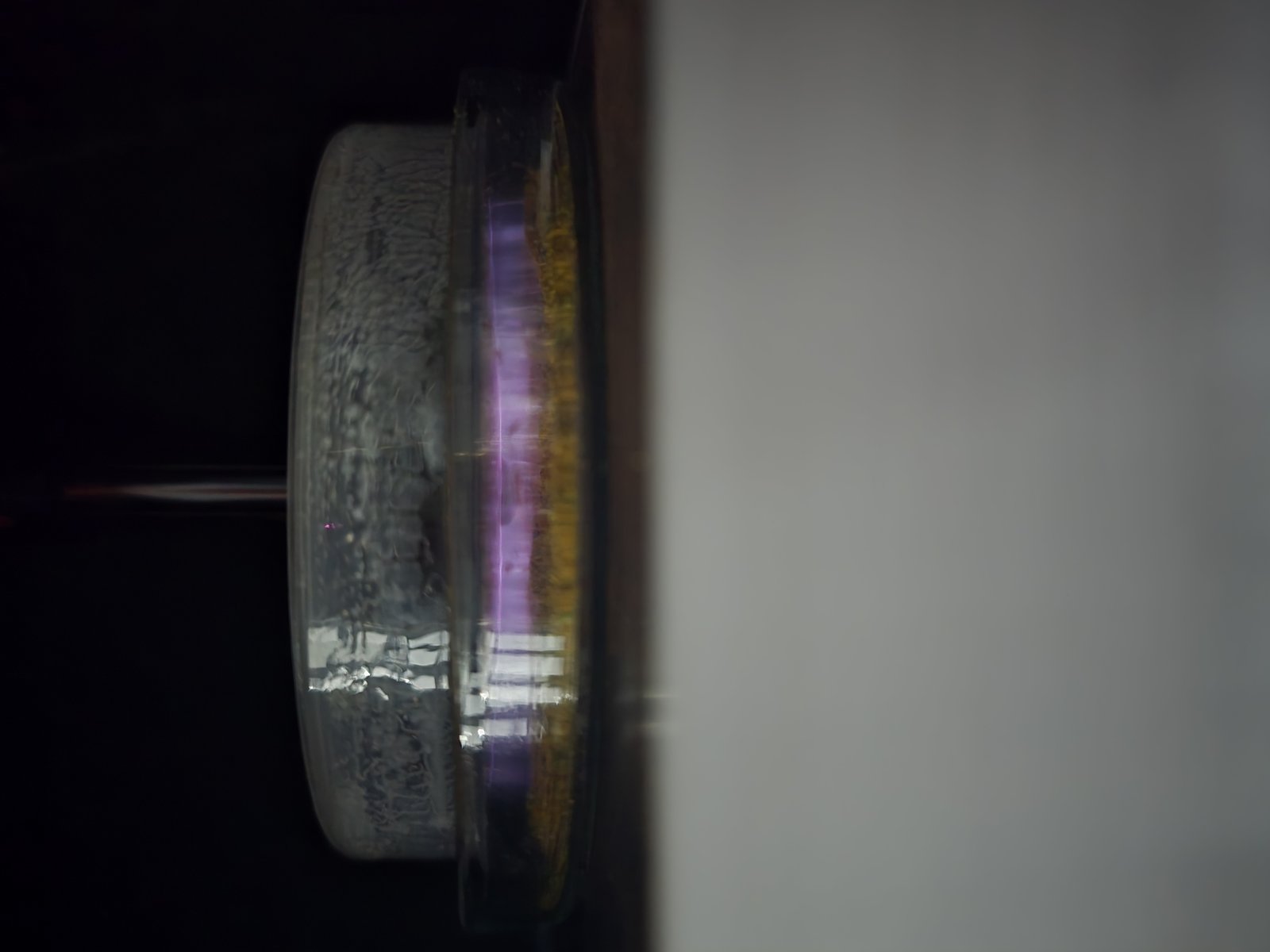
Before talking about fermentation, it helps to understand what plasma does to a microbial cell. Work by the team of Assoc. Prof. Dr. Siwapon Srisonphan on reducing Alternaria brassicicola (ACS Applied Materials & Interfaces, 2021) and Xanthomonas campestris (ACS Applied Bio Materials, 2024) shows that the reactive species formed disrupt the cell wall of the microorganism directly.
The key point is that intensity determines which way the result goes. At a high enough level the cell dies, which is what you want in decontamination. Below that level the cell does not die but changes its response, and that is the window fermentation work is interested in. The design therefore runs in the opposite direction from decontamination work, using the same equipment.
07How the project runs
It starts with a literature review and selection of the target microbial strain, covering a review of the compounds wanted, assessment of promising strains, and choice of the fermentation system that suits the goal.
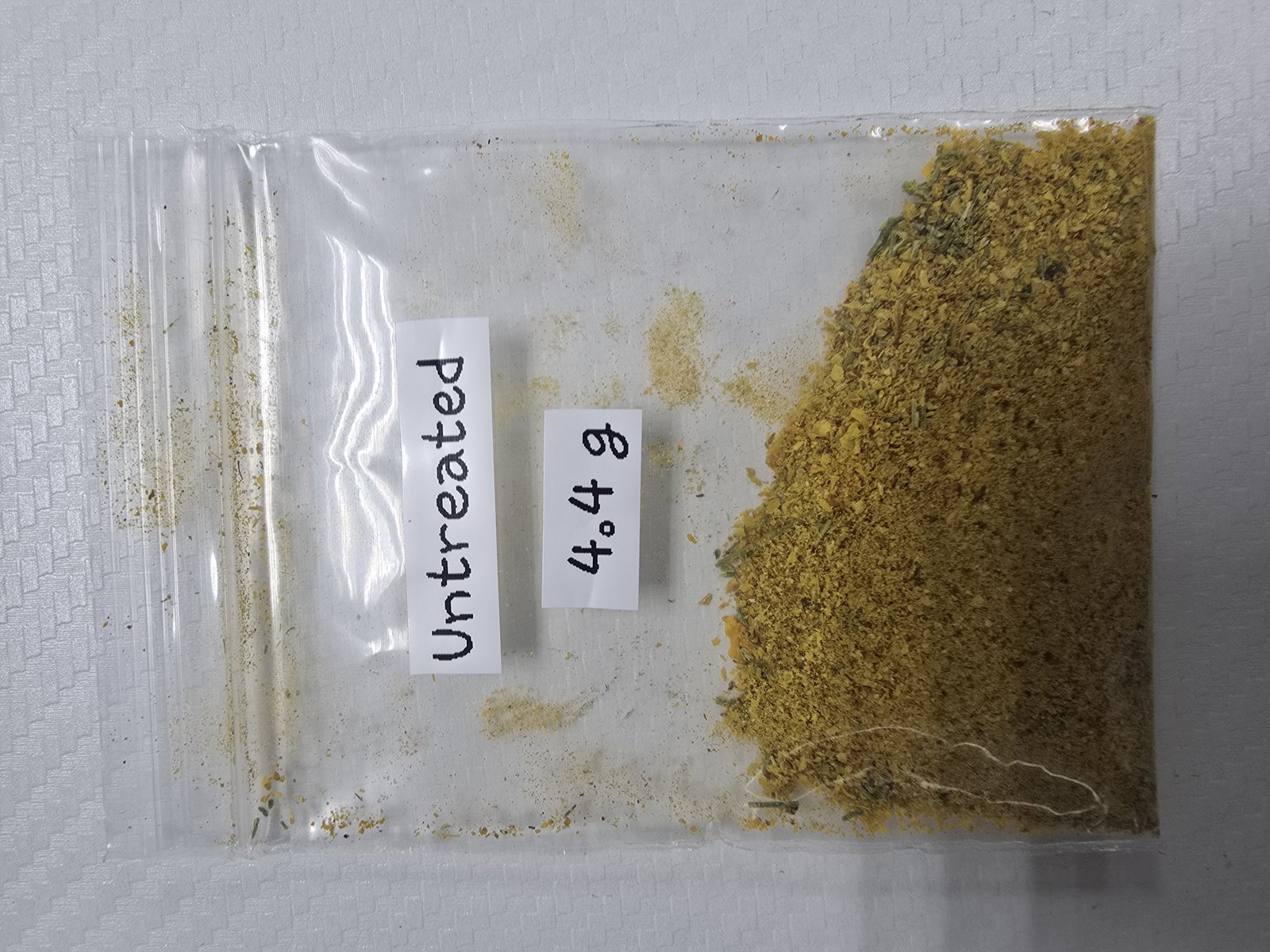
Next is a preliminary laboratory study, testing several sets of plasma parameters, following cell growth under stress, analysing the composition of the compounds before and after plasma, and assessing preliminary activity in cultured skin cell systems. What comes out of it is not a guarantee of the claim a partner will use on a label.
Where the results support it, fermentation is scaled from flask to small fermenter, then on to a pilot scale matched to the production volume required.
Verification of the compound's endpoints is carried out by VISBIO as the independent tester, covering antioxidant capacity, anti-inflammatory activity through cytokine measurement, cell viability, and where relevant, assessment of the effect on skin microbiome balance by sequencing.
08In summary: four points before deciding
Four things to remember before deciding
- The idea behind this group of work is using plasma as controllable stress to push microorganisms into producing active compounds.
- Cold plasma applied to the yeast Saccharomyces cerevisiae has been reported to alter glycolytic metabolic pathways and increase hexokinase expression.
- The workable window differs by strain, by medium composition and by the growth phase at which plasma is applied, so it has to be found project by project.
- The resulting compound has to enter the regulatory framework of each destination market, which is why this remains research rather than a product ready to sell.
09Frequently asked questions
Does plasma mutate the microorganism?
It depends on the intensity used. At the level used as a stress trigger, the aim is to change how the organism produces compounds while the strain remains the same strain. Work that deliberately induces mutation is a separate approach using different conditions, and it has different registration implications, so the goal has to be defined clearly at the start.
How does the resulting compound differ from ordinary ferment?
It differs in composition, not in name. Changing the fermentation conditions changes the proportions and the kinds of compounds produced. Proving the difference therefore means measuring chemical composition against ordinary fermentation, not claiming it from the method used.
How long does it take?
It depends on the number of strains and conditions to be tested, but the project is structured with a decision point after the preliminary study, so it can stop early if the results do not support continuing, rather than committing budget for a long run from the outset.
Can it be used for food, not just cosmetics?
The same principle applies, but the regulatory framework for food differs significantly from cosmetics, both in the safety data required and in the claims permitted. The project therefore has to define the destination market clearly from the start, rather than developing first and choosing later.
10Talk through your problem with the TIBD team
If you are looking for a fermentation-derived active with a body of evidence belonging to your own brand, start by talking through which group of compounds you want and which market you are selling into.
TIBD works alongside researchers and technology owners so that research carries on from the laboratory through to a real production line. The first thing we do is assess together whether your problem genuinely suits this technology. If it does not, we will say so at the start.
Message us on LINE @tibdglobal or use the contact form at tibdglobal.com/contact and tell us about the problem in your process.
Read next
- Plasma-activated water actives for skincareWhat the research says, and where the line sits
- Plasma-activated water as a source of plant nutrientsHow far nitrogen fixation from air actually goes
- Cosmetics that want to cut back on preservativesWhere plasma-activated water sits in a formulation
← Back to Cold Plasma · Cold plasma services · Talk to the team
Sources Suwannarat, Thammaniphit and Srisonphan (2021) ACS Applied Materials & Interfaces · Suwannarat et al. (2024) ACS Applied Bio Materials · Recek et al. (2018) Scientific Reports DOI: 10.1038/s41598-018-26227-5 · Probiotics and Antimicrobial Proteins (2025) on secondary metabolites from lactic acid bacteria · Fermentation (MDPI, 2024) on fermentation assisted by pulsed electric field, magnetic field and cold plasma · PLOS ONE DOI: 10.1371/journal.pone.0204266 on induced mutation in Ganoderma lucidum · Regulatory framework: Thailand Cosmetics Act B.E. 2558, Regulation (EC) No 1223/2009, ISO 22716, ISO 11930, ISO 16128, Cosmetic Ingredient Review safety assessment of yeast-derived ingredients · Cold plasma research in Thailand by Assoc. Prof. Dr. Siwapon Srisonphan Kasetsart University
About TIBD TIBD Company Limited works alongside researchers and technology owners so that research carries on from the laboratory into real industrial use, from feasibility assessment and test design to prototyping and production scale-up, with VISBIO, an affiliated company, acting as the independent verifier. The office is at the Kasetsart Agricultural and Agro-Industrial Product Improvement Institute, Kasetsart University, Bangkhen.