TIBD and KAPI Welcome Madagascar Delegation for Knowledge Exchange on Aromatic-Plant Analytical Laboratories
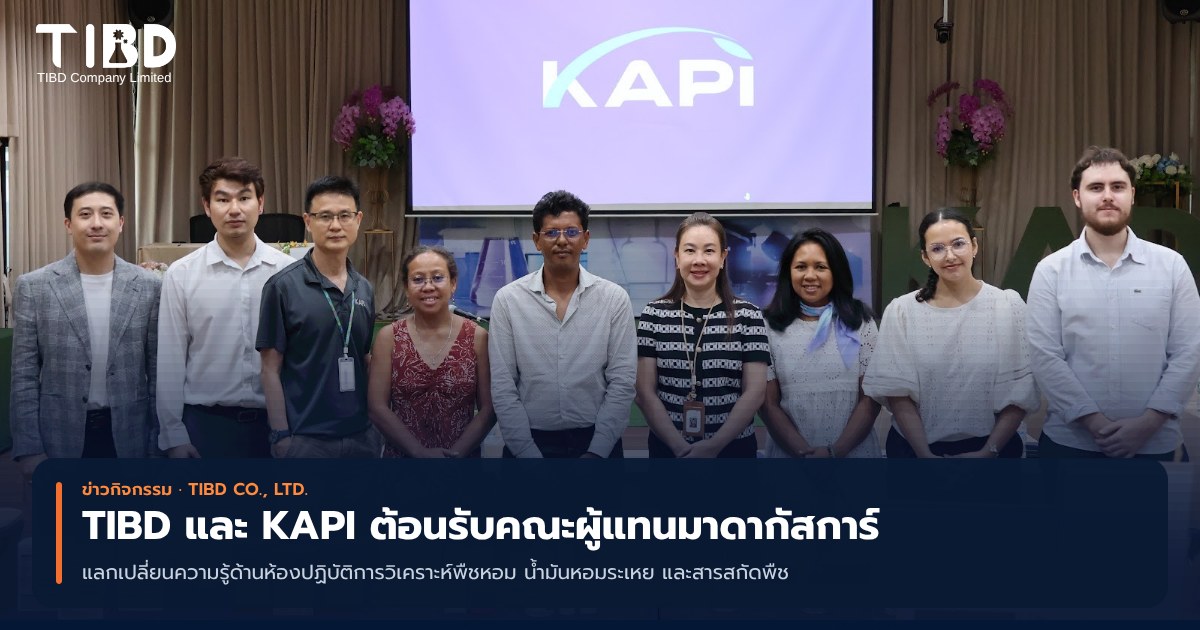
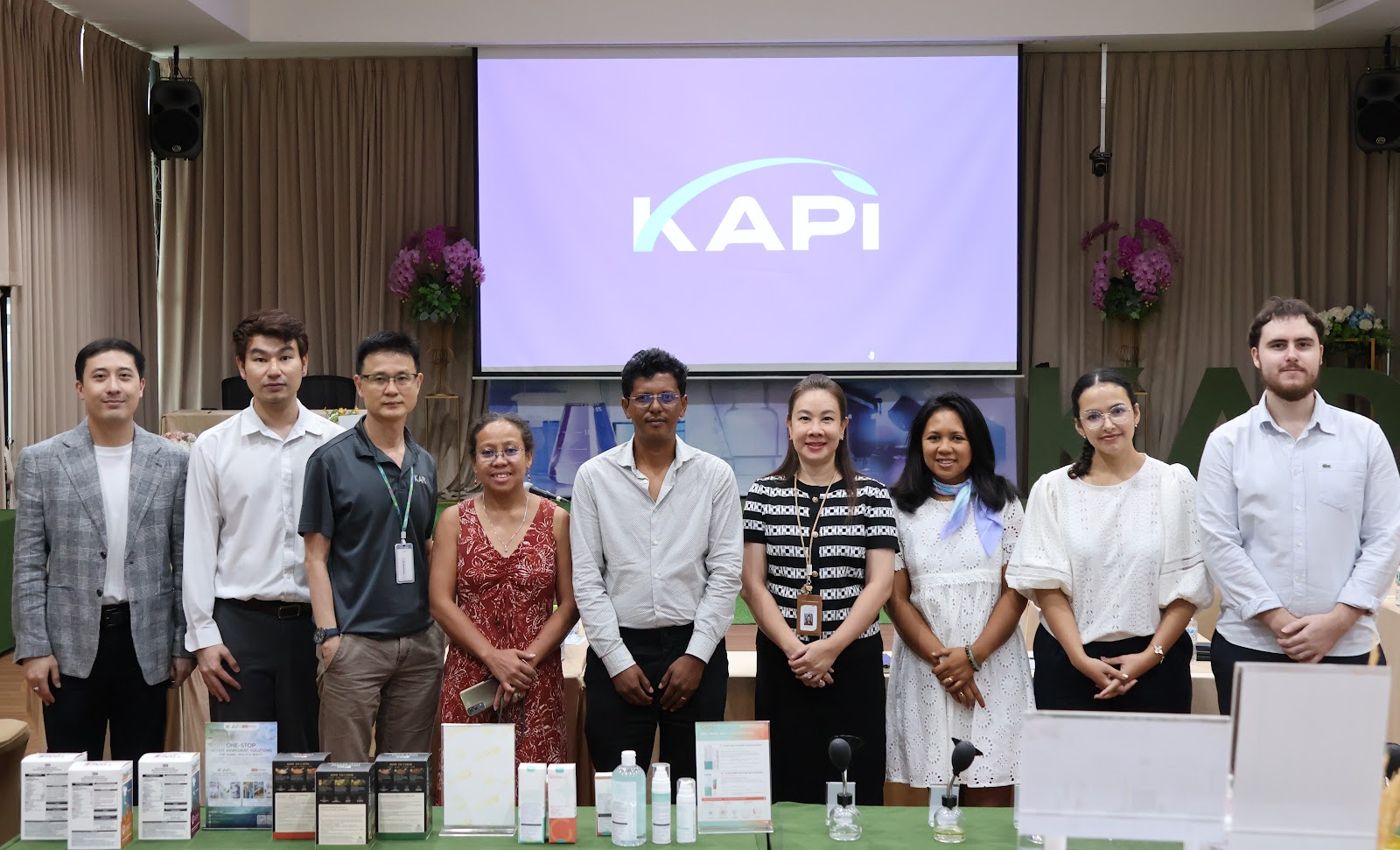
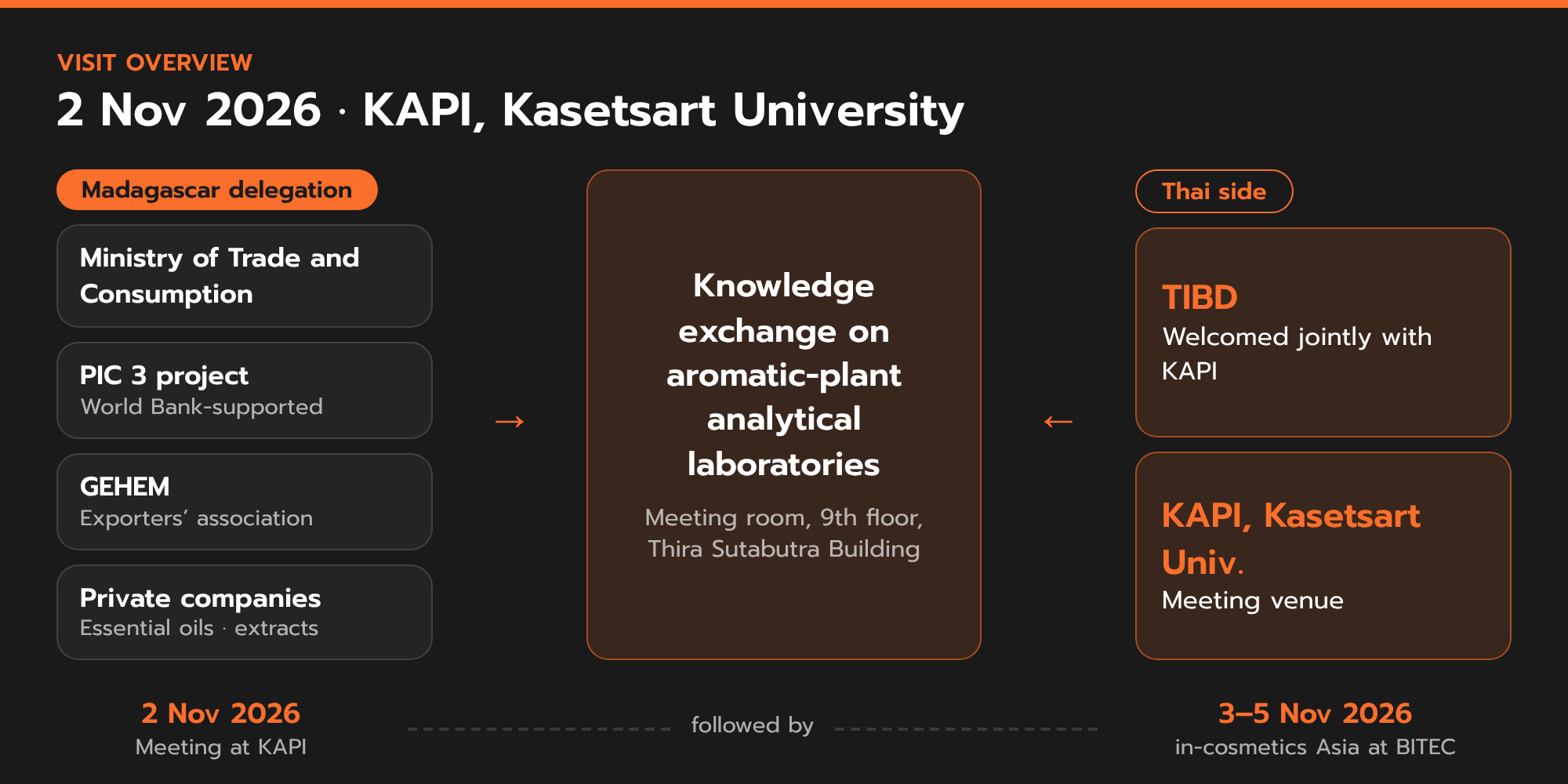
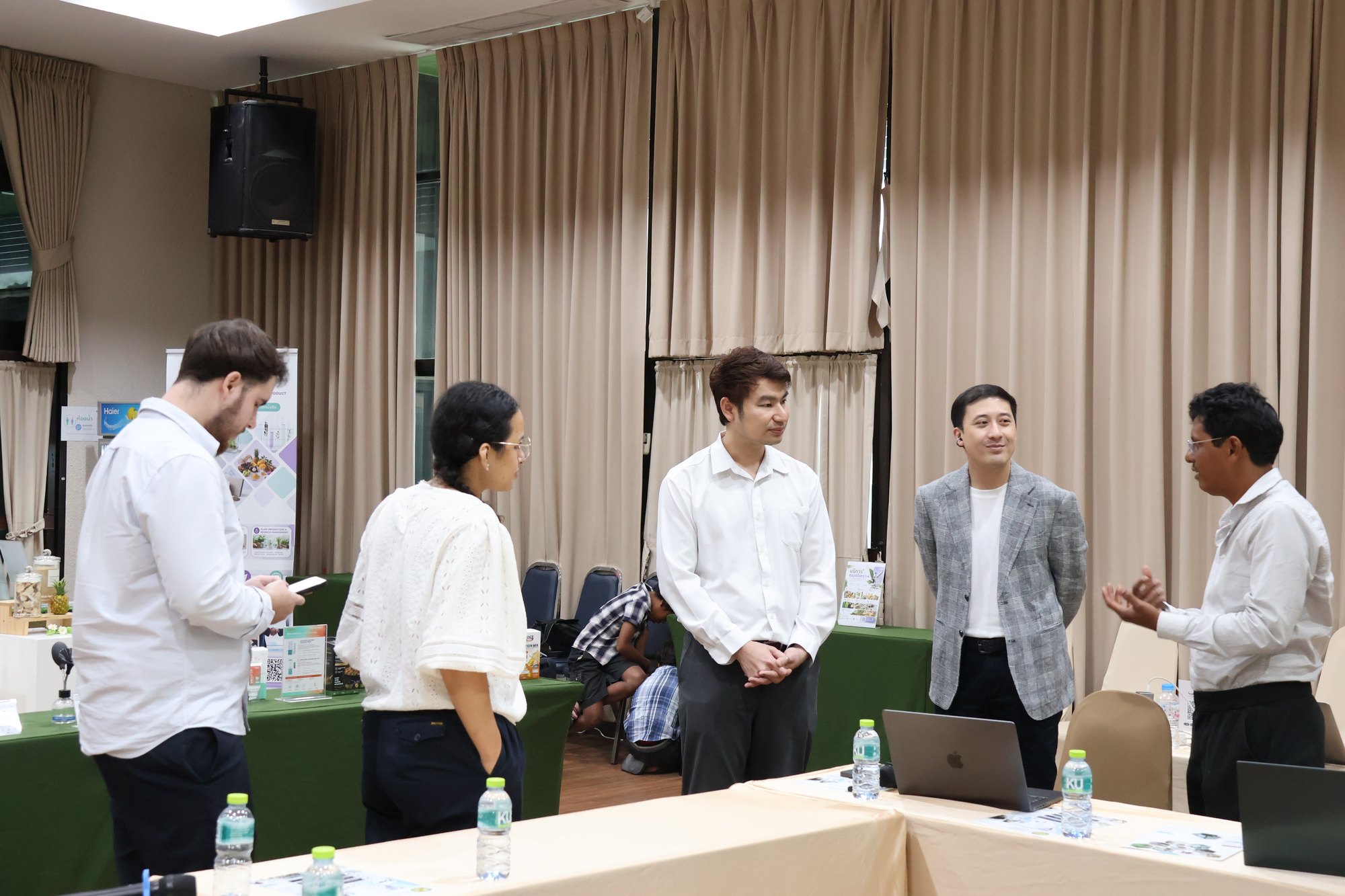
On 2 November 2026, at the 9th-floor meeting room of the Thira Sutabutra Building, Kasetsart Agricultural and Agro-Industrial Product Improvement Institute (KAPI), Kasetsart University, TIBD Co., Ltd. (TIBD) and KAPI welcomed a delegation from Madagascar for an exchange of knowledge and experience on developing analytical and research laboratories for aromatic plants.
Aromatic plants here refers to plants containing volatile aroma compounds, used to produce essential oils, extracts and fragrance raw materials. The delegation was organised by Madagascar’s Ministry of Trade and Consumption, the Pôles Intégrés de Croissance 3 (PIC 3) project, and the Groupement des Exportateurs d’Huiles Essentielles de Madagascar (GEHEM), the country’s association of essential-oil and plant-extract exporters.
Participants on the Thai side included Dr. Wuttipong Panitsettakorn, Chief Executive Officer (CEO) and co-founder of TIBD and adviser to KAPI, who chaired the meeting; Mr. Kittiphoom Chinsophonsup, Chief Marketing Officer (CMO) of TIBD; Dr. Pilanee Vaithanomsat, Director of KAPI; and Dr. Warawut Suphamitmongkol, Deputy Director of KAPI for Research and Information, who joined in welcoming the delegation.
The delegation: government, exporters and entrepreneurs
The delegation comprised representatives of the government, a development project, an exporters’ association and private companies. PIC 3 is a World Bank-supported development project in Madagascar operating in 12 areas across 10 regions, covering agribusiness, tourism and digital. GEHEM joined as the private-sector representative of the aromatic-plant industry.
The entrepreneurs in the delegation included Floramad, Group BIOESOIL of Madagascar, BIONEXX, Jacarandas Group and Vonimanitra Madagascar, companies involved in essential oils, plant extracts and plant-based raw materials from Madagascar. The Madagascar delegates also attended in-cosmetics Asia, held on 3–5 November 2026 at the Bangkok International Trade and Exhibition Centre (BITEC).
GEHEM and Madagascar’s essential-oil sector
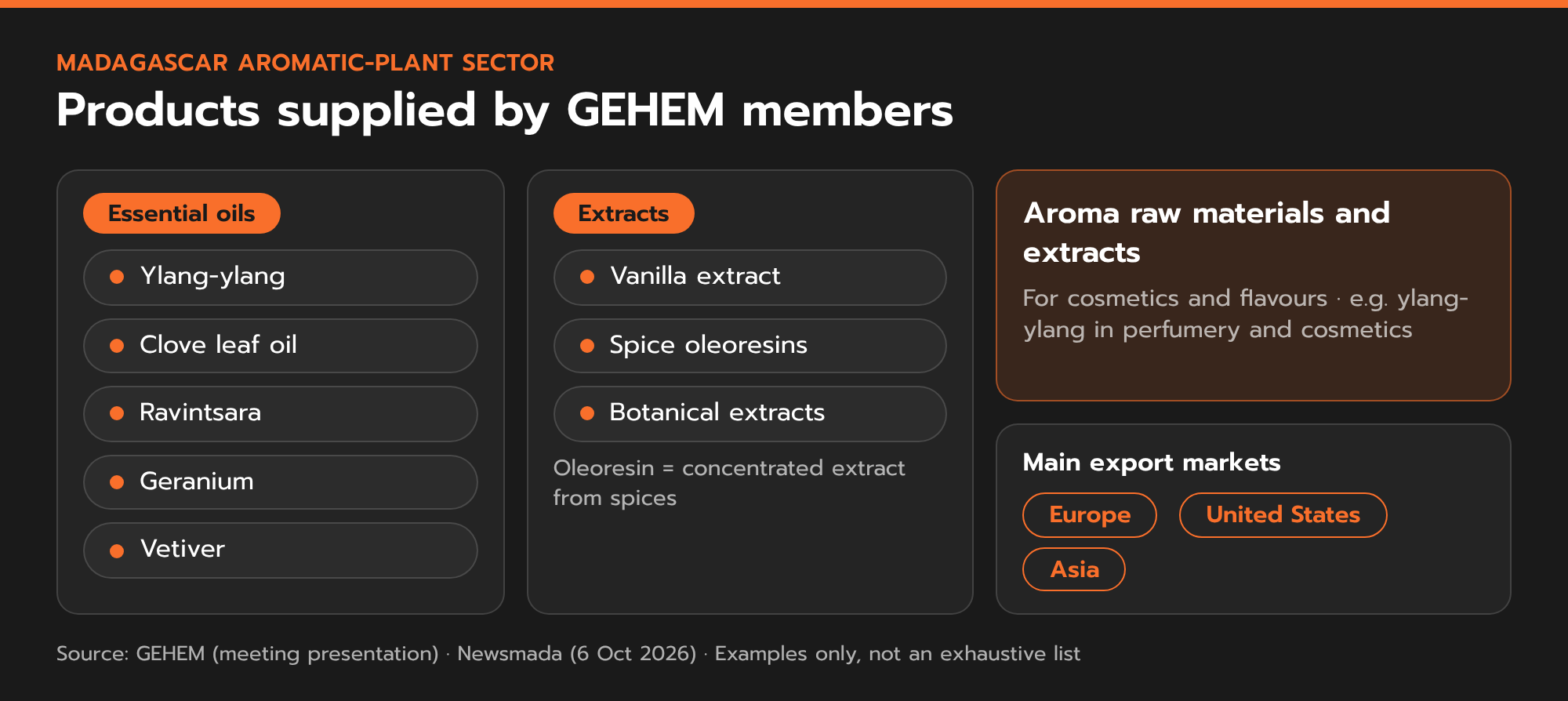
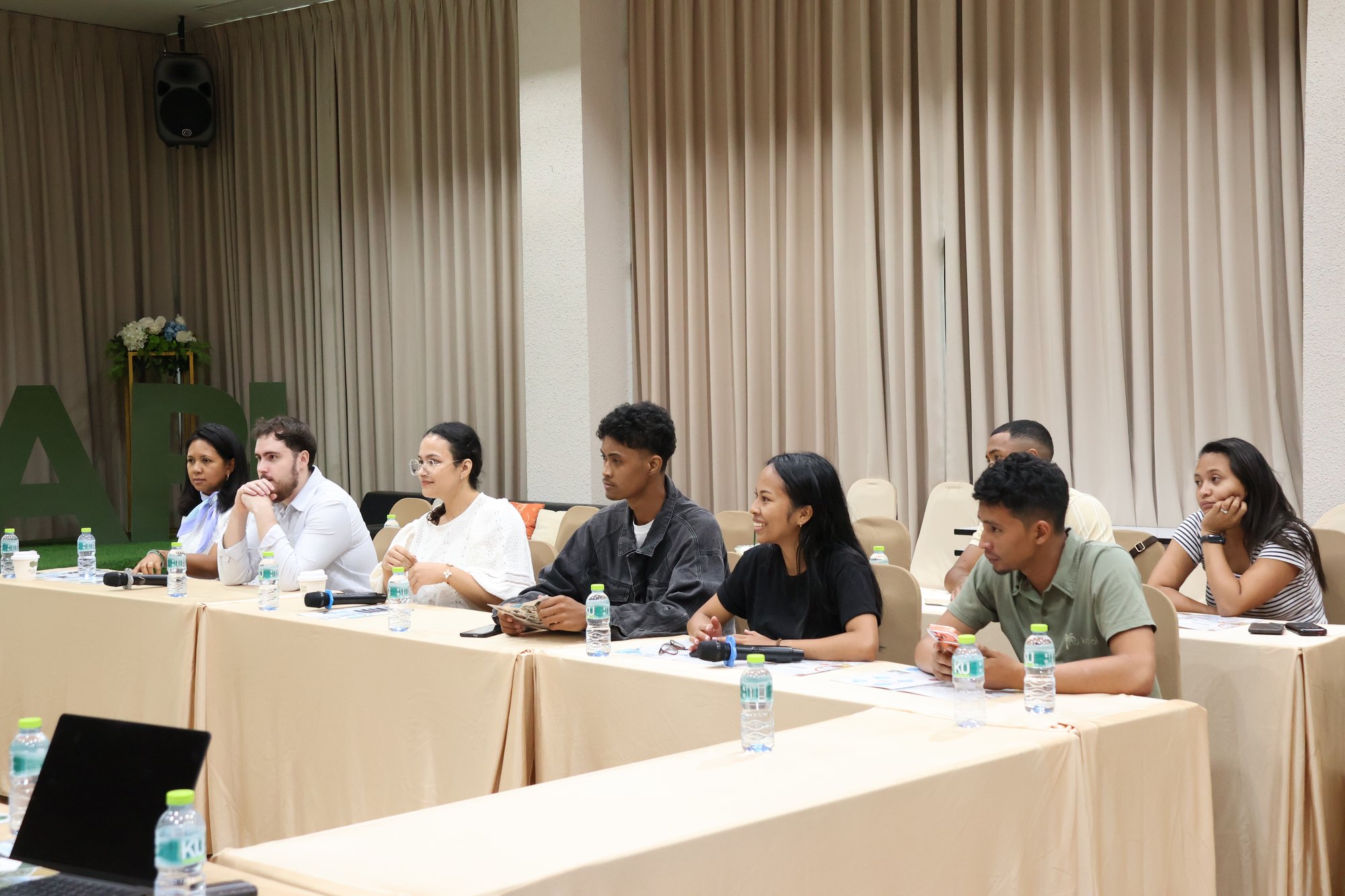
As GEHEM presented at the meeting, the organisation is a professional association of exporters of essential oils, botanical extracts, oleoresins (concentrated extracts from spices) and non-food vegetable oils. Its mission is to promote the market for aroma raw materials that are produced to a high standard, traceable and responsibly sourced.
GEHEM members supply essential oils such as ylang-ylang (Cananga odorata), clove leaf, ravintsara, geranium and vetiver, as well as vanilla extract, spice oleoresins and botanical extracts for cosmetics and flavours. GEHEM’s role covers business matchmaking, participation in international trade fairs, and public–private dialogue. A recent example is the regulatory information portal “Essential Oils from A to Z”, developed by GEHEM with the World Bank and the Government of Madagascar and launched on 24 May 2024 to help entrepreneurs understand permitting and export procedures.
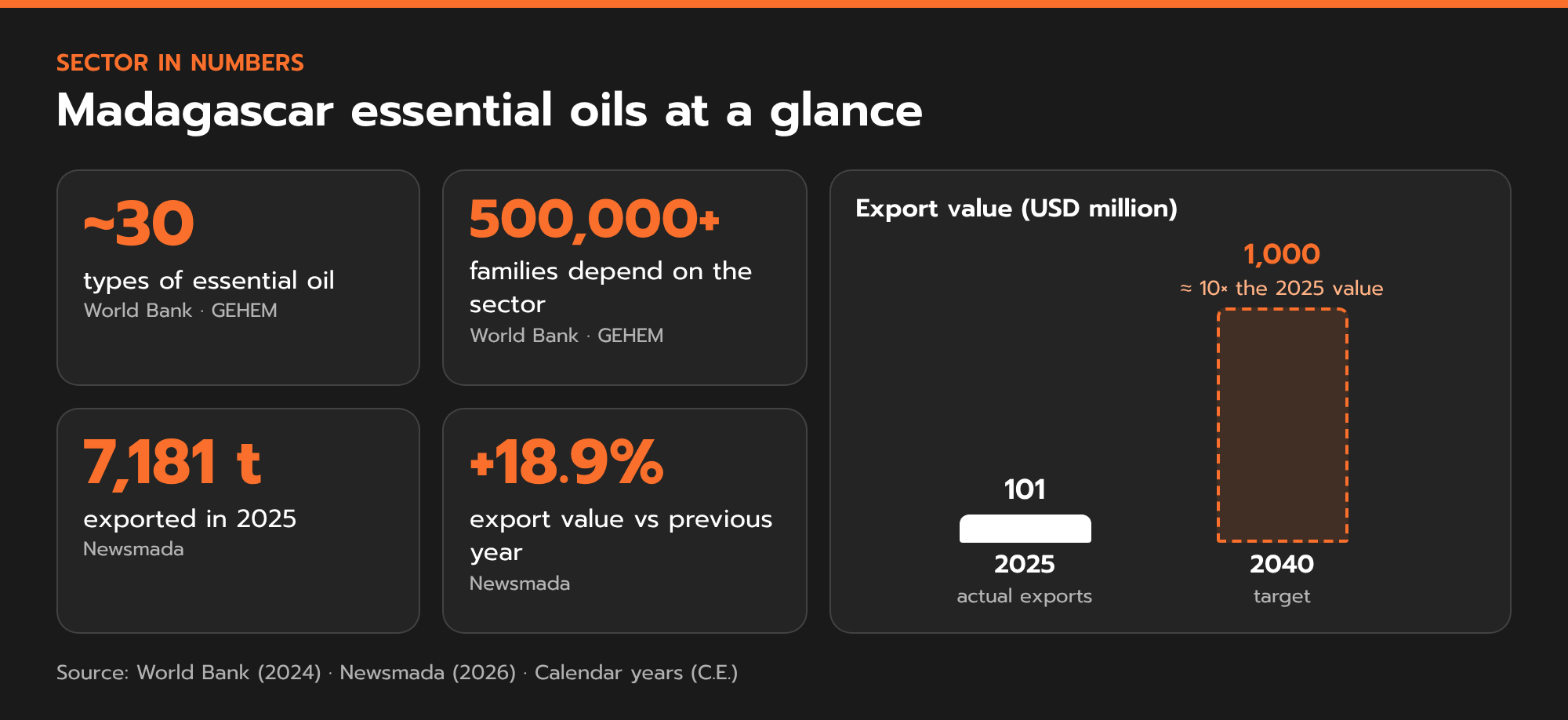
GEHEM presented that Madagascar produces about 30 types of essential oil, many from plants endemic to the island. Around 500,000 rural households are involved in the sector, and the target is to raise export value to USD 1 billion by 2040. This is consistent with the World Bank’s 2024 publication stating that essential oils are one of Madagascar’s three leading agricultural exports and a main source of income for more than 500,000 families.
The Madagascar news outlet Newsmada reported on 19 March 2026 that in 2025 Madagascar’s essential-oil and extract exporters shipped a total of 7,181 tonnes, worth about USD 101 million, with value up 18.9% on the previous year. The products named were clove leaf oil, vanilla extract and ylang-ylang. A further Newsmada report on 6 October 2026 put the global essential-oil market at about USD 7 billion, meaning Madagascar’s share is still small; the main export markets are Europe, the United States and Asia, and the sector is focusing on domestic processing and value addition.
GEHEM’s laboratory project
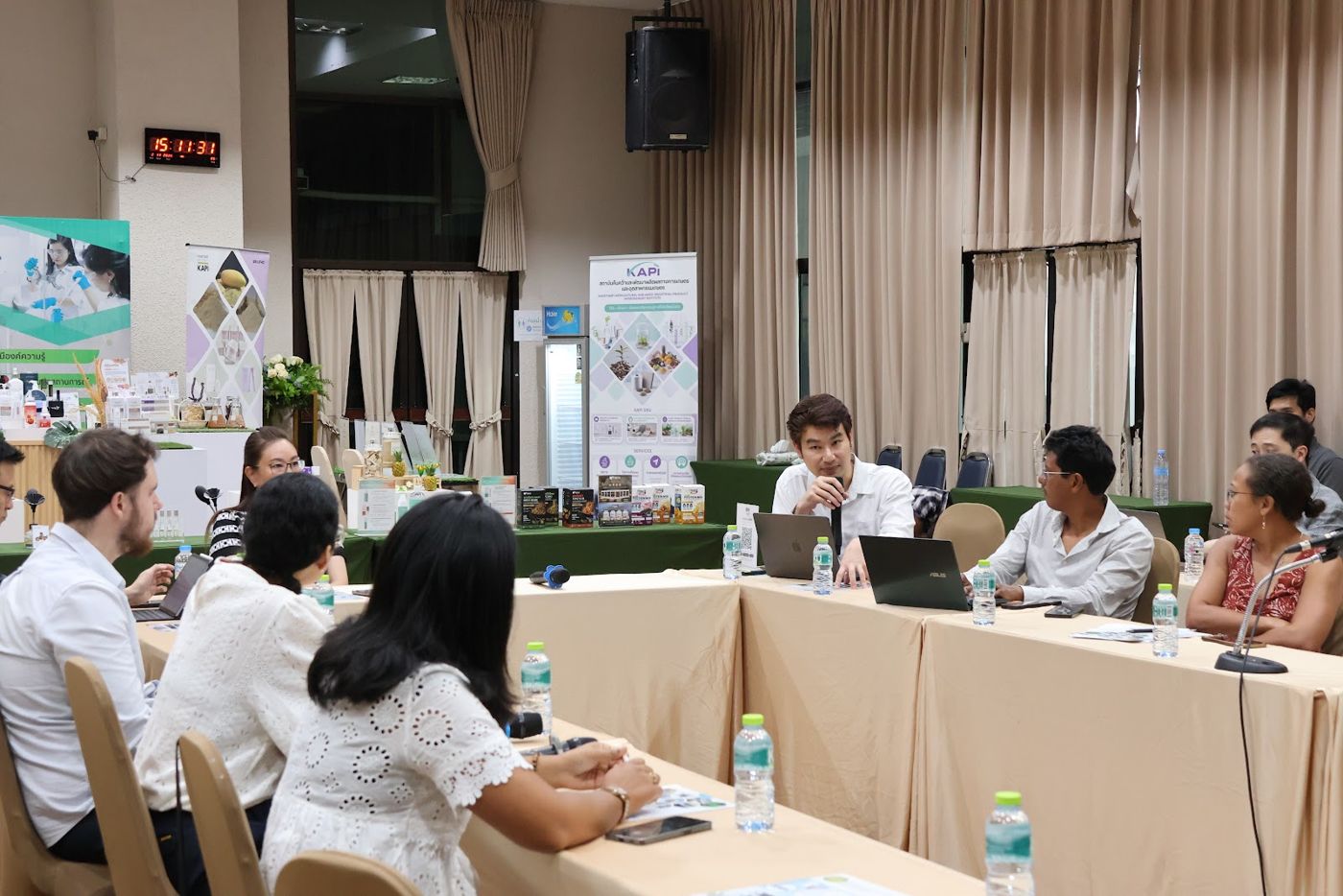
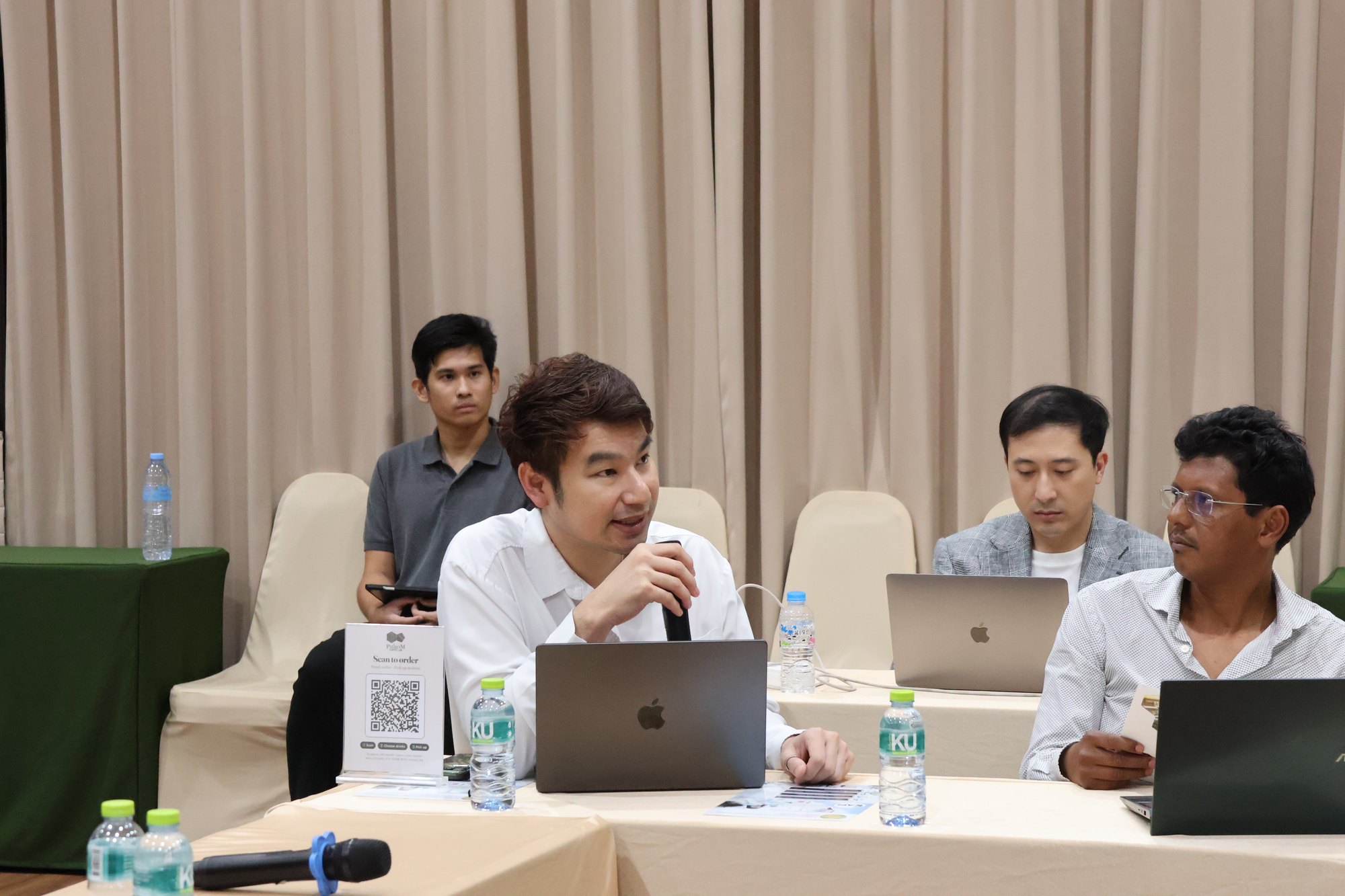
GEHEM presented its approach to developing a laboratory for aroma and agricultural products, which at the time of the meeting was at the study stage, for shared use by its exporting members. It has two goals: quality control, by analysis that confirms purity and conformity with buyers’ standards and legal requirements; and innovation, to develop new extracts and value-added raw materials.
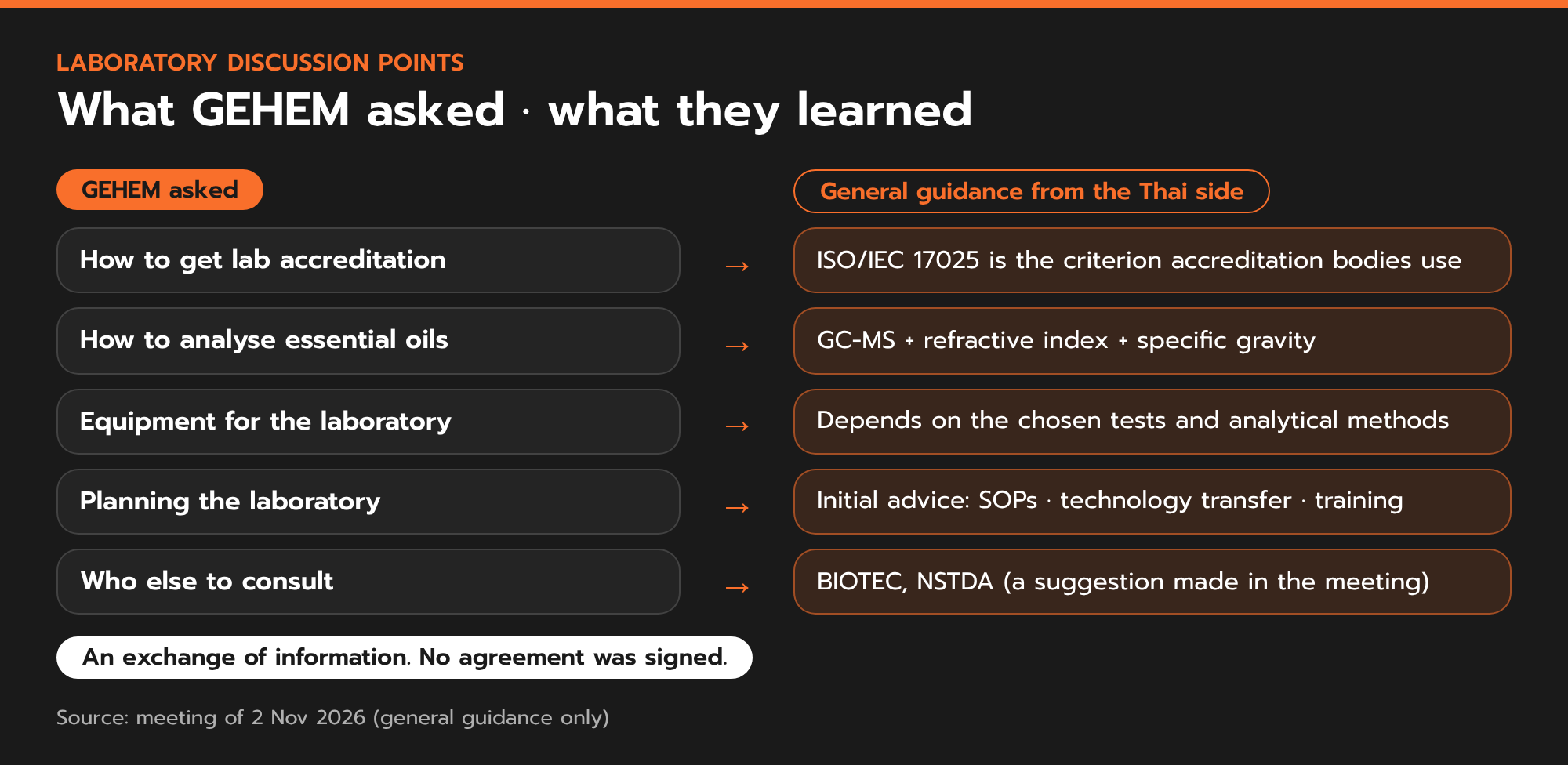
GEHEM noted that analytical services within the country remain limited and that it is interested in how to obtain international accreditation for a laboratory. It asked about the approach, steps, timeline and costs involved, and sought advice on equipment for an essential-oil laboratory.
Dr. Wuttipong gave general guidance that a testing laboratory should operate under ISO/IEC 17025, the international standard for the competence, impartiality and consistent operation of testing and calibration laboratories (2017 edition), which accreditation bodies use as their criterion. For essential oils, GC-MS is used to confirm the composition profile, together with physical values, namely refractive index and specific gravity. Other compound classes, such as flavonoids, are analysed by HPLC or LC-MS.
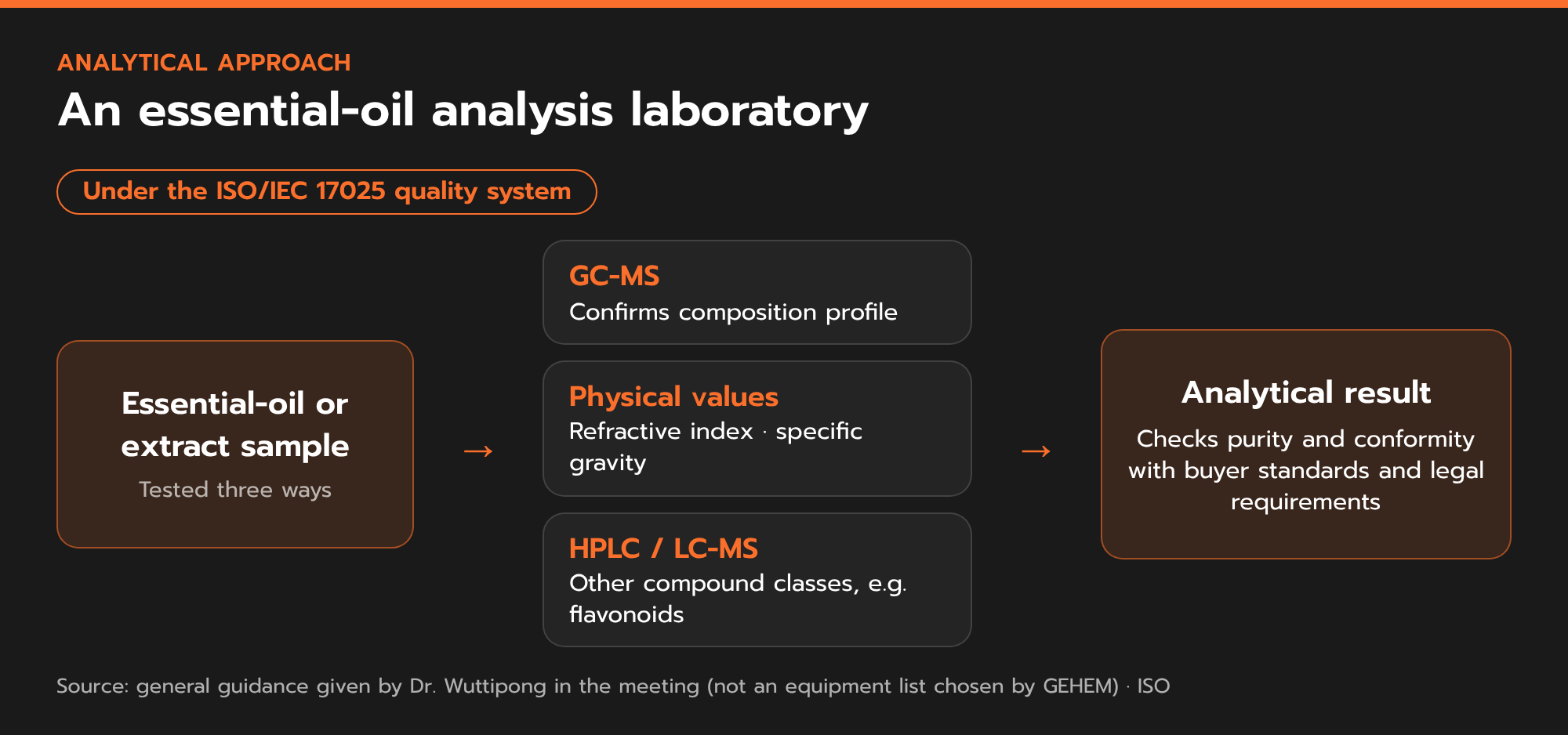
Dr. Wuttipong added that, if of interest, the Thai research team could provide initial advice on laboratory planning, guidance on preparing standard operating procedures (SOPs), technology transfer and staff training, noting that the equipment list depends on the tests and the analytical method standards chosen.
Dr. Wuttipong also cited the laboratory of the National Center for Genetic Engineering and Biotechnology (BIOTEC), NSTDA, which carries out essential-oil and flavour testing, and suggested that GEHEM consider discussing the matter further with that agency. This was a suggestion made at the meeting only.
The TIBD and K-API ecosystem
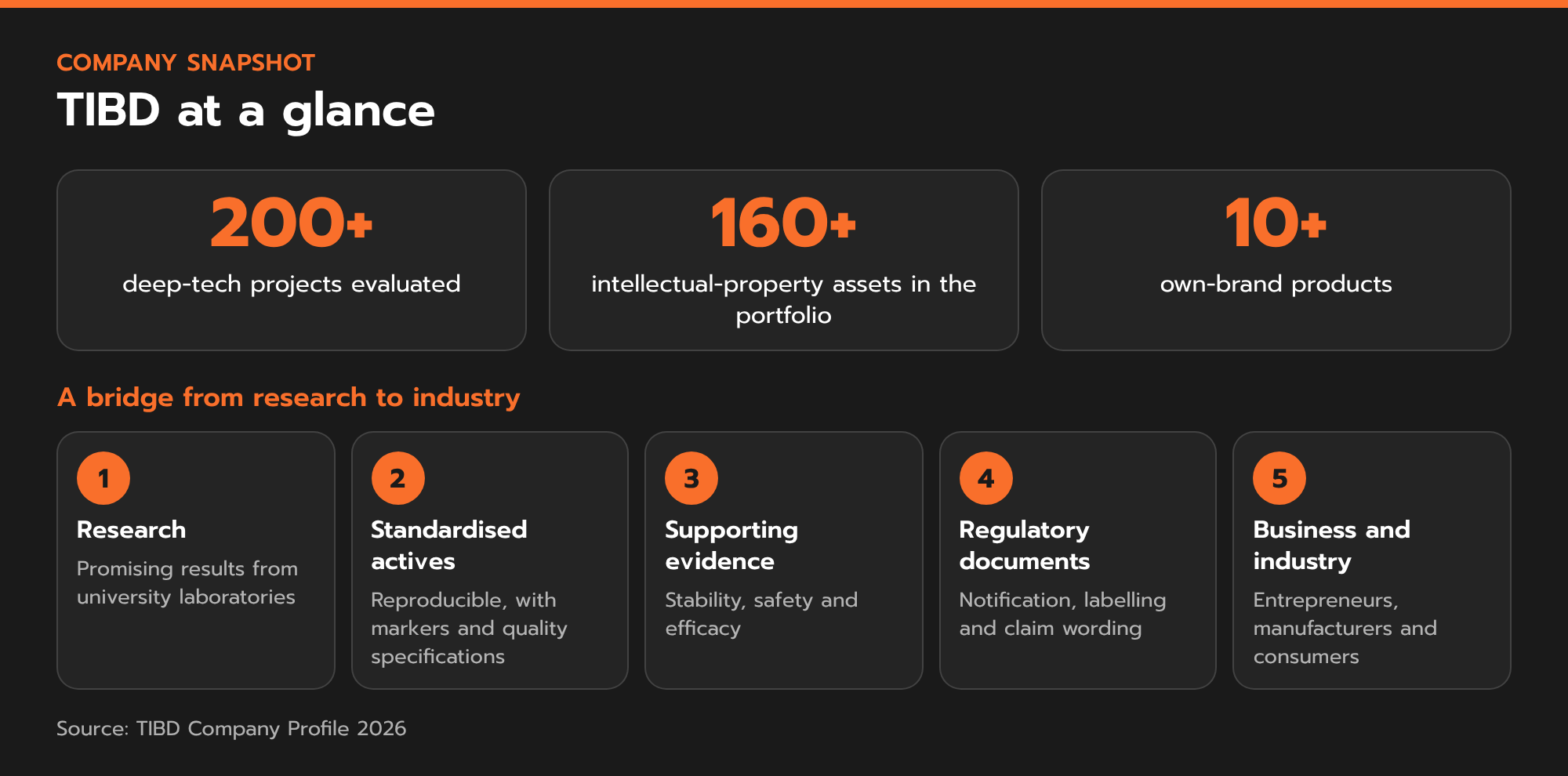
TIBD was founded in 2016 as a consultancy and innovation developer for the health and beauty industry. At the meeting, TIBD introduced an overview of TIBD and K-API to the delegation.
According to TIBD’s 2026 company profile, TIBD was founded on the Kasetsart University campus. It has evaluated more than 200 deep-tech projects, holds more than 160 intellectual-property assets in its portfolio and has more than 10 products under its own brands. It acts as a bridge from university research to standardised active ingredients, supporting evidence on stability, safety and efficacy, regulatory documentation, and application in business and industry.
KAPI was established in 1991 under Kasetsart University and provides integrated analysis, testing and research services, from raw-material control to laboratory- and semi-industrial-scale extraction. According to information published in 2025, it has developed more than 50 extracts through research and development.
K-API is a joint venture between KU Universe, a Kasetsart University affiliate, and Zubb Biotech, a TIBD affiliate. It was officially launched on 19 December 2024 at KAPI, with the aim of developing integrated plant-extraction technology from research through to commercial production. Its co-founders come from both KAPI and TIBD, and K-API’s extraction plant is located within Kasetsart University.
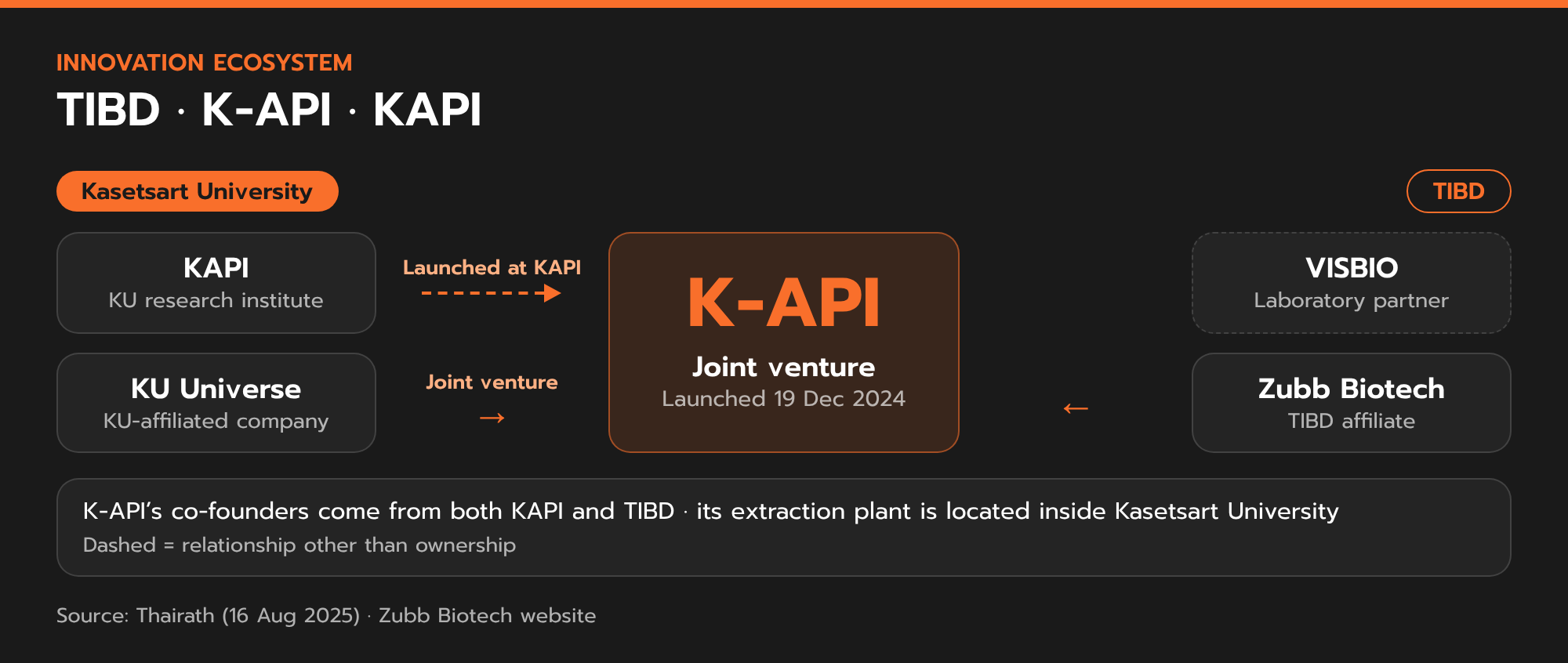
Within this ecosystem, Zubb Biotech focuses on active extracts and delivery technologies, with 102 standard extracts for cosmetics, food and herbal products according to its 2026 catalogue, while VISBIO, a laboratory partner, provides testing services.
Extraction, by-product use and applications
GEHEM said that essential-oil production in Madagascar relies mainly on steam distillation, so it is interested in technologies that improve yield and reduce energy use, including wood fuel, and in ways to make use of the material left after distillation. The meeting noted that this residue may still contain phytochemicals such as polyphenols and flavonoids, subject to confirmation by analysis.
Field data is consistent with these concerns. A status report on essential-oil distillation in the Diana region, prepared for the PIC 2 project in November 2019, states that firewood is the main fuel for distillation in the area, with estimated use of about 100,000 cubic metres a year, and proposes more efficient stoves and a regional analytical laboratory.
GEHEM also asked about further applications of its products. For ylang-ylang, for example, it is aware of use in perfumery and cosmetics but not of other uses.
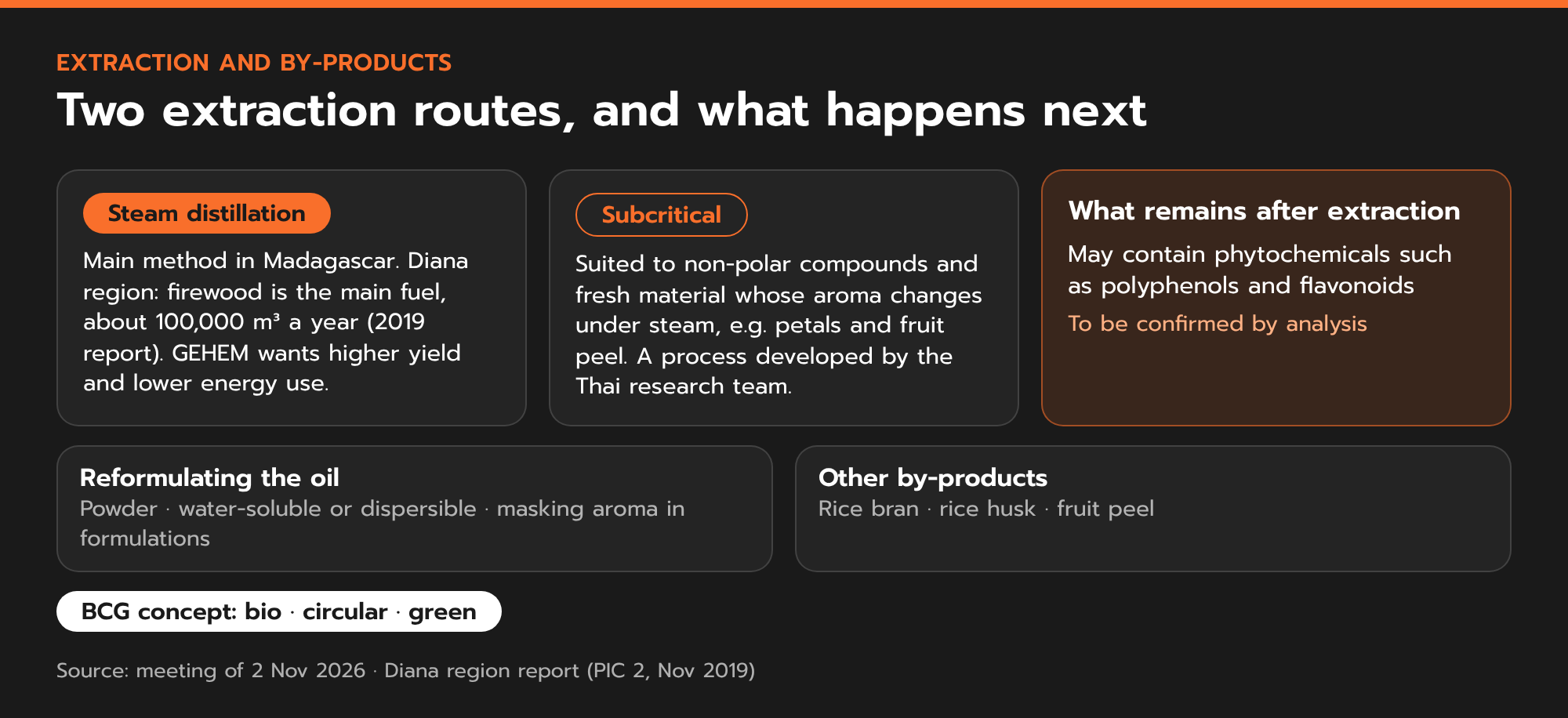
On the Thai side, Dr. Wuttipong gave a broad picture of the research of KAPI and TIBD. He described subcritical extraction, which suits non-polar compounds and fresh materials whose aroma may change under steam distillation, such as some flower petals and fruit peels. It is a process specifically developed by the research team and is not steam distillation. Technical details are specific to the research team and would be discussed within an appropriate framework.
Other approaches mentioned included reformulating the oil, for example as a powder or in a water-soluble or water-dispersible form, or masking its aroma when used in product formulations; and using by-products such as rice bran, rice husk and fruit peel, in line with the bio-, circular and green (BCG) economy concept.
Topics of interest for further exchange
Towards the end of the meeting, GEHEM representatives expressed interest in learning more about KAPI’s research and development and TIBD’s brand development and marketing work. Dr. Wuttipong said they could coordinate through the KAPI or TIBD teams, as both parties are co-founders of K-API. At the close of the meeting, both sides exchanged contact details.
The meeting was an exchange of information and experience; no agreement or memorandum of cooperation was signed.
Display of research and products
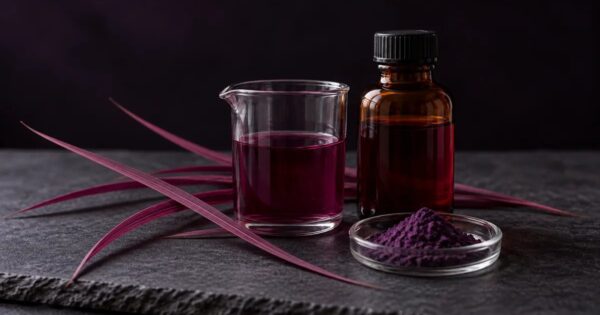
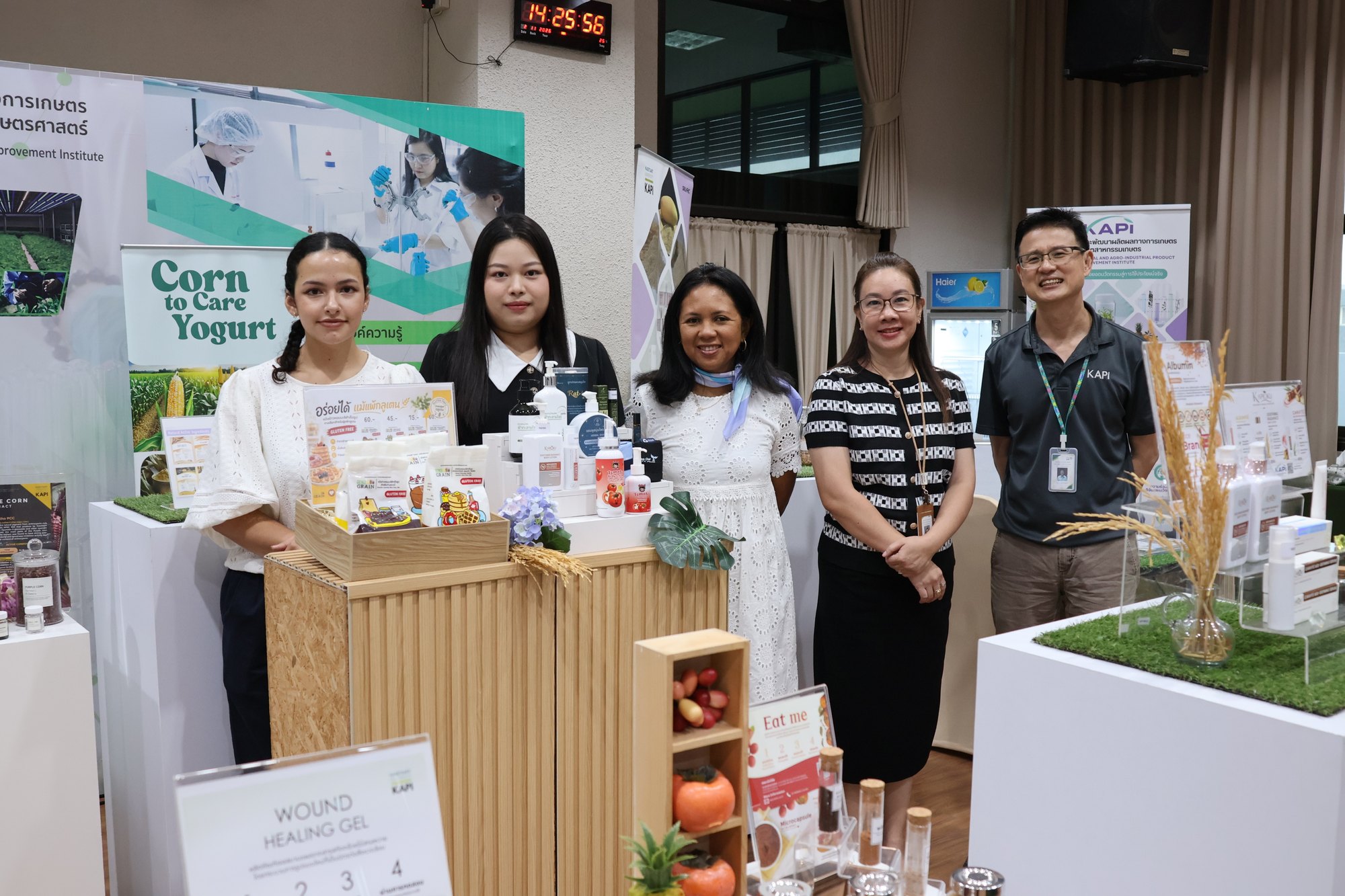
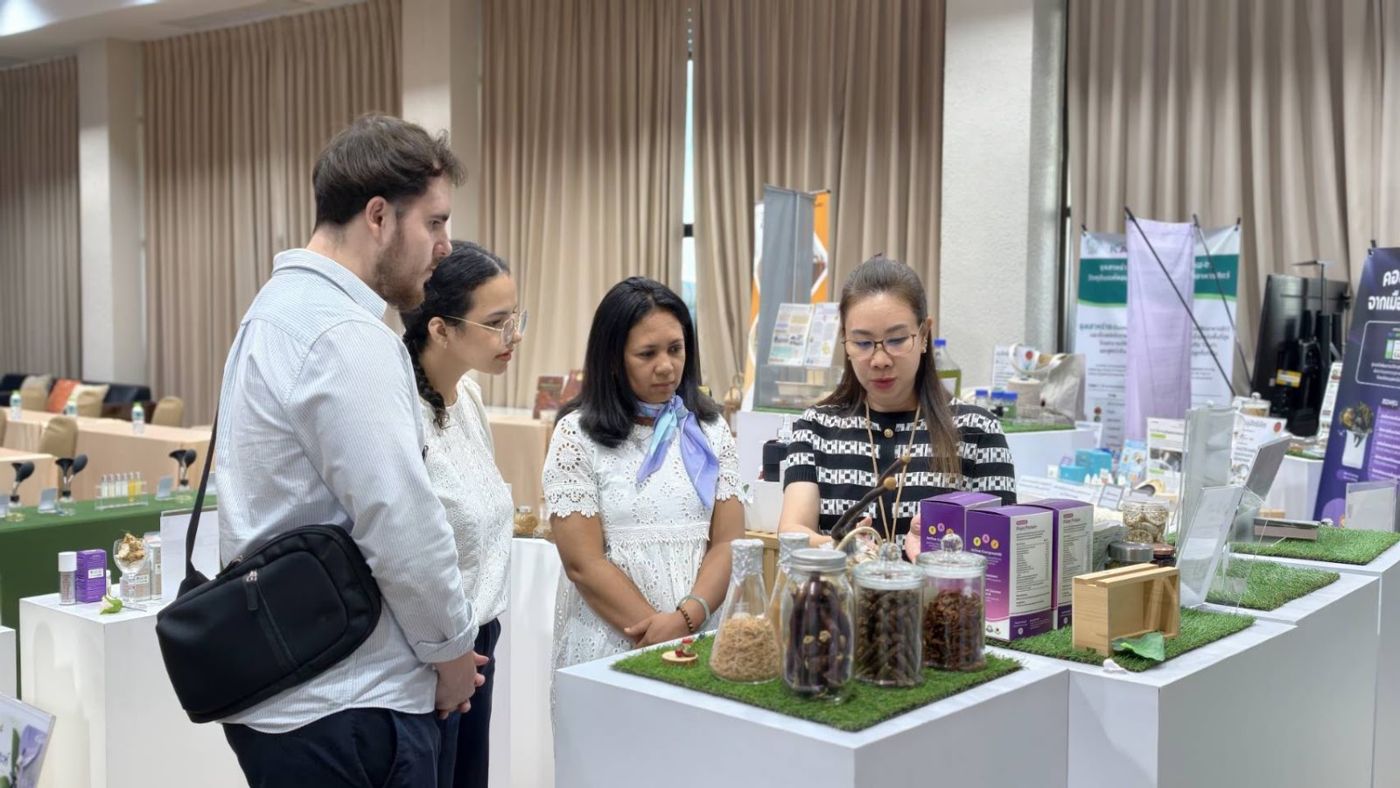
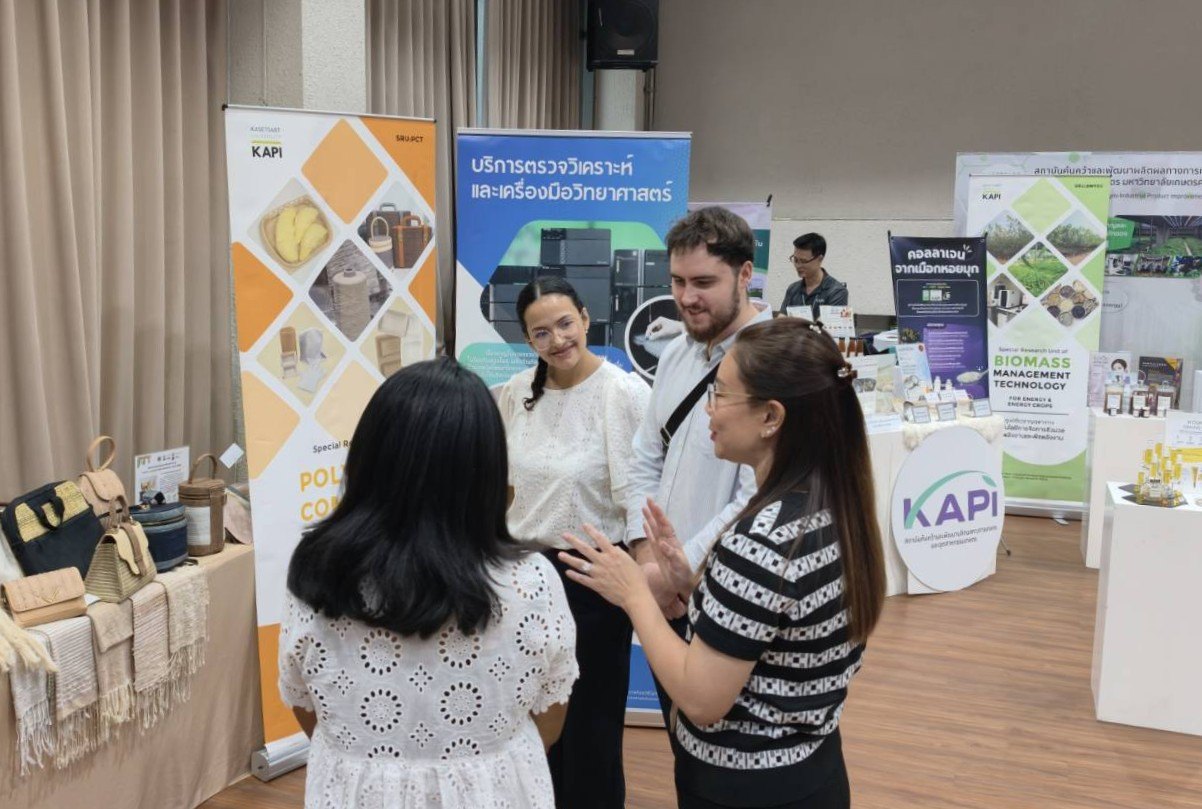
The meeting room featured raw materials, extracts, research outputs and prototype products to support the exchange of knowledge, including extracts from purple corn cob and mangosteen peel, rice albumin protein, eri silk dyed with natural colours, and information sheets on research outputs and intellectual property.
An innovation ecosystem for knowledge exchange
TIBD thanks the Madagascar delegation for taking part in the meeting, and thanks KAPI for hosting the venue and co-hosting.
The visit reflects the role of the TIBD, K-API and KAPI innovation ecosystem, which links research, active-ingredient development, testing and commercial production, as a framework for knowledge exchange with Madagascar’s aromatic-plant and extract sector.
Further news: website www.tibdglobal.com | LINE Official Account @tibdglobal | Facebook Cosmebiz – TIBD | email info@tibdglobal.com