
Thai Herbal Product Stability Testing Service (Herbal Product Stability Hub): Covering 14 Herbal Dosage Forms

฿15,000.00

Category:
Description

The Thai herbal product industry continues to expand, driven by domestic consumers turning to traditional health remedies and by export markets in ASEAN, Japan, the European Union, and the United States that increasingly value natural products with scientific evidence. The common requirement across all these markets is the need to verify shelf life and active ingredient stability.

The challenge with Thai herbal products lies in their chemical complexity. Unlike conventional pharmaceuticals derived from single purified compounds, herbal products contain multiple compounds that vary by growing region, harvest season, extraction method, and packaging system. Stability testing aligned with international standards and the Thai Herbal Pharmacopoeia (THP 2021) therefore becomes an essential tool for generating the scientific documentation needed for Food and Drug Administration (FDA) registration and for negotiations with international importers.

TIBD’s service is designed specifically for Thai herbal products. It covers stability testing protocols per ICH Q1A(R2), ASEAN Zone IVb conditions, and THP 2021 criteria, including Marker Compound analysis and phytochemical fingerprinting (TLC/HPTLC Fingerprinting), conducted in partnership with VISBIO as an Independent Quality Assurance Verifier (IQAV) using Validated Methods per ICH Q2(R1). This page serves as a hub linking you to stability testing services for each of the 14 herbal dosage forms that TIBD supports.
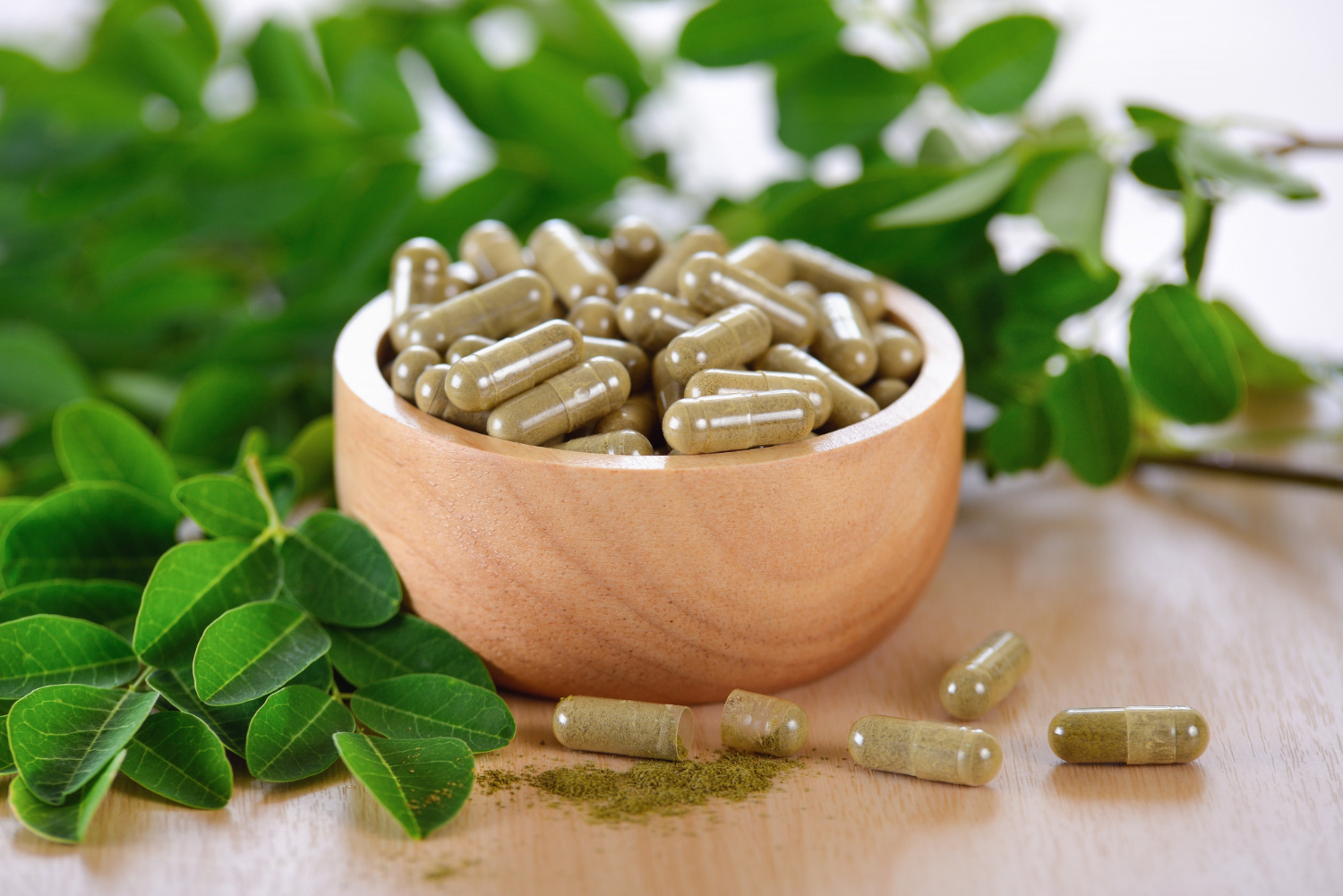
What Are Thai Herbal Products? Definition and Scope Under the 2562 Act

Under the Herbal Product Act B.E. 2562 (2019), a herbal product refers to a product whose primary ingredients are derived from plants, animals, microorganisms, or minerals, used for the purposes of health care, treatment, alleviation, prevention, or curing of disease. The category covers traditional Thai medicine, alternative medicine, single herbs and herbal formulations, and herbal health products.

Commonly used Thai herbs in commercial products include Turmeric (Curcuma longa), with Curcuminoids as the Marker Compound; Andrographis (Andrographis paniculata), with Andrographolide; White Ginger (Kaempferia parviflora), with Methoxyflavones; Centella asiatica, with Asiaticoside; Moringa (Moringa oleifera), with Glucosinolates; and Amla (Phyllanthus emblica), with Tannins.

The Thai herbal product market has a structure that producers must always consider. Domestically, consumers require products with FDA registration, clearly stated shelf lives, and scientific evidence. For export, foreign importers require product specification documents aligned with ASEAN and ICH standards, along with Marker Compound data analyzed by High-Performance Liquid Chromatography (HPLC) or equivalent techniques.

Stability testing for herbal chewable tablets and Thai herbal tablets

14 Herbal Dosage Forms Supported by TIBD

TIBD provides stability testing for herbal products across 14 dosage forms. Each form has specific testing protocols and parameters designed to address its particular physical, chemical, and microbiological characteristics.

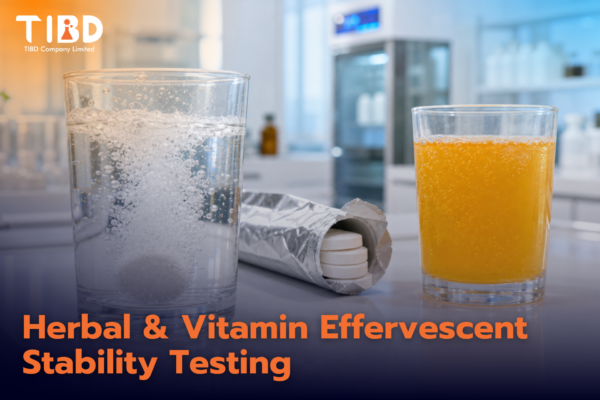
The solid oral dosage group covers: Plain Herbal Tablet, Film-Coated Herbal Tablet, Chewable Herbal Tablet, Effervescent Tablet, Herbal Pill, Herbal Licap/Soft Capsule, Hard Capsule and Granules, Softgel and Lozenges, Herbal Sachet, and Herbal Powder.

The liquid dosage group covers: Herbal Syrup, Herbal Oral Liquid, Herbal Ready-to-Drink (RTD), Herbal Gummy, Herbal Jelly, and Herbal Tea.

The external use group covers: Herbal Balm, Herbal Gel, Herbal Cream, Herbal Spray, Herbal Medicated Oil, and Herbal Inhaler.

Each dosage form has a dedicated article covering specific parameters, THP 2021 criteria, and packaging considerations. These articles provide deeper technical detail and dosage-form-specific challenges.

The Core of Herbal Testing: Marker Compound and TLC Fingerprinting

The critical difference between stability testing for herbal products and conventional pharmaceuticals is the chemical complexity of herbs. Measuring a single Marker Compound may not be sufficient to demonstrate overall product stability. Two techniques must therefore be used together.

Marker Compound analysis uses High-Performance Liquid Chromatography (HPLC) or Ultra-Performance Liquid Chromatography (UPLC) for non-volatile compounds, and Gas Chromatography-Mass Spectrometry (GC-MS) for volatile compounds in herbal oils. Examples of Marker selection include Curcuminoids (Curcumin, Demethoxycurcumin, Bisdemethoxycurcumin) for Turmeric, Andrographolide for Andrographis, and Methoxyflavones (5,7-Dimethoxyflavone) for White Ginger.

TLC/HPTLC Fingerprinting captures an overview of multiple compound groups simultaneously, providing a Similarity Index used to compare batches and different sampling time points during stability testing. A Similarity Index above 0.95 indicates that the product’s chemical profile remains close to the baseline.

Using both techniques together provides a complete picture: Marker Compound analysis answers whether the primary active ingredient remains at sufficient levels, while TLC Fingerprinting answers whether the overall chemical profile remains consistent with the registered formulation.

Testing Conditions and Sampling Schedule per ASEAN Zone IVb

Thailand and ASEAN countries fall within the hot and humid ASEAN Zone IVb climatic zone. Testing conditions must therefore reflect the actual environmental conditions of the target market.

Long-term Study conditions use 30°C / 75% RH for a minimum of 12 months, extending to 24-36 months for products requiring full shelf-life determination. Accelerated Study conditions use 40°C / 75% RH for 6 months to support initial registration and shelf-life predictions. Intermediate Study conditions use 30°C / 65% RH for 12 months when Accelerated Study results show significant change.

Standard pull points for long-term studies are at months 0, 3, 6, 9, 12, 18, 24, and 36. For Accelerated Studies, pull points are at months 0, 1, 2, 3, and 6. For volatile-containing herbal products such as Herbal Balm, Herbal Medicated Oil, and Herbal Inhaler, TIBD adds monthly pull points during the first 6 months to capture volatile compound changes in detail.

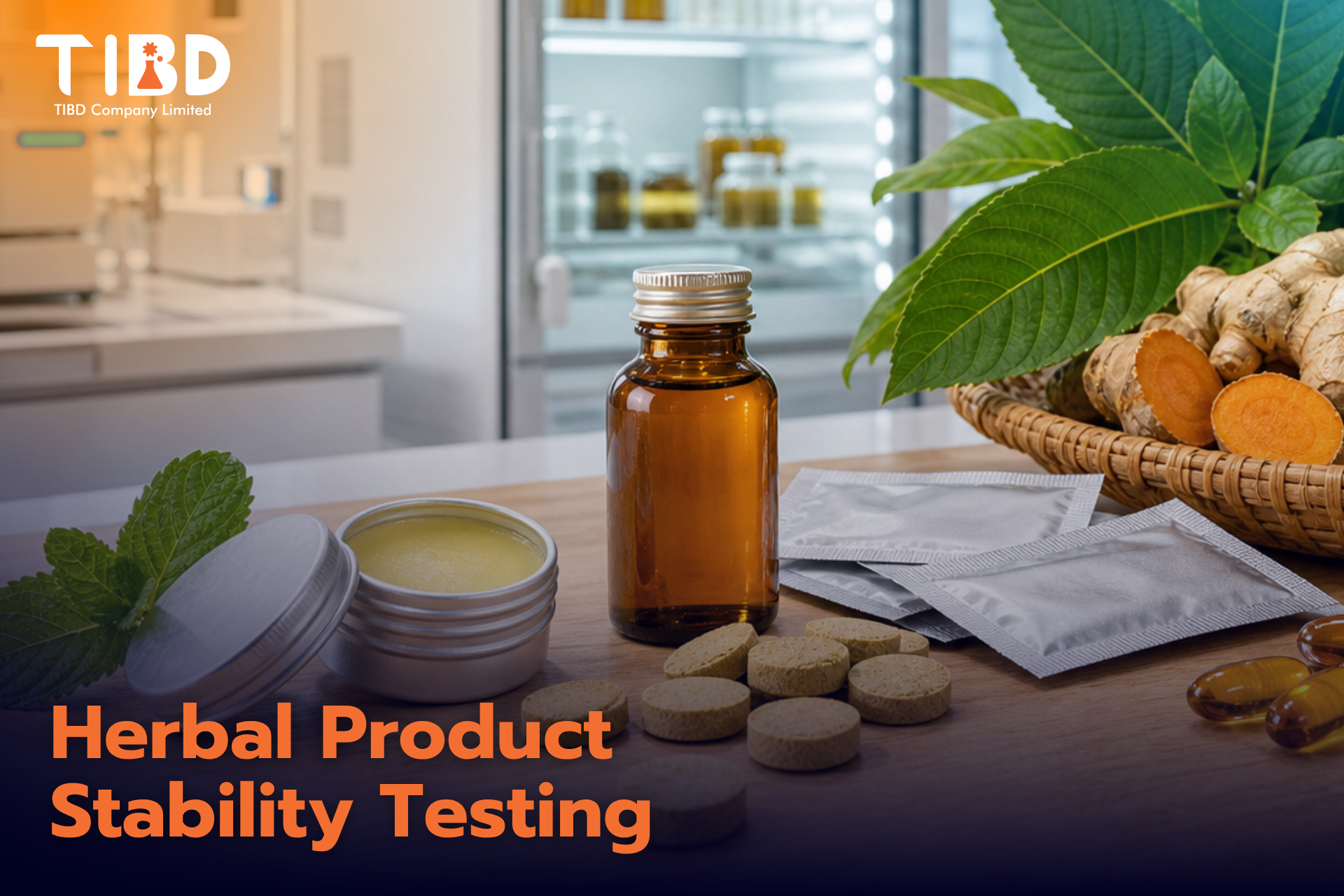
Herbal Product Stability Hub: stability testing covering 14 herbal dosage forms

Acceptance Criteria per Thai Herbal Pharmacopoeia (THP 2021)

The Thai Herbal Pharmacopoeia (THP) 2021 edition sets specific Acceptance Criteria for herbal products, used alongside ICH Q1A(R2) standards.

For Marker Compound content, at day zero the value must fall within the range specified in the product specification documents (generally 90-110% of the declared amount), and throughout the shelf life the value must not fall below 90% of the initial value. For Fingerprinting, the Similarity Index between T0 and Tx must not be below 0.95.

For dosage-form-specific criteria: Herbal Pills and dry products must have a Water Activity (aw) not exceeding 0.60 to inhibit microbial growth. Herbal Balm and Herbal Medicated Oils must retain volatiles at no less than 85-90% and pass odor stability testing. Herbal RTD and syrups must pass Microbial Limit Testing at every pull point.

For contaminant testing, THP 2021 requires herbal products to undergo Heavy Metal Testing, Pesticide Residue analysis, and Aflatoxin testing at the initial sampling point. Although these parameters do not change over time, they are required as part of the registration documentation.

Legal Requirements and FDA Registration

The Herbal Product Act B.E. 2562 (2019) requires herbal products registered with the Food and Drug Administration (FDA) to provide stability data from testing per ICH Q1A(R2) or equivalent, and to state a scientifically based shelf life on the label rather than an estimate based on other products.

The ASEAN Guideline on Stability Study of Drug Products (2013) further stipulates that testing conditions must be appropriate for the Zone IVb climate for products sold in ASEAN, that sampling frequency must comply with ICH Q1A(R2), and that data presented must cover at least 3 production batches.

For products registered under Traditional Thai Medicine per ministerial announcements, stability requirements may differ from those for herbal health products. TIBD designs protocols addressing both categories according to each client’s specific requirements.

Exporting Thai Herbal Products to ASEAN and International Markets

Exporting Thai herbal products to foreign markets involves opportunities and challenges in the dimension of quality documentation. Importers in ASEAN countries such as Singapore, Malaysia, Vietnam, Indonesia, and the Philippines require stability data aligned with ICH Q1A(R2) and the ASEAN Stability Guideline, along with Certificates of Analysis (COA) showing Marker Compound results and microbial testing.

In Japan and the European Union, importers prioritize TLC/HPTLC Fingerprinting data and long-term studies covering 3 batches over 24 months. For the United States market under DSHEA (Dietary Supplement Health and Education Act), herbal products classified as Dietary Supplements require cGMP (current Good Manufacturing Practice) documentation and stability data supporting Best Before Date determination.

A key advantage for producers who test under ASEAN Zone IVb conditions is that this data covers a more demanding environment than many target markets, making products tested in Thailand highly credible for markets with milder climates.

VISBIO’s Role as an Independent Quality Assurance Verifier (IQAV)

The credibility of herbal product stability test reports depends on the independence of the analyst. VISBIO, acting as an Independent Quality Assurance Verifier (IQAV), performs Marker Compound analysis, TLC/HPTLC Fingerprinting, and microbial testing on samples collected at TIBD’s various pull points, using Validated Methods per ICH Q2(R1) with full traceability documentation at every step and operations conducted under ISO/IEC 17025 standards.

For complex Thai herbal products, having a third-party IQAV gives importers and regulatory authorities in ASEAN, Japan, and Europe confidence in the data presented, reducing questions and additional requirements during the registration process.

TIBD Team Expertise

The herbal product stability testing service is conducted in partnership with Dr. Wuttipong Panitsettakorn, Advisor and Co-Founder, who specializes in commercial technology management for the health and beauty industry, and Ms. Mandhamon Uttamo, Advanced Formulator, with experience in formulation development and packaging system selection for Thai herbal products. Our team includes researchers specializing in Phytochemistry, Pharmacognosy, and Botanical Standardization, as well as network researchers covering Marker Compound analysis, HPTLC Fingerprinting, and microbiological assessment of herbal products.

Is your Thai herbal product ready for FDA registration or international export? If you need stability data aligned with ICH Q1A(R2), ASEAN Stability Guidelines, and the Thai Herbal Pharmacopoeia (THP 2021) for any herbal dosage form, Contact TIBD for a customized protocol designed for your product.

Reference

Apply for Thai Herbal Product Stability Testing Service (Herbal Product Stability Hub): Covering 14 Herbal Dosage Forms

If you have any questions or would like to receive a free consultation regarding Thai Herbal Product Stability Testing Service (Herbal Product Stability Hub): Covering 14 Herbal Dosage Forms, or if you would like to visit us in person in Bangkok, Thailand, you are warmly welcomed and feel free to contact us via the contact form below.

  • This field is for validation purposes and should be left unchanged.