Turmeric Curcumin Softgel with Piperine Extract: Research Evidence and Absorption Technology
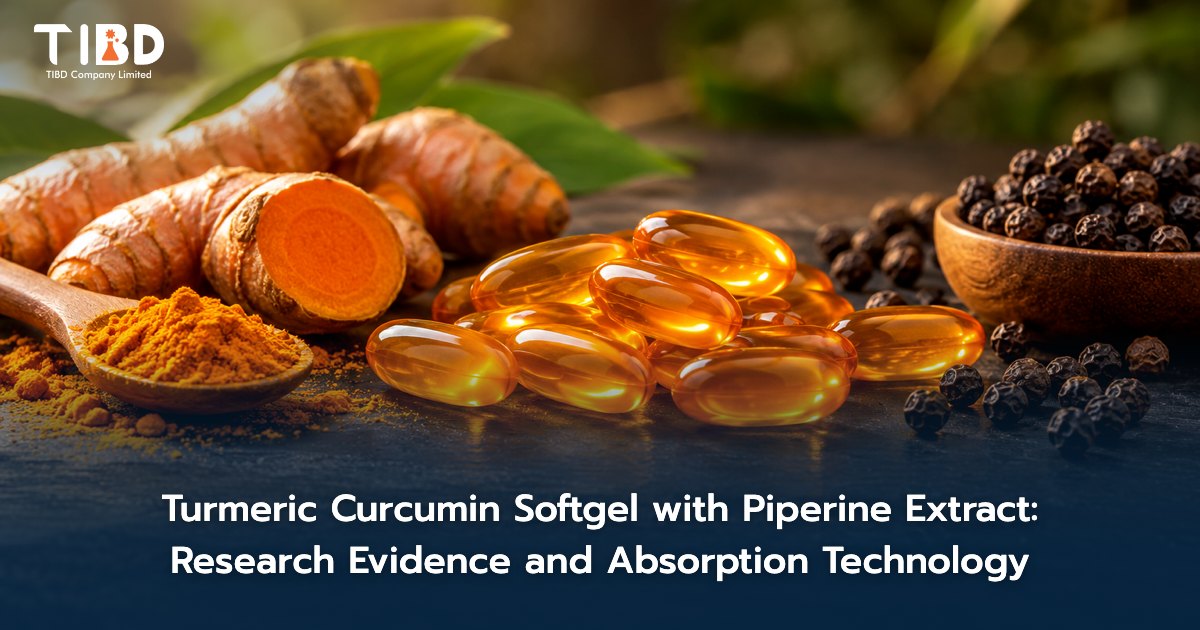
In today’s world, where wellness is taking center stage, turmeric (Curcuma longa) and black pepper (Piper nigrum) have become key ingredients in dietary supplement development, with a body of research on inflammation and antioxidant activity. This article focuses on curcumin extract from turmeric rhizome, developed together with piperine extract from black pepper in Softgel form.
One challenge with Curcumin (the main curcuminoid in turmeric) is its low bioavailability, meaning it is poorly absorbed in the body. Piperine from black pepper and Softgel formulations based on carrier oils or emulsion systems are approaches used to improve curcumin absorption [1, 2].
This article explores the properties of curcumin extract and piperine extract, the research behind them (with the type of study for each finding), precautions, and the technology used in developing Softgel supplements.
Understanding Curcumin Extract and Piperine Extract
Curcumin Extract: The Power of Curcumin
Curcumin extract is obtained from the rhizomes of Curcuma longa and contains Curcuminoids, with Curcumin as the main compound in this group.
Key Properties
✅ Anti-inflammatory – In laboratory and animal studies, curcumin reduces cytokine production and inhibits inflammatory enzymes such as COX-2, LOX, and iNOS [3]; clinical trials report changes in inflammation-related markers such as NF-κB, COX-2, 5-LOX, and CRP [4].
✅ Antioxidant – Shows antioxidant activity at the cellular level [3]; human meta-analyses report improvements in oxidative stress markers (see below).
✅ A Different Material: Turmeric Essential Oil – Steam-distilled turmeric essential oil is not the same as curcumin extract. Its main compounds are turmerones such as Aromatic Turmerone (a type of Terpenoid), while curcuminoids are non-volatile and are largely absent from the essential oil [5]. In vitro and in rats, aromatic turmerone induced neural stem cell proliferation [6], and laboratory data suggest turmerones may act together with curcuminoids [5]. These are preclinical data only, with no human studies; the human research cited in this article concerns curcumin or turmeric extracts, not the essential oil.


Piperine Extract from Black Pepper: Enhancing Absorption
The key black pepper compound discussed in research is Piperine, an alkaloid that markedly increases Curcumin’s bioavailability [2].
✅ Boosts Curcumin Absorption – Piperine inhibits glucuronidation in the liver and intestine, the process that normally converts and clears Curcumin quickly, increasing its levels in the blood [2, 7].
✅ Anti-inflammatory & Antioxidant – Laboratory and animal studies report antioxidant and anti-inflammatory activity of piperine [7]. The same enzyme-inhibiting effect (CYP3A4, P-gp) may also raise blood levels of some medicines, so people on regular medication should ask a pharmacist [8].
✅ Digestive Enzymes – Animal studies show piperine stimulates pancreatic digestive enzymes [7].
Scientific Insight: In a single-dose study in healthy volunteers, 2 g of curcumin taken with 20 mg of piperine increased curcumin bioavailability by about 2,000% (20-fold) compared with curcumin alone, which was barely detectable in blood; in rats the increase was 154% [2].
Science-Backed Health Benefits of Curcumin Extract & Piperine
The studies below tested curcumin, curcuminoid or turmeric extracts (some combined with piperine). The type of study is stated for each point; results depend on the formulation and dose studied and do not mean that a supplement treats disease.

Powerful Anti-Inflammatory Properties
Chronic inflammation is linked to arthritis, autoimmune diseases, and digestive disorders.
- In cell and animal studies, curcumin inhibits NF-κB, a protein that controls inflammatory gene expression [3, 4].
- Small clinical trials in people with rheumatoid arthritis reported symptom improvement with curcumin [9, 10], but more recent meta-analyses rate the certainty of evidence as very low and found no significant difference in blood inflammatory markers [11, 12]. (For inflammatory bowel disease, see Gut Health below.)
- A multicenter trial in 367 Thai patients with knee osteoarthritis found that turmeric extract (1,500 mg/day) was non-inferior to the NSAID ibuprofen (1,200 mg/day) for pain, with fewer reports of abdominal pain or discomfort, although the overall number of people with side effects did not differ [13]. A meta-analysis of 16 trials (1,810 participants) found effects similar to NSAIDs with fewer side effects [14].

Pain Relief & Joint Support
Research on curcumin, piperine and joint discomfort:
- An umbrella meta-analysis of 11 meta-analyses found that curcumin reduced pain and stiffness scores and improved joint function in people with knee osteoarthritis [15].
- A curcuminoid plus piperine formulation was tested against placebo in 40 patients with knee osteoarthritis and improved blood oxidative stress markers [16]. Piperine increases curcumin absorption [2], but no trial has yet shown that adding piperine relieves pain better than curcumin alone, and in a meta-analysis on fatty liver disease, adding piperine did not improve the effect on liver enzymes [17].

Gut Health & Digestive Support
- In a randomized placebo-controlled trial of 50 patients with mild-to-moderate Ulcerative Colitis, curcumin 3 g/day added to standard mesalamine therapy led to clinical remission in 53.8% versus 0% with placebo, with few and comparable side effects in both groups [18]. Newer meta-analyses point the same way for Ulcerative Colitis, but found no difference from placebo in Crohn’s disease [19, 20].
- Animal studies show piperine stimulates pancreatic digestive enzymes [7].

Antioxidant & Other Research Findings
What studies have found so far:
- Oxidative stress and blood vessels: umbrella meta-analyses of human studies found that curcumin lowered an oxidative damage marker (MDA), raised antioxidant enzymes (SOD, GPx, CAT) and improved flow-mediated dilation (FMD) [21, 22]. These are marker changes, not evidence of fewer cardiovascular events.
- Cognitive function: results in animal models of Alzheimer’s disease are positive, but human trials are inconsistent; some found small improvements in certain cognitive domains in older adults, while no benefit has been shown in people with Alzheimer’s disease [23, 24, 25].
- Blood sugar: meta-analyses found small reductions in fasting glucose and HbA1c in people with prediabetes or type 2 diabetes, but results vary by formulation and the certainty of evidence is low [26, 27]; nanocurcumin did not lower glucose in type 2 diabetes [28].
- Anti-tumor activity: data come from cell and animal studies only, and there is no evidence that curcumin treats cancer in humans [3]. Human data mainly concern mouth sores (oral mucositis) from head and neck cancer treatment, with low-certainty evidence [29]. People with cancer must consult their treating physician before using any supplement.
Precautions
- Liver: Cases of liver injury or hepatitis have been reported in association with turmeric supplements, especially high-absorption or high-dose formulations, and most improved after stopping use. People with liver disease, or who notice symptoms such as yellowing of the skin or eyes or dark urine, should stop use and see a doctor [30, 31].
- Medicines: Piperine inhibits enzymes and transporters the body uses to clear drugs (CYP3A4, P-gp), so it may raise blood levels of some medicines [8]. People taking regular medication, especially anticoagulant or antiplatelet drugs and glucose-lowering drugs (research shows curcumin may slightly lower blood sugar [26]), should consult a doctor or pharmacist before use.
- Consult a doctor first: Pregnant or breastfeeding women, people scheduled for surgery, people undergoing cancer treatment, and anyone with a chronic medical condition.
- Side effects: In a knee osteoarthritis meta-analysis, side effects of turmeric extract were similar to placebo and fewer than with NSAIDs [14], but in a cognitive-function meta-analysis, more side effects were reported with curcumin than with control [24].
- Limits of the evidence: Most human studies are small, short and use different formulations and doses, so each result applies only to the formulation and dose studied. Data on turmeric essential oil are preclinical only. Dietary supplements are not medicines and do not replace medical treatment.
Disclaimer: Individual results may vary; consult a healthcare professional before starting any supplement.
Developing a High-Absorption Softgel with Curcumin Extract & Piperine Extract
Cutting-Edge Absorption Technologies
💡 SEDDS (Self-Emulsifying Drug Delivery System) – A mix of oil and surfactants that forms a fine emulsion in the gut, helping curcumin disperse and be absorbed more easily [1].
💡 Phytosome & Liposome Technology – Forms Curcumin-Phospholipid complexes or phospholipid vesicles, allowing easier absorption through the intestinal lining [1, 3].
Carrier Oils & Emulsifiers for Enhanced Stability
💡 MCT Oil / Coconut Oil / Rice Bran Oil – Used as carriers for curcumin extract in softgels. Taking curcumin with fat is an approach used to improve absorption [1], but curcumin has limited solubility in oil, so each formula must be tested for solubility and stability; one curcumin phytosome softgel study found that an oily vehicle markedly reduced curcumin dissolution [32].
💡 Lecithin, Polysorbate 80, Cremophor EL – Examples of emulsifiers studied in formulation research to form micelles and improve curcumin dispersion in the gut. The legal status of each ingredient for use in food supplements must be checked individually in each target market.
Synergistic Ingredients for Maximum Effectiveness
💡Piperine (Black Pepper Extract) – Increased Curcumin’s bioavailability by about 2,000% in a single-dose human study [2].
💡Curcumin with turmeric essential oil (e.g., BCM-95®, a trademark of another manufacturer) – A curcumin formula recombined with other turmeric components, including turmerone-containing essential oil. A pilot crossover study in humans found about 7 times higher absorption than standard curcumin; the researchers were affiliated with the manufacturer [33].
💡Additional Botanicals – Ginger and Vitamin D have each been studied on their own in knee osteoarthritis [34], and Boswellia is also commonly considered. No study has yet confirmed added benefit when combined with curcumin, so each combined formula needs its own efficacy and stability testing.

Why Softgel Form Suits Curcumin Extract & Piperine Extract
Raw Material Sourcing
✔️ Ensure high-quality, standardized extracts with a certificate of analysis (CoA) verifying curcuminoid & piperine content.
✔️ Choose GMP-certified suppliers that meet the food regulations of your target market.
Manufacturing & Compliance
✔️ Select a manufacturer with Softgel expertise, using SEDDS or Phytosome technology.
✔️ Register the product with the relevant authority in each market (in Thailand, the Thai Food and Drug Administration) and include the required warnings.
Branding & Marketing Strategies
✔️ Highlight “Advanced Absorption Technology” as a unique selling point.
✔️ Communicate benefits according to the actual level of evidence and local food advertising rules, without claims to treat or prevent disease.

Conclusion: The Future of Turmeric & Black Pepper Softgel Supplements
✅ Curcumin extract has human research on inflammation, knee osteoarthritis pain, and oxidative stress markers, but is poorly absorbed on its own.
✅ Piperine from black pepper increased Curcumin’s absorption by up to 2,000% in a single-dose human study.
✅ Softgels with SEDDS or Phytosome technology are approaches used to improve bioavailability; each formula needs its own testing.
✅ Actual effectiveness depends on the formulation and dose used.
If you’re looking to develop or purchase a premium Turmeric & Black Pepper Softgel, contact us today! Click
Reference
- Prasad S, Tyagi AK, Aggarwal BB. (2014). Recent developments in delivery, bioavailability, absorption and metabolism of curcumin: the golden pigment from golden spice. Cancer Research and Treatment, 46(1), 2–18. doi:10.4143/crt.2014.46.1.2
- Shoba G, Joy D, Joseph T, Majeed M, Rajendran R, Srinivas PS. (1998). Influence of piperine on the pharmacokinetics of curcumin in animals and human volunteers. Planta Medica, 64(4), 353–356. doi:10.1055/s-2006-957450
- Basnet P, Skalko-Basnet N. (2011). Curcumin: an anti-inflammatory molecule from a curry spice on the path to cancer treatment. Molecules, 16(6), 4567–4598. doi:10.3390/molecules16064567
- Gupta SC, Patchva S, Aggarwal BB. (2013). Therapeutic roles of curcumin: lessons learned from clinical trials. The AAPS Journal, 15(1), 195–218. doi:10.1208/s12248-012-9432-8
- Saavedra DI, Carter DT, Dawson JT, Shah SA, Stevens N, Poudel A, Satyal P, Bascoul C. (2026). Turmeric (Curcuma longa) rhizome essential oil: analytical profile of authenticated and commercial samples, safety and pharmacology review. Pharmaceutical Biology, 64(1), 379–397. doi:10.1080/13880209.2026.2629622
- Hucklenbroich J, Klein R, Neumaier B, Graf R, Fink GR, Schroeter M, Rueger MA. (2014). Aromatic-turmerone induces neural stem cell proliferation in vitro and in vivo. Stem Cell Research & Therapy, 5(4), 100. doi:10.1186/scrt500
- Srinivasan K. (2007). Black pepper and its pungent principle-piperine: a review of diverse physiological effects. Critical Reviews in Food Science and Nutrition, 47(8), 735–748. doi:10.1080/10408390601062054
- Tripathi D, Gupta VK, Pandey P, Rajinikanth PS. (2025). Metabolic insights into drug absorption: unveiling piperine’s transformative bioenhancing potential. Pharmaceutical Research, 42(10), 1857–1891. doi:10.1007/s11095-025-03920-5
- Chandran B, Goel A. (2012). A randomized, pilot study to assess the efficacy and safety of curcumin in patients with active rheumatoid arthritis. Phytotherapy Research, 26(11), 1719–1725. doi:10.1002/ptr.4639
- Zeng L, Yang T, Yang K, Yu G, Li J, Xiang W, Chen H. (2022). Curcumin and Curcuma longa extract in the treatment of 10 types of autoimmune diseases: a systematic review and meta-analysis of 31 randomized controlled trials. Frontiers in Immunology, 13, 896476. doi:10.3389/fimmu.2022.896476
- Fan Y, Yi Z, Mao S, Wen J, Zhang J, Zhang Q, Liu R. (2026). Curcumin for the clinical treatment of rheumatoid arthritis: a systematic review and meta-analysis of placebo-controlled randomized clinical trials. Frontiers in Immunology, 16, 1726157. doi:10.3389/fimmu.2025.1726157
- Liu AJ, Wu PC, Chen YP, Chu HT, Chang HH. (2025). Effects of curcumin and Curcuma longa extract on inflammatory biomarkers in patients with rheumatoid arthritis (RA) and systemic lupus erythematosus (SLE): a systematic review and meta-analysis of randomized controlled trials. Inflammation Research, 75(1), 2. doi:10.1007/s00011-025-02135-z
- Kuptniratsaikul V, Dajpratham P, Taechaarpornkul W, Buntragulpoontawee M, Lukkanapichonchut P, Chootip C, et al. (2014). Efficacy and safety of Curcuma domestica extracts compared with ibuprofen in patients with knee osteoarthritis: a multicenter study. Clinical Interventions in Aging, 9, 451–458. doi:10.2147/CIA.S58535
- Wang Z, Singh A, Jones G, Winzenberg T, Ding C, Chopra A, et al. (2021). Efficacy and safety of turmeric extracts for the treatment of knee osteoarthritis: a systematic review and meta-analysis of randomised controlled trials. Current Rheumatology Reports, 23(2), 11. doi:10.1007/s11926-020-00975-8
- Bideshki MV, Jourabchi-Ghadim N, Radkhah N, Behzadi M, Asemani S, Jamilian P, Zarezadeh M. (2024). The efficacy of curcumin in relieving osteoarthritis: a meta-analysis of meta-analyses. Phytotherapy Research, 38(6), 2875–2891. doi:10.1002/ptr.8153
- Panahi Y, Alishiri GH, Parvin S, Sahebkar A. (2015). Mitigation of systemic oxidative stress by curcuminoids in osteoarthritis: results of a randomized controlled trial. Journal of Dietary Supplements, 13(2), 209–220. doi:10.3109/19390211.2015.1008611
- Aragón-Vela J, Sánchez-Oliver AJ, Huertas JR, Casuso RA. (2024). Does curcumin improve liver enzymes levels in nonalcoholic fatty liver disease? A systematic review, meta-analysis, and meta-regression. Phytotherapy Research, 38(8), 4261–4271. doi:10.1002/ptr.8274
- Lang A, Salomon N, Wu JC, Kopylov U, Lahat A, Har-Noy O, et al. (2015). Curcumin in combination with mesalamine induces remission in patients with mild-to-moderate ulcerative colitis in a randomized controlled trial. Clinical Gastroenterology and Hepatology, 13(8), 1444–1449.e1. doi:10.1016/j.cgh.2015.02.019
- Peng Z, Li D, Wu N, Wang XY, Sun GX, Gao HB, Li HX. (2024). Safety and efficacy of curcumin in the treatment of ulcerative colitis: an updated systematic review and meta-analysis of randomized controlled trials. Explore (NY), 21(1), 103083. doi:10.1016/j.explore.2024.103083
- Mohseni S, Tavakoli A, Ghazipoor H, Pouralimohamadi N, Zare R, Rampp T, et al. (2025). Curcumin for the clinical treatment of inflammatory bowel diseases: a systematic review and meta-analysis of placebo-controlled randomized clinical trials. Frontiers in Nutrition, 12, 1494351. doi:10.3389/fnut.2025.1494351
- Kavyani Z, Najafi K, Naghsh N, Karvane HB, Musazadeh V. (2024). The effects of curcumin supplementation on biomarkers of inflammation, oxidative stress, and endothelial function: a meta-analysis of meta-analyses. Prostaglandins & Other Lipid Mediators, 174, 106867. doi:10.1016/j.prostaglandins.2024.106867
- Tang WW, Huang FF, Haedi AR, Shi QY. (2024). The effect of curcumin supplementation on endothelial function and blood pressure in patients with metabolic disorders: a meta-analysis of meta-analyses. Prostaglandins & Other Lipid Mediators, 175, 106900. doi:10.1016/j.prostaglandins.2024.106900
- Zhu LN, Mei X, Zhang ZG, Xie YP, Lang F. (2019). Curcumin intervention for cognitive function in different types of people: a systematic review and meta-analysis. Phytotherapy Research, 33(3), 524–533. doi:10.1002/ptr.6257
- Yu L, Li N, Li B, Ye KX, Guo J, Shan J, et al. (2025). Targeting cognitive aging with curcumin supplementation: a systematic review and meta-analysis. The Journal of Prevention of Alzheimer’s Disease, 12(8), 100248. doi:10.1016/j.tjpad.2025.100248
- Wang W, Zhao R, Liu B, Li K. (2025). The effect of curcumin supplementation on cognitive function: an updated systematic review and meta-analysis. Frontiers in Nutrition, 12, 1549509. doi:10.3389/fnut.2025.1549509
- Kehinde SA, Qaisrani ZN, Pattanayaiying R, Lay BB, Phyo KY, Lin WP, et al. (2025). Clinical potential of Curcuma longa Linn. as nutraceutical/dietary supplement for metabolic syndrome: systematic review and meta-analysis of randomized controlled trials. Foods, 15(1), 60. doi:10.3390/foods15010060
- Khongphakdee P, Jumnianpol J, Puttarak P, Sawangjit R, Sae-Tan S. (2026). Comparative effectiveness of turmeric and curcumin formulations on glycemic, lipid, and inflammatory markers in people with prediabetes: a systematic review and network meta-analysis. Complementary Therapies in Medicine, 103, 103453. doi:10.1016/j.ctim.2026.103453
- Ghoflchi S, Jalili-Nik M, Hashemy SI, Karav S, Hosseini H, Sahebkar A. (2026). Evaluating the effects of nanocurcumin supplementation in type 2 diabetes mellitus: a systematic review and meta-analysis of randomized controlled trials. Endocrinology, Diabetes & Metabolism, 9(3), e70242. doi:10.1002/edm2.70242
- Berkovitz S, Collaço N, Dolakova K, Hughes J. (2026). A systematic review of turmeric/curcumin for prevention and treatment of oral mucositis due to radiotherapy and/or chemotherapy for head and neck cancer. Journal of Integrative and Complementary Medicine, 32(8), 636–646. doi:10.1177/27683605261426992
- Lombardi N, Crescioli G, Maggini V, Ippoliti I, Menniti-Ippolito F, Gallo E, et al. (2020). Acute liver injury following turmeric use in Tuscany: an analysis of the Italian Phytovigilance database and systematic review of case reports. British Journal of Clinical Pharmacology, 87(3), 741–753. doi:10.1111/bcp.14460
- Papke DJ, Viveiros K, Zota V, Gill RM, González IA, Misdraji J, Patil DT. (2024). Turmeric supplement-associated hepatitis: a clinicopathological series of 11 cases highlighting pan-lobular and zone 3 injury. Histopathology, 86(3), 410–422. doi:10.1111/his.15333
- Allam AN, Komeil IA, Abdallah OY. (2015). Curcumin phytosomal softgel formulation: development, optimization and physicochemical characterization. Acta Pharmaceutica, 65(3), 285–297. doi:10.1515/acph-2015-0029
- Antony B, Merina B, Iyer VS, Judy N, Lennertz K, Joyal S. (2008). A pilot cross-over study to evaluate human oral bioavailability of BCM-95CG (Biocurcumax), a novel bioenhanced preparation of curcumin. Indian Journal of Pharmaceutical Sciences, 70(4), 445–449. doi:10.4103/0250-474X.44591
- Mathieu S, Soubrier M, Peirs C, Monfoulet LE, Boirie Y, Tournadre A. (2022). A meta-analysis of the impact of nutritional supplementation on osteoarthritis symptoms. Nutrients, 14(8), 1607. doi:10.3390/nu14081607